Most people who message us before booking start with the same worry: “Can I actually physically do this?“. It’s already 2026 and Everest Base Camp Trek is not that hard, you just need to follow our proper plans.
So, yes, after running over a hundred of trekkers to Everest Base Camp every season – across a wide range of ages and fitness levels – our honest answer is yes, if you can walk 5 to 7 hours a day on uneven ground for two weeks and you take the altitude seriously. You don’t need to be an athlete. You need stamina, not speed, and the patience to go slow when your guide tells you to.
What you’re training for is base camp at 5,364m, and the morning after, the climb up Kalapatthar (5,545m) – the rocky viewpoint where the Everest photo you came for actually happens. Base camp itself sits below the icefall, where the summit isn’t visible from the ground. Kalapatthar is where you see it.
On safety: Our guides carry a pulse oximeter and check your oxygen levels each evening from Namche onward. We build proper acclimatization days into Namche (3,440m) and Dingboche (4,410m), and we don’t shorten them no matter how strong you feel early – rushing the altitude is the single biggest reason EBC treks end early.
Before you fly to Lukla, our owner Chin Thapa sits down with you at the hotel and walks through the whole route – pace, altitude, what each day actually involves. Most clients tell us this is where the trip stops feeling abstract.
You can reach us day or night – message us and you’ll usually hear back within minutes during Nepal hours. We’re a local agency based in Thamel, and the people answering your questions before the trek are the same people running it.


Extra: We have all required service included like accommodation, meals, pre-arranged vehicle, expert guide, and 24/7 support from us.
8 Highlights of Everest Base Camp Trek Package:
- Stand at Everest Base Camp (5,364m). The final push from Gorakshep is a few hours of slow walking across rocky glacial debris, with the Khumbu Icefall hanging above you and Nuptse, Lhotse, and Pumori closing in on three sides. It’s where every summit climber sleeps the night before their attempt.
- Climb Kalapatthar (5,545m) for the Everest photo you came for. Base camp sits below the icefall, where the summit isn’t visible – Kalapatthar is the rocky viewpoint where it is. We time it for sunrise or late afternoon depending on the week’s cloud pattern.
- Fly into Lukla, the mountain airstrip carved into a hillside at 2,860m – one of the most memorable landings in trekking before the walking even begins.
- Acclimatize properly at Namche (3,440m) and Dingboche (4,410m). Two full rest days we don’t skip, with daily oximeter checks from Namche onward.
- Spend time at Tengboche Monastery (3,860m), the largest in the Khumbu, with Ama Dablam standing directly behind it. The afternoon puja is open to respectful visitors when the monks are in residence.
- Walk the Khumbu Glacier moraine between Lobuche and Gorakshep – the edge of one of the highest glaciers in the world.
- Cross the high suspension bridges over the Dudh Koshi, strung with prayer flags and swaying just enough to make you watch your feet – the most photographed stretch between Phakding and Namche.
- Trek through Sagarmatha National Park, a UNESCO World Heritage Site and real wildlife habitat – Himalayan tahr on the slopes, the danphe (Nepal’s national bird) in the rhododendron forest.
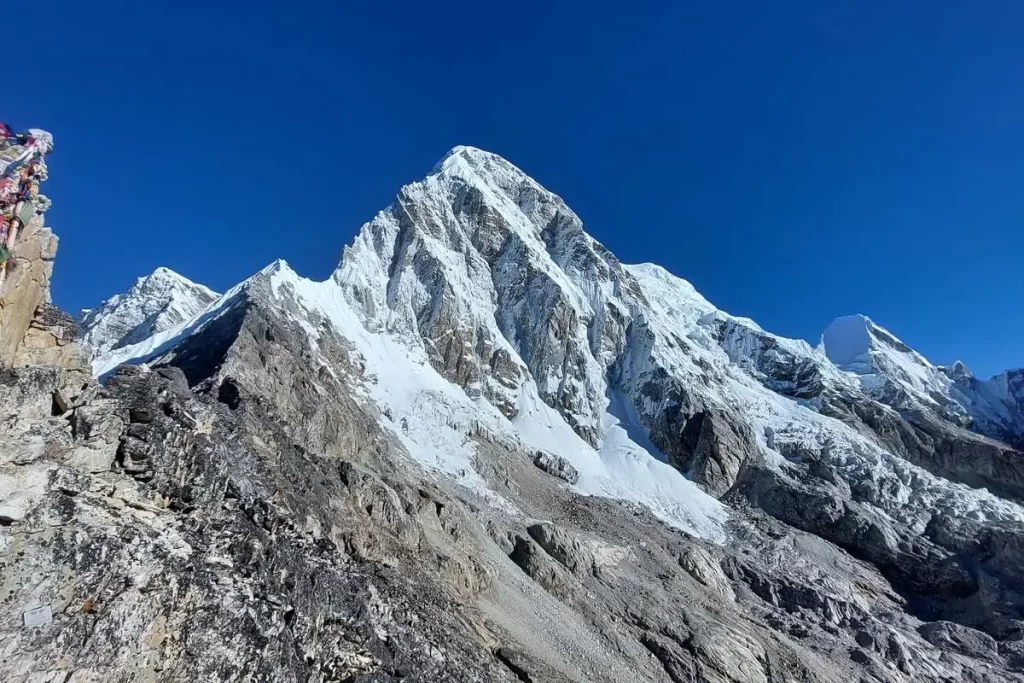
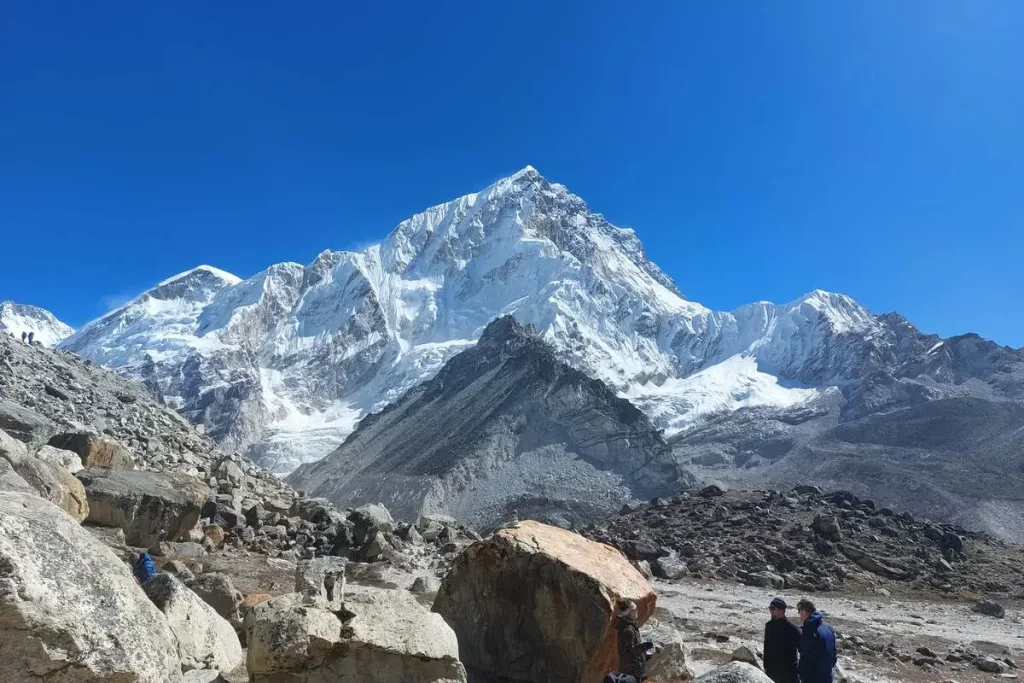
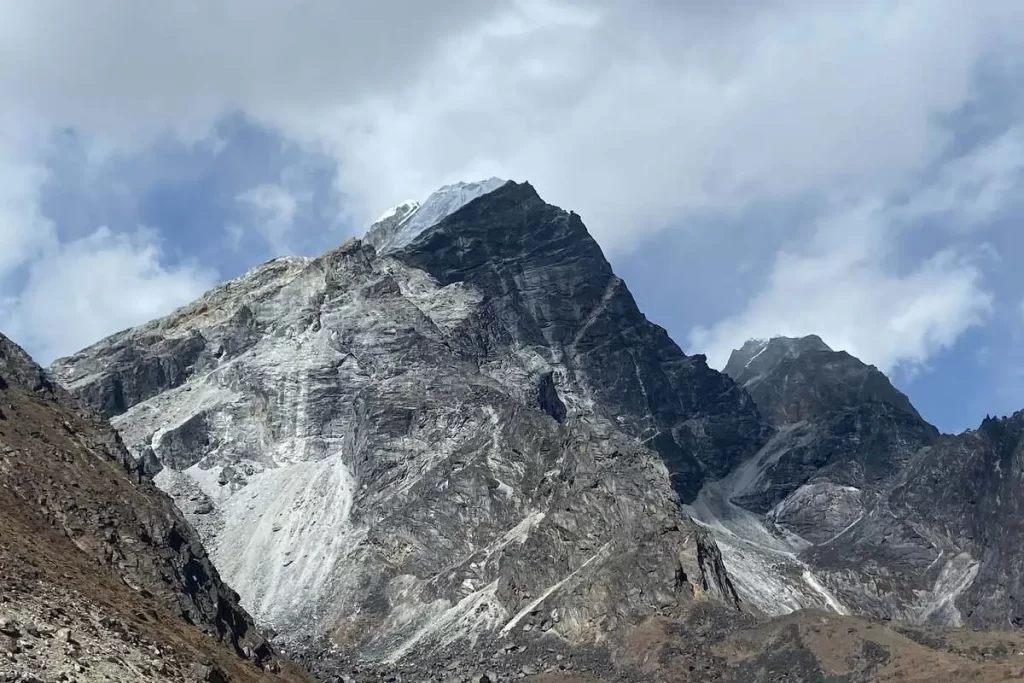
While the major highlights of the trek are highlighted above, you will find new unexpected gems on each step of the journey. There is always something new to discover that might end up being your highlight.
Why the Everest Base Camp Trek Is Worth It?
Everest Base Camp is one of the highest places on earth you can reach on foot no climbing permit, no technical skill, just two weeks of walking and the patience to let your body adjust. That’s the draw: it’s the closest most people will ever stand to the highest mountain on the planet. Similarly, this iconic trek follows in the footsteps of legends like Sir Edmund Hillary and Tenzing Norgay.
Also, let’s not forget the famous viewpoint “Kalapatthar” standing at an elevation of 5,545m (18,192 ft) showcasing the best sunrise view on earth. Including Mount Everest, the stunning panoramas of neighbouring peaks as Lhotse, Nuptse, and Changtse makes the trek more rewarding.
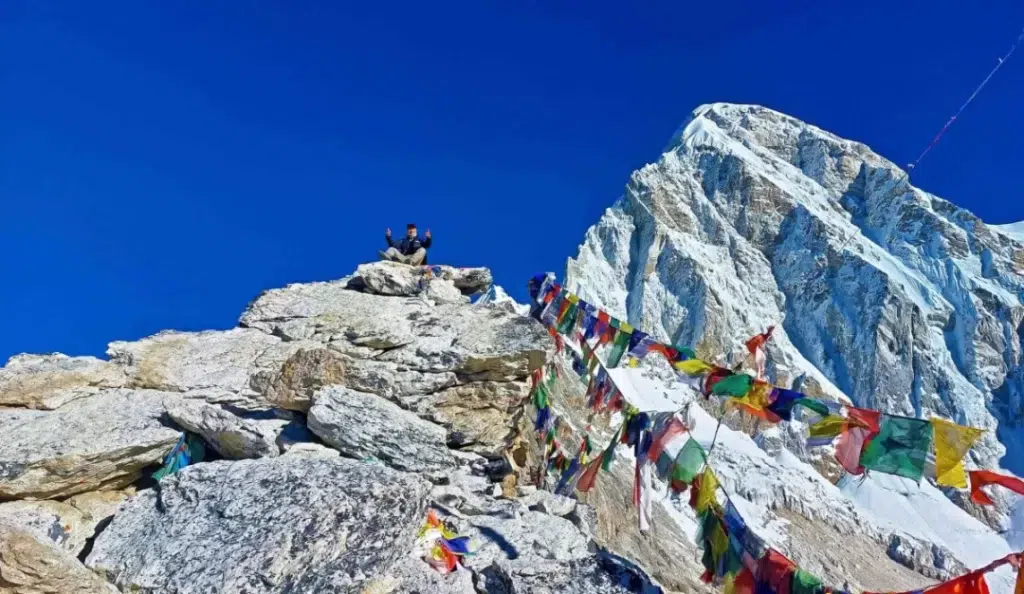
Another key element that makes the EBC trek special is the rich culture you experience along the way. The Sherpa people have deep-rooted traditions; their resilience and kindness add depth to the journey.
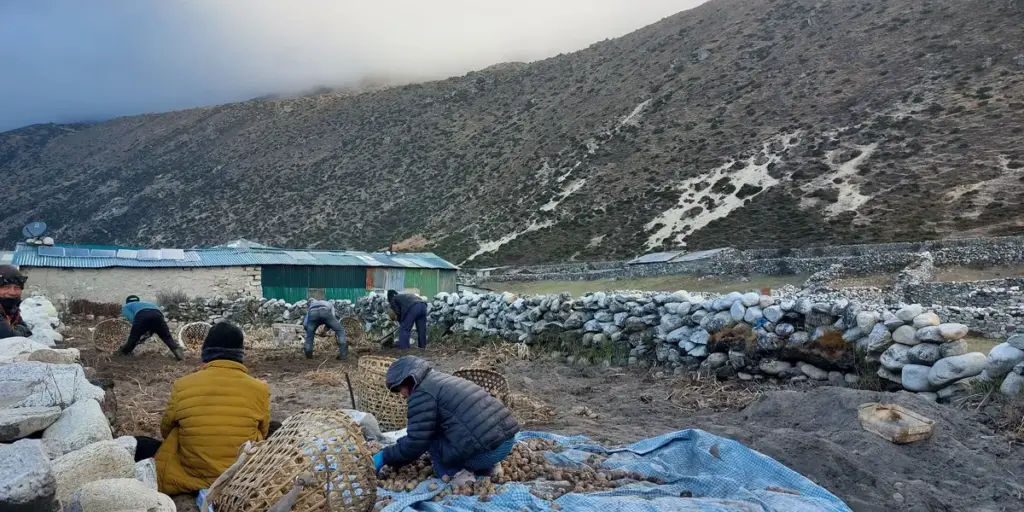
You’ll cross the Dudh Koshi on high suspension bridges, climb through Sherpa villages that have outfitted Everest expeditions for generations, and spend your evenings in teahouse dining rooms where the wood stove is the only warm spot in the building.
Everest Base Camp Overview
The 14-Days Everest Base Camp Trek Package starts with a 35-minute flight to Lukla from Kathmandu or 20 minutes flight from Ramechhap.
Now, why two places for Lukla flight?
The reason is during off-season, the EBC Lukla flight starts from Kathmandu and from Ramechhap during peak-seasons (March, April, May, September, October & November).
Similarly, during Ramechhap to Lukla flight, it is a 5–6-hour drive from Kathmandu to reach Ramechhap Manthali Airport.
Either way, the excitement begins the moment you land in Lukla airport and trek to Phakding.
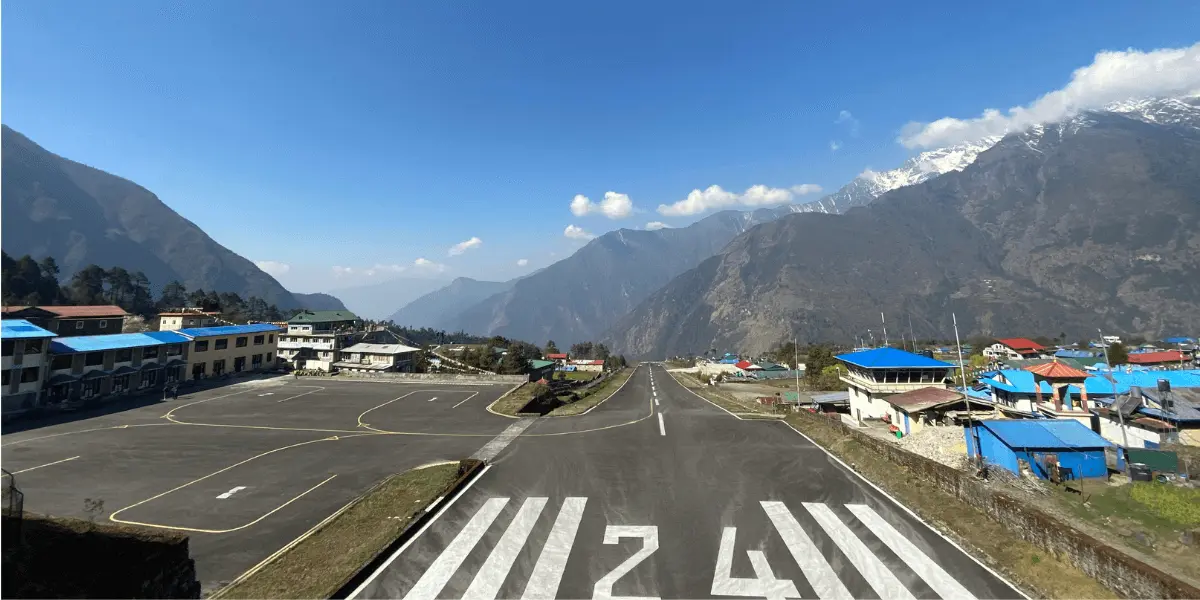
From Phakding, the route follows the Dudhkoshi river bank, trekking through the UNESCO Heritage site “Sagarmatha National Park” the next day. Before you know it, you will then reach the famous Namche Bazar, the largest market in the Khumbu region.
Namche is also the first checkpoint to acclimate, enjoy local markets, visit museums and prepare for the next adventure.
The next day is a visit to famous Tengboche Monastery, with its serene atmosphere and jaw-dropping views of Ama Dablam. I mean, you’re surrounded by some of the world’s tallest mountains! As you push on to Dingboche and Lobuche, the views just get better.
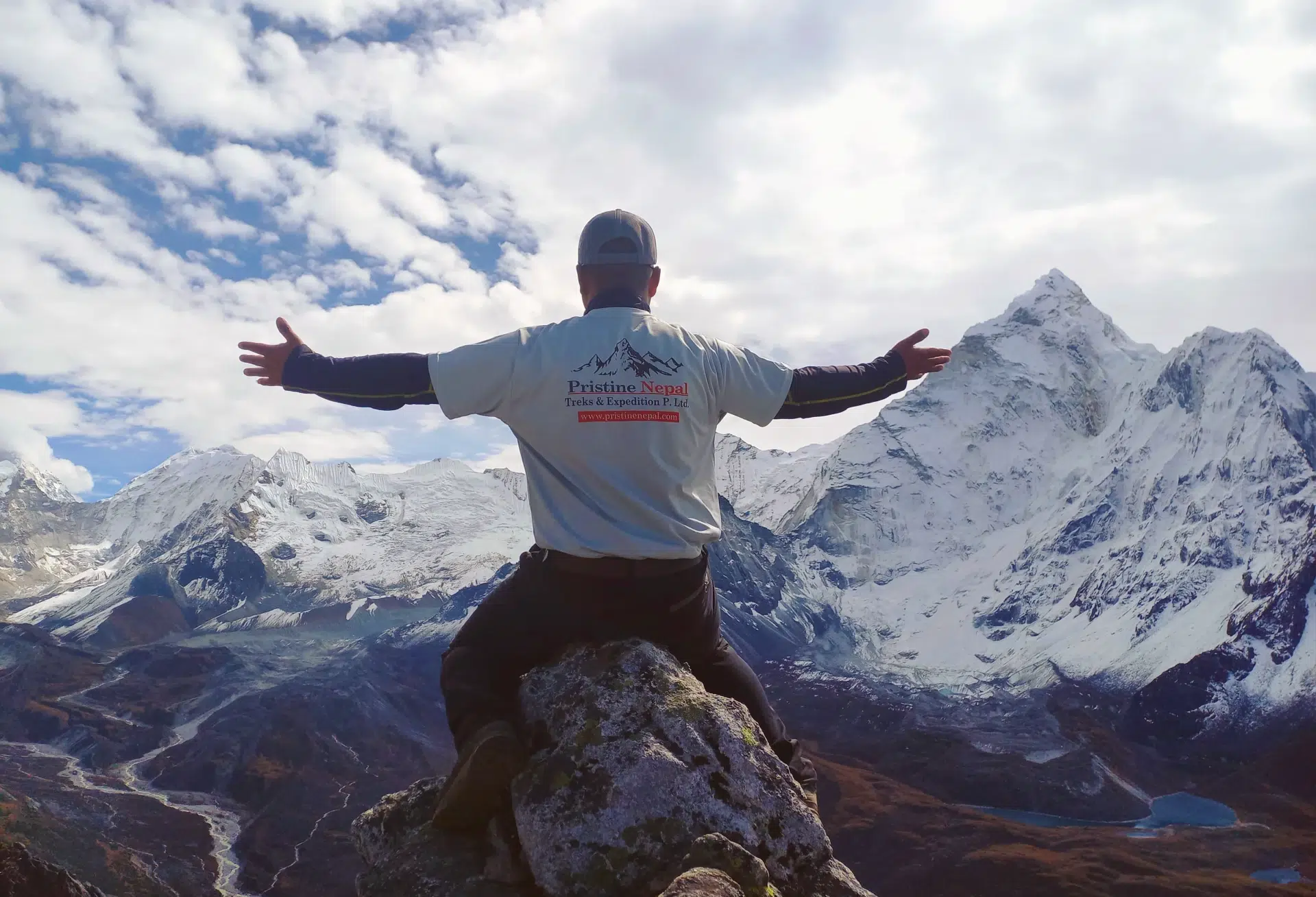
You’ll see everything from Lhotse and Nuptse to Makalu and Cho Oyu, with Mount Everest looming over it all.
Then, of course, there’s the Everest Base Camp itself. Following the trail, we will hike to Gorakshep & walk alongside the Khumbu Glacier, the world’s highest glacier.
Reaching the Everest Base Camp, the following day will be a short hike to Kalapatthar for a beautiful sunrise view over Mount Everest & other peaks.
After the beautiful sunrise view, we will descend to Pheriche village observing the scenery for a while.
Back to Namche Bazar on Day 11 and then Lukla on Day 12. Now, if you want to skip the 3 day in Everest Base Camp Trek then I recommend you the Luxury Everest Base Camp Trek Package and learn why.
Everest Base Camp Trek Package 14 days outline itinerary
- Day 01: Arrival in Kathmandu airport, transfer to the Hotel, and preparation
- Day 02: Fly to Lukla 2,860m and trek to Phakding 2,660m – 04 hours
- Day 03: Trek to Namche Bazar 3,440m – 06 hours
- Day 04: Acclimatization day at Namche Bazar – Hike to Everest View Hotel and back to Namche Bazar
- Day 05: Trek to Tengboche 3,860m – 06 hours
- Day 06: Trek to Dingboche 4,410m – 06 hours
- Day 07: Acclimatization day at Dingboche – Hike to Nangkartshang Peak 5,121m
- Day 08: Trek to Lobuche 4,910m – 05 hours
- Day 09: Reach Gorakshep 5,180m – Trek to Everest Base Camp 5,364m and back to Gorakshep – 07 hours
- Day 10: Hike to Kalapatthar 5,545m for sunrise view, back to Gorakshep, and trek down to Pheriche 4,200m – 08 hours
- Day 11: Trek back to Namche Bazar – 07 hours
- Day 12: Trek back to Lukla – 07 hours
- Day 13: Fly to Ramchhap/Kathmandu and transfer to the hotel
- Day 14: Departure from Kathmandu
14-Days EBC Trek at a Glance:
- Day 1: Kathmandu Arrival & Preparation
- Day 2-12: Full EBC Trekking Duration time
- Day 13: Back to Kathmandu/Farewell Dinner
- Day 14: International Departure
Note: Please make sure to have extra days except our plan. Because the mountain weather and Lukla flights are not that reliable.
Short Lukla Flight Details:
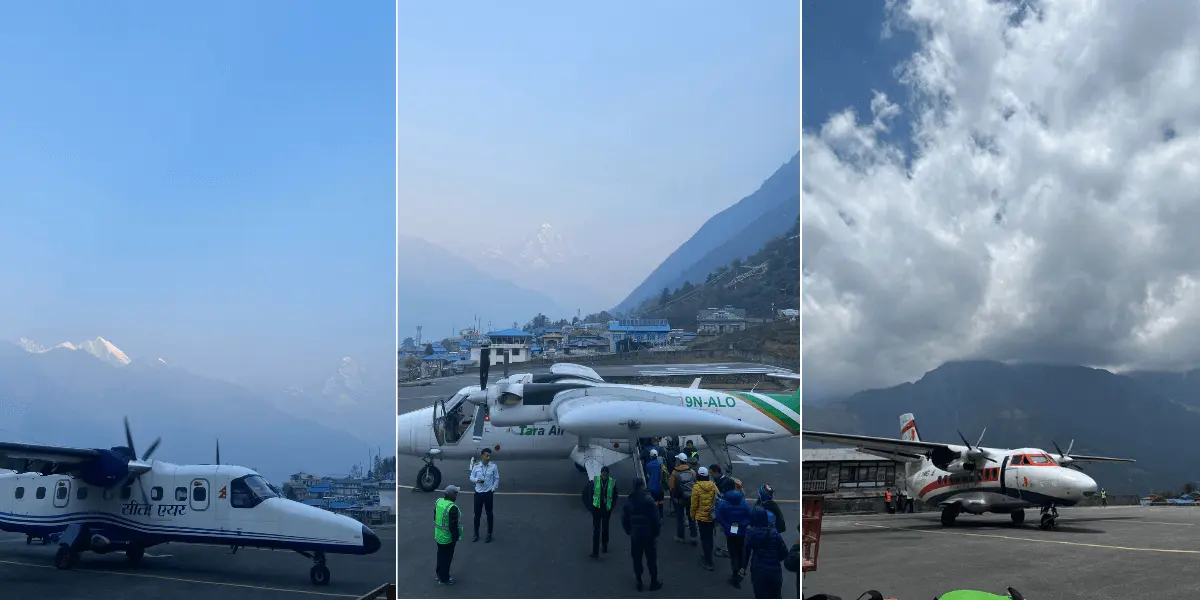 So, the reason behind the Lukla flight redirection from Manthali Airport instead of Kathmandu is the heavy air traffic faced in Kathmandu. As the Kathmandu Tribhuvan International Airport has only one runway, it is hard to fly both international and domestic flights on the same runway.
But here are some few details about Lukla flight:
Lukla Flight Operations:
- Kathmandu: Flights to Lukla operate from Kathmandu from June to August and December to January.
- Ramechhap: During peak seasons (March to May and Sep-November), flights operate from Manthali Airport, Ramechhap to manage high air traffic.
Transportation to Ramechhap:
- Ramechhap is just 132 km (82 miles) from Kathmandu which will take 4-5 hour to reach. Private transportation will be arranged for this trip.
- Departure is early in the morning, around 1 or 2 AM, to ensure timely arrival for the Lukla flight.
Adverse Weather and Lukla Flight Issues:
- Occasionally, flights to or from Lukla may be delayed due to adverse weather or technical issues.
- Sharing Helicopters may be used as an alternative, with additional costs ranging from USD 350 to USD 600 per person.
Lukla Luggage Weight Limit
- The weight limit for the Lukla flight is 10 kg for luggage and 5 kg for hand-carry items.
- Exceeding these limits will incur additional fees you are responsible for paying.
About Lukla Flight Delays

Several scenarios can cause delays for flights to or from Lukla:
- Weather-Related Delays: Lukla flights will be rescheduled for the following day when the weather clears. Trekkers may need to stay an extra day or two.
- Technical Issues: The airline may try to fix the problem and reschedule the Lukla flight for the same day or the next day if a replacement plane is required.
- Other Unforeseen Circumstances: Compensation or refunds may be provided depending on the airline’s policies.
Preparation for Delays:
- Be prepared for possible delays with enough supplies and backup plans.
- Additional spare days are strongly advised for this trek.
What’s Included in the Package:
Here are the services Included in the Normal Everest Base Camp Trek Packages (USD 1,255):
- Airport picks up and drop-off by private vehicle
- Two nights hotel in Kathmandu including breakfast on the basis of twin sharing (Hotel Thamel Park or Hotel Jampa or similar)
- Kathmandu – Ramechhap – Kathmandu transfer by private vehicle
- Ramechhap – Lukla – Ramechhap domestic flight (March to May and September to November)
- Kathmandu – Lukla – Kathmandu domestic flight (June to August and December to January)
- 10kg luggage and 5kg hand carry on Lukla flight
- A Sleeping bag with -20 degrees Celsius resistance
- Lodge accommodation
- Attached bathroom including hot shower: 1N at Phakding, 3N at Namche and 1N at Lukla
- Normal tourist Room: 1N at Tengboche, 2N at Dingboche, 1N at Lobuche, 1N at Gorakshep and 1N at Pheriche
- Meals: Breakfast, lunch and dinner, serving tea or coffee cup as per meal only on the mountain during trekking
- Fresh fruits with dinner
- Water purification tablets
- Trekking permits
- An experienced, government license trekking guide
- One porter for two trekkers from Lukla (Up to 20kg weight restriction for porter)
- First Aid Kit including an oximeter (daily oxygen level checkup)
- Pristine Nepal Trek’s Duffle Bag (No need to worry about this; we provide it at no extra charge. You will use it for packing your supplies and you can bring it with you at home as a souvenir.)
- Pristine Nepal Trek’s T-shirt as a souvenir
- Certificate of completion/achievement from PNT
- Farewell dinner at Nepali restaurant in Kathmandu
- (Note: Refunds aren’t available for Lukla flight delays or cancellations, as these are outside our control – this is why we recommend 2–3 buffer days.)
Here are the service excluded in the EBC packages:
- Nepal visa fee ($30 for 15 days and $50 for 30 days)
- Travel insurance including helicopter evacuation up to 6000m and medical expenses
- Tips to guide and porter
- Personal expenses such as laundry, wifi internet, battery charges, snacks & desserts, soft & hard drinks, horse riding
- Anything that is not included in the inclusion section
- Extra nights hotel in Kathmandu in early arrival, late departure, early return from the mountain in any cases
Here are the services Included for the Deluxe Everest Base Camp Trek Package (USD 1,730):
- Four airport picks up and drops by private vehicle
- Two night hotel in Kathmandu including breakfast (Ramada Encore, or Lo Mustang or Similar)
- Kathmandu – Lukla – Kathmandu flight ticket (December to mid-March and June to mid-September)
- Ramechhap – Lukla – Ramechhap flight ticket (Mid-March to May and mid-September to November)
- An experienced licensed holder trekking guide
- One assistant guide per 5 trekkers
- A porter for two trekkers from Lukla
- Lodge accommodation on the mountain (1 night deluxe room with hot shower at Phakding, 3 night deluxe room with hot shower at Namche Bazar, 1 night deluxe room with hot shower at Tengboche, 2 night deluxe room at Dingboche, 1 night attached bathroom at Lukla)
- (1 night normal room at Lobuche, 1 night normal twin bedroom at Gorakshep, 1 night normal room at Pheriche)
- Meals: Breakfast, lunch and dinner, serving tea or coffee cup as per meal only on the mountain during trekking
- Fresh fruits with dinner
- 1 litre hot water in the evening before going to bed
- 3 litre mineral water per day per person
- Sleeping bag and down jacket on request
- First Aid Kit
- Oxi meter to check blood saturation
- Local rural municipality permit
- Sagarmatha national park entrance fee
- Pristine Nepal Trek’s duffle bag for porter
- Pristine Nepal Trek’s head cap and T-Shirt as a souvenir
- Free coordination in emergency cases
- Farewell dinner at Nepali restaurant
Here are the service excluded in the EBC Deluxe packages:
- Nepal visa fee (USD 30 for 15 days USD 50 for 30 days)
- Travel insurance including helicopter evacuation up to 6000m and medical expenses
- Tips to guide and porter
- Personal expenses such as laundry, wifi internet, battery charges, snacks & desserts, soft & hard drinks, horse riding
- Anything that is not included in the inclusion section
- Extra nights hotel in Kathmandu in early arrival, late departure, early return from the mountain in any cases
Learn more about electricity and wifi facilities of Everest Base Camp.
14-Day Everest Base Camp Trek Detailed Itinerary
Activities: Arrival at Tribhuvan International Airport, visa-on-arrival if necessary, transfer to Thamel (30 minutes), meet the trekking guide, briefing about the trek, settle payment balance (preferably in cash due to bank charges).
Includes: Accommodation, briefing, and assistance with gear if needed.
We will meet you at Tribhuvan International Airport. Unless you have obtained a visa prior to your arrival in Nepal, you will need to get a visa-on-arrival in the immigration department of the airport. Sometimes, this process may take 30 minutes to even 1 & half hours. Inside the airport lobby, one of our representatives will be waiting for you with your name on the Pristine Nepal Treks name board.
We will then drive the 7 km to Thamel (30 minutes) to your hotel. Upon you reach the hotel you will do the check-in and after a while, you will indulge in the briefing session. Also, you will be introduced to the trekking guide as well.
We will brief you regarding your Everest Base Camp trek and if you need any trekking gear, we assist you there. We also provide Sleeping Bag on rent and Down Jacket can be rented in Thamel.


Activities: Early morning flight from Kathmandu to Lukla (may involve Ramechhap due to high traffic), trek to Phakding (4-5 hours).
Trail: Downhill from Lukla through Chaurikharka, Chheplung, Thadokoshi, Ghat, and Chhuthawa.
Today is the first day of your big adventure. According to your Lukla flight schedule, your guide will pick you up at the hotel in the early morning.
Normally, Lukla flight is operated only in the morning from 6am to 11am. If weather permits, they can have flight in the afternoon as well. Lukla weather becomes cloudy normally in the afternoon. Lukla flight is done only with best visibility.
Only 13 to 17 seater small planes can make flight to Lukla. There are 400 to 800 people on each day to fly to Lukla in busy season. They need at least 25 to 50 flights every morning in peak season and they should finish it in the morning.
Due to the single runway and heavy air traffic in Kathmandu airport, they can’t provide flight permission only for Lukla flight in the morning. That is why they can’t operate all those Lukla flights from Kathmandu airport.
So, they bring all those Lukla flight from Ramechhap which is the nearest airport from Kathmandu.
Kathmandu to Ramechhap Distance: 132 km
Operating Time: March, April, May, September, October & November
Manthali Airport Altitude: 474 m (1,555 ft)
It is a 4 to 5-hour drive to Ramechhap from Kathmandu and the domestic airlines fly to Lukla early in the morning, because Lukla weather is comparatively better in the morning. You need to be in Ramechhap before 7 am so we will need to depart from Kathmandu around 2 am.
About Kathmandu to Lukla Flight
From Lukla, it is a 35-minute flight from Kathmandu so it should take 90 minutes for the round trip. Sometimes during the bad weather, it may take more than two and a half hours. This is why all the domestic flights operate from Ramechhap to Lukla during the busy season.
Operating Time: January, February, June, July, August, & December
Operate From: Tribhuvan International Airport (Domestic Flight Area)
Lukla to Phakding Trek
Lukla to Phakding Distance: 7.8km/4.8miles
Duration: 2-3 hours
Difficulty Level: Easy
Phakding Altitude: 2,660m (8,727 ft)
Once you reach Lukla you will meet with our porter, have breakfast, and prepare for trek to Phakding. You will see the Pasang Lhamu statue on top of the exit before you leave Lukla. Pasang Lhamu Sherpa was the first woman from Nepal who summit Mount Everest on 22 April 1993.
Right after that, at the Lukla counter/checkpost, you will stop to obtain permits (Trek Card & Sagarmatha National Park). Worry not our guide will take care of all the permit procedures.
Afterward, the trekking trail leads you slowly down to Chaurikharka, Chheplung, one of the popular Sherpa villages. After this, you will follow the old trekking trail to Thadokoshi village, Ghat, Chhuthawa, and eventually Phakding. There will be short downhill and short uphill stretches, but most of the time trail continues at a similar altitude. Villages are not very big in this area and most of the local people are involved in tourism. You will see hydro project pipelines on the way that provide locals with electricity.
You’ll follow the trail along the Dudhkoshi riverside. After walking for approximately four hours you will reach Phakding, a tourist-oriented village, at 2,660m/8727.03 ft. There are about 20 lodges, guest houses, hotels, and restaurants, and almost all the trekkers stop at Phakding for the first night.
Trek Highlight:
- First View of Kusum Khangkaru mountain from Thado Koshi gaon
- Enchanting Painted Mani Stones
- Beautiful Prayer Wheels


Activities: Trek from Phakding to Namche Bazar (6 hours). Cross several suspension bridges, pass through Monjo (checkpost), and climb steeply to Namche Bazar.
Phakding to Namche Distance: 10.7 km (6.64 miles)
Trek Difficulty: Challenging
Duration: 5-6 Hours
After having a wonderful night at Phakding, the next day of the trek will start after a delicious breakfast. Today you trek to the famous Namche Bazar 3,440m/11,286.09 ft. Namche Bazar is called the gateway of Mount Everest. All trekkers and climbers have to come through Namche Bazar to go to Mount Everest.
You should cross the suspension bridge in Phakding which brings you to the other side of the Dudhkoshi River, and you will walk along the beautiful Dudhkoshi River all the time. You will cross at least five suspension bridges before Namche Bazar.
Passing through Tok Tok village, Banker, Monjo, and Jorsalle will be a fantastic walk in the afternoon. At Monjo checkpost, we will stop for permit check-in. After Monjo, you will cross the suspension bridge to stop at Jorsalle for lunch.
After lunch, you will again cross the river and then you will have a steep uphill climb. Approximately one-hour walking will bring you to Larja Dovan where you will see the famous Hillary Bridge with colorful Buddhist prayer flags. Then you need to trek uphill for two hours to Namche Bazar.
Trek Highlight:
- First glimpse of Mount Everest after crossing Larja Bridge
- Enter Sagarmatha National Park
- First View of Kongde Ri


Activities: Acclimatization hike to Syangboche (3,800m), visit Everest View Hotel and explore Namche Bazar.
Namche to Everest View Hotel: 2.5km (1.5 miles)
Duration: 2 Hours round trip
Hiking Difficulty: Moderate
It is very important to have an acclimatization day here. Namche Bazar is located at an elevation of 3,440m/11,286.09 ft above sea level and you are trekking to EBC which is 5,364m. You need to stop at many places over 4,000m before EBC. There is always the possibility of altitude sickness after 3,000m. It is advisable to walk slowly and stay at a place for two nights to avoid altitude sickness.
We suggest you hike even though this is the rest day in the Everest Base Camp trek.
Normally, our guide will take you to Char camp which is on top of the Namche Bazar where you can see beautiful mountain views including Mount Everest. You will witness the statue of late Sherpa mountaineer Tenzing Norgay and a view of Mount Everest 8,848m, Lhotse 8,516m, Ama Dablam 6,838m, Thamserku 6,608m, Kusum Kangaru Himal 6,367m, Kongde Himal 6,187m, Khumbila, Tawache 6,495m, Nuptse 7,861m and many other high peaks from Char camp.
Go further up to Syangboche 3,800m. It is a steep uphill climb but not too long. Syangboche is famous for a few things: its airport which is the highest airport in Nepal, built at an elevation of 3,780m above sea level; Sagarmatha Next (waste management center) and the Hotel Everest View, which is said to be the highest hotel in the world. Stop at the Hotel Everest View for a short tea break enjoy the view of mountains, then go back to Namche Bazar.
Namche Bazar is popular for its market on the weekend, and on Saturdays, people from different villages come to Namche Bazar to shop and farmers bring their products to sell. As well as the market, this place offers many trekking and climbing gear shops, banks, restaurants, hotels and lodges, a health post, a security post, a military base, a Sagarmatha pollution control committee, a small departmental store, a sauna bath center, massage center, etc.
Highlight:
- Visit Tenzing Norgay Sherpa Park
- Everest View Hotel & view of Mount Everest, Ama Dablam & other peaks
- Visit Sagarmatha Next for handmade recycled products, arts, and others
- You can do Yoga


Activities: Trek from Namche Bazar to Tengboche (6 hours), cross Phungi Thanga, climb uphill to Tengboche, visit the monastery.
Namche To Tengboche Distance: Approximately 9.8 km (6.08 miles)
Duration: 5-6 hours
Trek Difficulty: Very Hard
Tengboche Altitude: 3,860m (12,664 ft)
Namche to Phungi Thanga for Lunch: 4km (2.4 miles) & takes 2-3 hours
After stopping at Namche Bazar for two nights, your EBC trek starts again from here to Tengboche. The first part of the trail is so smooth and nice with a beautiful Everest view. The path is wide and clean through a constant elevation. You will have a panoramic Lukla Valley view in the south and a gorgeous view to the northeast. Two hours of pleasant walking will bring you to Lausasa where two trekking routes diverge. The north uphill trail goes to Gokyo Lake Valley and the east downhill trail takes you to Tengboche.
You need to hike approximately one hour downhill to Phungi Thanga where we stop for lunch. After this, you will cross another suspension bridge, and stop at the checkpost for check-in.
Then from here onward, you will climb uphill to Tengboche for approximately two hours. It is a steep uphill so walk slowly and keep yourself hydrated. Tengboche is an important place in the Khumbu region. It has the oldest monastery and it is the center of the religious faith of the Buddhist Sherpa people.
Monks live in this monastery and they perform puja every day, in the morning and afternoon. You can go here and get a blessing from a monk.
Check in at the hotel/lodge and you can go explore the Tengboche. Overnight stay.Trek Highlight:
- Visit Tengboche Monastery & get the blessing of Monk
- First astounding view of Everest, Lhotse, Ama Dablam & other peaks


Activities: Trek from Tengboche to Dingboche (5 hours), pass through Pangboche, Somare.
Tengboche to Dingboche Distance: Approximately 10 km (6.2 miles)
Trek Difficulty: Moderate
Today you will trek to Dingboche which is over 4,400m/14,435.7 ft. After a delicious breakfast, you will commence your hike, a 15-20 mins downhill to Deboche, and from here a beautiful horizontal path through the rhododendron forest to the Dudhkoshi River. Then you trek uphill to the famous Sherpa village, Pangboche at 4,000m/13,123.36ft. This village has produced many Sherpa mountain climbers. The tree line is only present in north-facing areas. Pangboche and Somare face south and do not have a tree line at this 4,000m altitude.
After this village, you will travel along the horizontal path for half an hour and then uphill to Somare where you will have an hour-long lunch break. The path is horizontal to Dingboche but the elevation gradually starts to increase. It takes about two and a half hours to reach Dingboche at 4,410m. This comparatively large village is the last in this area and you will spend two nights here.
Highlight:
- Beautiful Pangboche Village also known as one of the biggest settlements in the Khumbu Region
- Walk beside Imja River


Activities: Hike to Nangkartshang Peak (5,121m) for views of Makalu, Ama Dablam, and other peaks.
Dingboche to Nangkartshang Peak Distance: Approximately 2 km (1.2 miles) uphill
Nangkartshang Peak Altitude: 5,121m (16,801.18 ft)
Hiking Difficulty: Hard
Duration: 4-5 hour round trip
Trekking to EBC is always challenging due to its high altitude. Many trekkers suffer from altitude sickness in this region. It is not only due to the high elevation: weather conditions also play a major role in altitude sickness. Going slowly and taking acclimatization days at these places will be very helpful in adapting to the environment. Your body will adapt and you will be more likely to make it to Everest base camp.
Hiking to Nangkartshang Peak 5,121m/16,801.18 ft will be very helpful on this day. It is a steep uphill climb from Dingboche and takes 2 hours and 30 minutes. This peak offers beautiful Mount Makalu 8,463m views including Ama Dablam, Lhotse, Island Peak, Kangtega, Thamserku, Tawache, Cholatse, Nuptse, and many other high mountains.
You should then return to Dingboche before lunch and rest for the day. Going up and stopping at a lower elevation is perfect for acclimatization. Even if you are very careful you can experience altitude problems at this elevation. You must tell your guide if you have a problem. Usually, it will be fine after spending two nights here.
Highlight:
- Hike to Nangkartshang Peak for an amazing 360° view of the Himalayas
- Explore the village area and taste bakery items in Dingboche


Activities: Trek from Dingboche to Lobuche (6 hours), cross Thukla, climb uphill to Thukla pass then Lobuche.
Dingboche to Lobuche Distance: Approx 6 km (3.7 miles)
Trek Difficulty: Challenging
Duration: 5-6 Hours
After having two nights at Dingboche you will continue to Lobuche today. The first part of the trail is a gradual uphill trek for 20 minutes. Then you follow a smooth gradual horizontal path heading to Thukla for 2-3 hours. You should cross a small river before Thukla 4,600m. This river comes from the Khumbu glacier and due to the fast melting of the glacier, it always changes its path. Sometimes in summer, it is also very wide. There is no fixed bridge. Local people fix the bridge but it is not stable.
You will stop at Thukla (also called Dukla) at 4,600m (15091.86 ft) for lunch. There are only two lodges and one tea shop therefore it becomes very busy in the high season as most trekkers stop here for lunch.You need to hike uphill after lunch at Thukla. This part is one of the famous uphills of the EBC trek. It is not that long but trekking here in the afternoon will be difficult and challenging, but also interesting. Approximately one hour of climbing brings you to the top of the mountain where you can witness a popular mountaineer’s memorial, where it is always windy and chilly. Then you need to trek another one and a half hours to reach Lobuche.
Normally, the trail is fine here except for during winter. It is a horizontal path but a lot of snow makes it challenging in winter. Lobuche is a tourist-stopping center before Gorakshep and Everest Base Camp. There are only 6-7 lodges, all of similar categories. Due to its high altitude, many trekkers complain about sleeping here and many trekkers suffer from headaches. A mild headache is acceptable but you have to be very careful if the headache worsens, and you should be fine after having a rest.
Meals here are not that tasty and neither Lobuche nor Gorakshep has much variety of food because bringing food here is a huge challenge. Most trekkers have little sleep at this altitude.
Our team always carries an oximeter during trekking. You can measure the proportion of oxygenated hemoglobin in the blood of your body. It will help to monitor how your body reacts to this altitude.
Highlight:
- First view of Mount Pumori
- Visit Everest Memorial & pay tribute to the brave souls


Activities: Early morning hike from Lobuche to Gorakshep (3 hours), continue to Everest Base Camp (1.5 hours), and return to Gorakshep for the night.
Lobuche to Gorakshep Distance (Lunch Stop): 4.5 km (2.7 miles)
Lobuche to Gorakshep Duration: 3 Hours
Gorakshep to Everest Base Camp Distance: 4.1 km (2.5 miles)
Gorakshep to EBC: 2-3 hours
Today is your Everest Base Camp Day. You need to get up early, have a warm breakfast, and start your day around 5 am. The first hour of walking will be easy even though this is high-altitude. You will have a gradual horizontal path in the first section. After walking for approximately an hour you should have a steep 20-minute uphill climb to Lobuche Pass 5,110m.
Then the path is formed by melting glaciers so it is unstable in every season. It is about a two-hour walk to Gorakshep but the views are incredible here. Once you reach Gorakshep 5,180m you can take a break for some food.
After stopping for a while you will continue to Everest Base Camp. It is only one and a half hours to Base Camp from Gorakshep. If you feel very tired, go slowly and take your time. The trail to base camp from Gorakshep is moderate but is also formed by melting glaciers. Everest base camp is also very unstable due to ice melting. Unfortunately, global warming is causing the glacier to melt very quickly. The base camp, where all expedition teams pitch their tents, is located just before the Khumbu icefall area.
Once you reach Everest base camp, we congratulate you. Everest Base Camp is not only a mountain base camp it is the highest mountain base camp. It is a dream destination for all adventure lovers, all nature lovers, and all mountain lovers. Everest Base Camp is located over 5,364m above sea level. This is the highest base camp of the highest peak.
So take pictures, celebrate your achievement, and enjoy the moment of Everest Base Camp. After an unforgettable time at Everest Base Camp, you will go back to Gorakshep for an overnight sleep.
Highlight:
- Visit the Everest Base Camp and capture the moment
- The last settlement of the Khumbu Region


Activities: Early morning hike to Kalapatthar (5,545m) for sunrise views, trek back to Gorakshep for breakfast, and continue to Pheriche (8 hours total).
Gorakshep to Kalapatthar Distance: Approximately 1.5 km (0.9 miles)
Duration to Reach Kalapatthar: 2 hours
Gorakshep to Pheriche: Approximately 12 km (7.4 miles)
Trek Difficulty: Hard
This day is also an important day on this Everest Base Camp trek. Early morning you will hike up to Kalapatthar 5,545m (18192.26 ft) for the sunrise view over Mount Everest. You can also opt for the sunset view from Kalapatthar. However, it has to be done on the same day as going to Base Camp. Most people cannot hike to Kalapatthar in the evening after a long day of trekking to base camp. So, it depends on the trekker’s choice.
After seeing the view from Kalapatthar, go back to the hotel for breakfast then walk down to Pheriche.
You will follow the same trail you trekked Lobuche and Thukla. After Thukla 4,600m, (you need to cross the River) you take the left trail instead of going right to Dingboche. Pheriche is another Sherpa village situated at an elevation of 4,200m above sea level. There is a hospital here that is very popular among the high-altitude trekkers.
All Nepalese guides and porters receive free treatment in this hospital, but tourists need to pay a high fee. This hospital opens only in the busy season. You will see yaks here most of the time in the year. You will have a pleasant sleep here after the nights over 5,000m.
Highlight:
- Hike to Kalapatthar 5,545m, the highest elevation in the package
- 360° view of astounding mountains from Kalapatthar


Activities: Trek from Pheriche to Namche Bazar (7 hours), cross Pheriche Pass, and descend through various villages Somare, Pangboche, Deboche, Tengboche, Phungi Thanga, and Sanasa.
Pheriche to Namche Distance: 19.8 km (12.3 miles)
Duration: 6-7 hours
Trek Difficulty: Challenging
After stopping overnight at Pheriche, today you will have a long day at Namche Bazar. You need to cross Pheriche Pass 4,470m in the first section for less than half an hour. Then trek down to Orsho 4,190, Somare 4,010m, and Pangboche village. It will be a constant gradual downhill trek. You will continue to walk down and cross Imja Khola (River) then reach Milingo 3,750m, passing through Deboche and reaching Tengboche 3,860m is a little uphill. Then it will straight downhill to Phungi Thanga 3,250m from Tengboche for an hour’s walk.
Normally, Phungi Thanga will be a lunch stop and then you will trek uphill to Lausasa for an hour. The trail will now be a gradual horizontal path to Namche Bazar for a two-hour walk. You will have a lovely room with a private bathroom at Namche Bazar and you will enjoy having a hot shower.


Activities: Trek from Namche Bazar to Lukla (7 hours), follow the same route back through Monjo, Phakding.
Namche to Lukla Distance: 18.5 km (11.4 miles)
Duration: 6-7 Hours
Trek Difficulty: Very Hard
Today is the last day of walking on the Everest Base Camp trek. After a delicious breakfast, you will follow the same trail you hiked up. The first section of the day will be downhill, past the popular Hillary Bridge with colorful Buddhist prayer flags at Larja Dovan and Jorsalle. You will check out from the Sagarmatha National Park at Monjo, then follow the Dudhkoshi River through Banker, TokTok, and Zam Fute, and stop for lunch at Phakding.
It will be a long day walking through Chhuthawa, Nurning, Ghat, Thado Koshi gaun, Chheplung, Chaurikharka, and Lukla. The night in Lukla will be the last night on the mountain of Everest Base Camp trek. Your porters finish their hard work here at Lukla, so don’t forget to celebrate and don’t forget to tip them.

Activities: Fly from Lukla to Ramechhap, drive to Kathmandu (5 hours), free afternoon, farewell dinner at a traditional Nepali restaurant.
After having an incredible time on the Everest Base Camp trek, today you will fly back to Kathmandu.
Lukla flights are operated only from Ramechhap in the high season due to the high air traffic of Kathmandu airport, so we will most probably fly to Ramechhap from Lukla. It is only a 15 to 20 minute flight to Ramechhap. Then we will have 5 hours drive to Kathmandu.
We will take you to your hotel and the afternoon will be free. We are pleased to offer a farewell dinner at a reputable traditional Nepali restaurant in the evening.

Activities: Transfer to the airport according to your flight schedule.
Finally, we will drop you at the airport 3 hours prior according to your flight schedule. We hope you will always retain fond memories of Nepal and your Everest Base Camp trek and will recommend Nepal and Everest Base Camp to your friends.
Have a wonderful journey ahead.
Thank you so much.
Key Stops Along the Trek
Namche Bazar – 3440m:
Namche Bazaar is the largest town in the Khumbu and the gateway to Everest – every trekker and climber heading for the mountain passes through here. Built into a horseshoe-shaped bowl on the mountainside, it’s the main acclimatization stop on the trek, where you spend two nights before going higher.
There’s more here than anywhere else on the trail: trekking and gear shops, banks, bakeries, a health post, museums, even a sauna. On Saturdays the weekly market fills the town as farmers and traders come in from surrounding villages.
Above town, a short climb leads to the Tenzing Norgay statue and the Hotel Everest View, with the trek’s first wide view of Everest, Lhotse, and Ama Dablam.
Tengboche – 3,860m:
Tengboche is the spiritual heart of the Khumbu, home to the region’s largest monastery. It sits on a saddle at 3,860m with Ama Dablam rising directly behind it – one of the views trekkers remember longest.
The monastery is an active place of worship: monks live here and perform puja each morning and afternoon, and respectful visitors are welcome to attend and receive a blessing. Reaching it means a steep two-hour climb up from Phungi Thanga, but the setting at the top makes the effort worth it. Our guides take guests for morning prayer from 4:00 am if interested.
Gorakshep – 5,180m:
Gorakshep is the last settlement on the trek and the highest place you’ll sleep – a small cluster of lodges on a sandy former glacial lakebed, ringed by some of the highest mountains on earth. It’s the launch point for both Everest Base Camp and the sunrise climb up Kalapatthar (5,545m), the trek’s highest point.
At this altitude everything is harder: food variety is limited because supplies are carried in by yak and porter, the rooms are cold, and most trekkers sleep poorly. That’s normal here.
Essential Gear & Packing List:
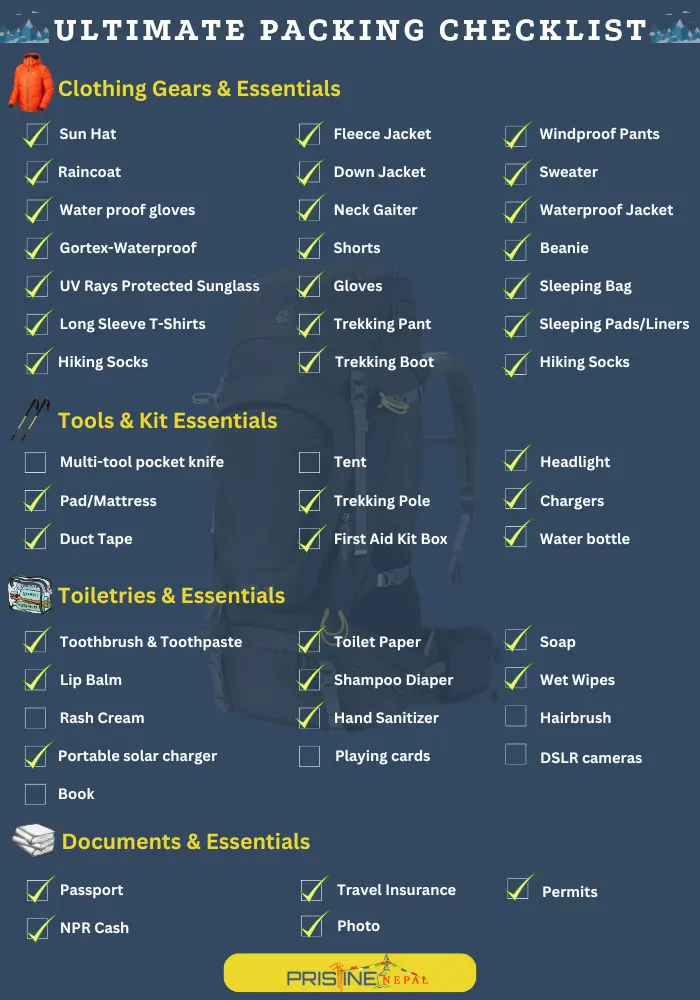
So, you are ready to pack your bag and trek to EBC? That’s exciting! I have covered all the essential packing checklist for the trek.
P.S we provide a free 75-litre Duffle bag for you to use on the EBC trek. We also have custom-made Company Sleeping Bag, especially for the trek that you can rent only at USD 15 for each.
Now, let’s dive into what you’ll need to pack:
Clothing gear for the trek:
You’ll want to layer up to handle the changing weather.
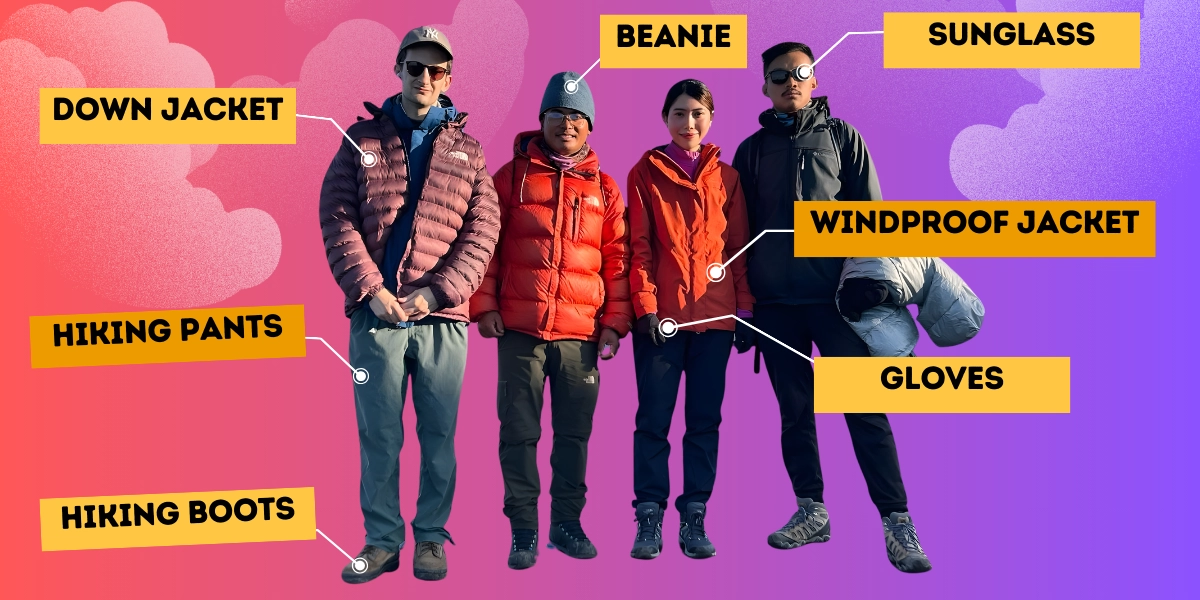
- Down Jacket (1): Best quality Down Jacket for the cold temperature. (can be rented in Nepal)
- Trekking Boots (1 pair): Go for high-ankle ones to keep your ankles supported on those rugged trails.
- Long Sleeve T-shirts (1 thin, 1 thick): A must for those sunny days when the UV rays are high.
- Gore-Tex Waterproof Jacket (1): Always ready for the rainy weather!
- Windproof Jacket (1): It’s a lifesaver, always recommended.
- Hiking Socks (2-3 pairs): Comfort is key, so bring extras!
- Beanie (1): Keeps your head warm, especially at higher altitudes.
- UV Protected Sunglasses (1): Most important!
- Nylon Windproof Pants (2 pairs): These will help you stay dry and comfy.
- Water Bottles (1): Hydration is crucial!
- Gloves (1 pair): To keep your hands warm, plus a pair of hard-shell outer gloves for the colder moments.
- Neck Gaiter (1): This little gem can keep your neck warm and shield your face from wind.
- Undergarments: Pack as needed, and don’t forget those comfy PJs for cozy nights!
- Sports Bra: Ladies, go for it.
Trekking Items:
Now, let’s get to the essential gear:
- Duffle Bag: No need to worry about this; we provide it at no extra charge. You’ll use it to pack your trekking supplies.
- Daypack (40L minimum): Perfect for carrying your essentials during the trek.
- Water Bottles or Camelbak: Stay hydrated on the go.
- Sleeping Bags (1): A warm, comfy sleeping bag is a must. We have a four-season sleeping bag available for rent at USD 15 for the trek.
- Trekking Poles (1 pair): These are super helpful for navigating those steep climbs and descents.
- Quick-Dry Trekking Towels (2): Because who wants to carry a wet towel?
- Headlamps: To see in the dark.
Toiletries Items:
Don’t forget your toiletries! Here’s a quick checklist:
- Toilet paper
- Soap/Sanitizer
- Shampoo
- Diaper rash cream (you never know!)
- Toothbrush & toothpaste
- Lip balm
- Wet wipes
- Hairbrush
- Sunscreen
- Moisturizer
- Mosquito repellent cream
Ladies, pack only essential items/cosmetics for the trek. Do not pack heavy.
Foods and Snacks
Keeping your energy up is essential, so pack some snacks like chocolate bars and protein-packed goodies for the trek. A thermos for hot water and rehydration powder are also great additions to your kit.
Important Documents
You can’t forget these:
- Passport: You’ll need it for entry gate registration.
- Visa: Don’t leave home without it!
- Travel Insurance: Always a smart move.
Additional Supplies
Lastly, some extra supplies can make your trek even better:
- Portable Solar Charger/Power Bank: Keeping your devices charged is a lifesaver.
- Playing Cards or Games: Perfect for downtime at the tea houses.
- DSLR Camera: You’ll want to capture all those breathtaking views.
- Book: For those quiet moments under the stars.
Optional Gear:
Some gears that you may find useful.
- Whistle
- Pillowcase
- Med Kit (Our company Guide will also hold one kit)
- Gaiters
- Micro spikes
- Sleeping Bag Liner
- Hand/Feet Warmer
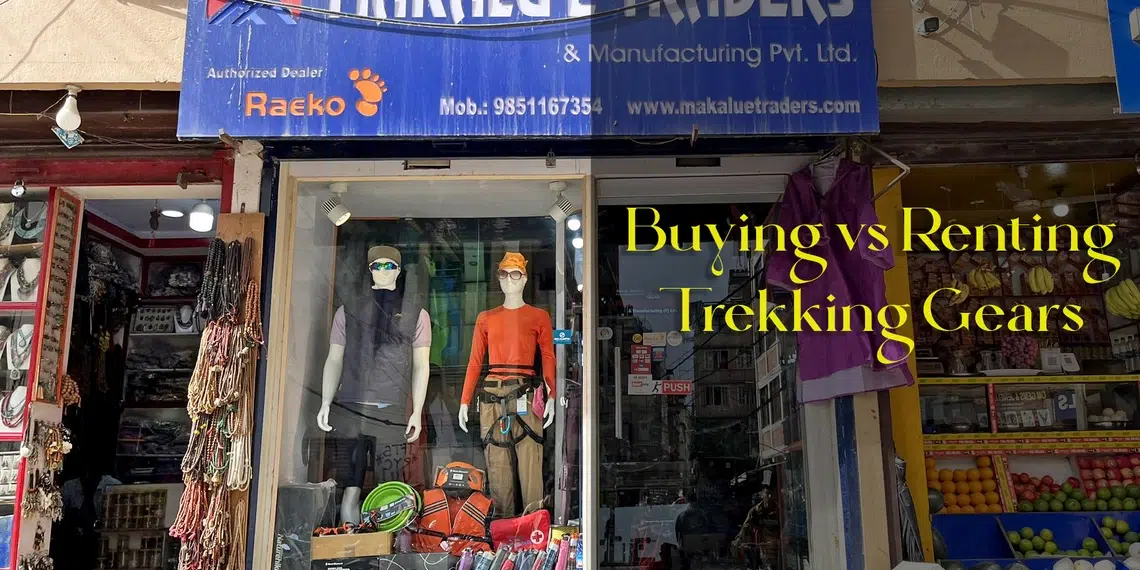
Remember, you can buy or rent any gear you might need in Thamel, Kathmandu, which is super convenient! If you’ve got any questions or need advice on what to bring, check out our detailed blog on buying and renting gear in Thamel.
And just a quick heads-up:
- When you’re packing, keep in mind that Lukla’s flight luggage limit is 15 kg max- 10 kg in your duffel bag and 5 kg in your carry-on. Extra weight will cost USD 1-2 per kg.
- We assign one porter for every two trekkers. The duffle bag will be carried by the porter.
- You will be carrying your daypack bag which will contain the daily necessities for the trek.
How to Pack Smart
- Use packing cubes: Organize your gear into categories (clothing, electronics, toiletries) using packing cubes. This makes it easy to find what you need quickly.
- Roll, don’t fold: Rolling your clothes saves space and reduces wrinkles.
- Wear your bulkiest items: Travel in your hiking boots and wear your heaviest jacket to save space in your bag.
- Multi-use items: Choose items that serve multiple purposes. For example, a buff can be used as a neck warmer, headband, or face mask.
- Layer up: Pack clothes that can be layered for warmth rather than bringing lots of thick items.
- Limit cotton: Choose quick-dry, moisture-wicking fabrics over cotton, which takes longer to dry and retains odors.
- Pack for the worst weather: Be prepared for cold and wet conditions, even if the forecast looks good.
- Consider rentals: Some gear (like sleeping bags & Down jacket) can be rented in Kathmandu, saving you packing space.
- Leave room: Don’t pack your bag to the brim. Leave some space for souvenirs or gear you might need to add along the way.
- Test your pack: Before you leave, take a short hike with your fully packed bag to ensure it’s comfortable and not too heavy.
Remember, less is more when trekking. Every gram counts when you’re carrying your gear at high altitude!
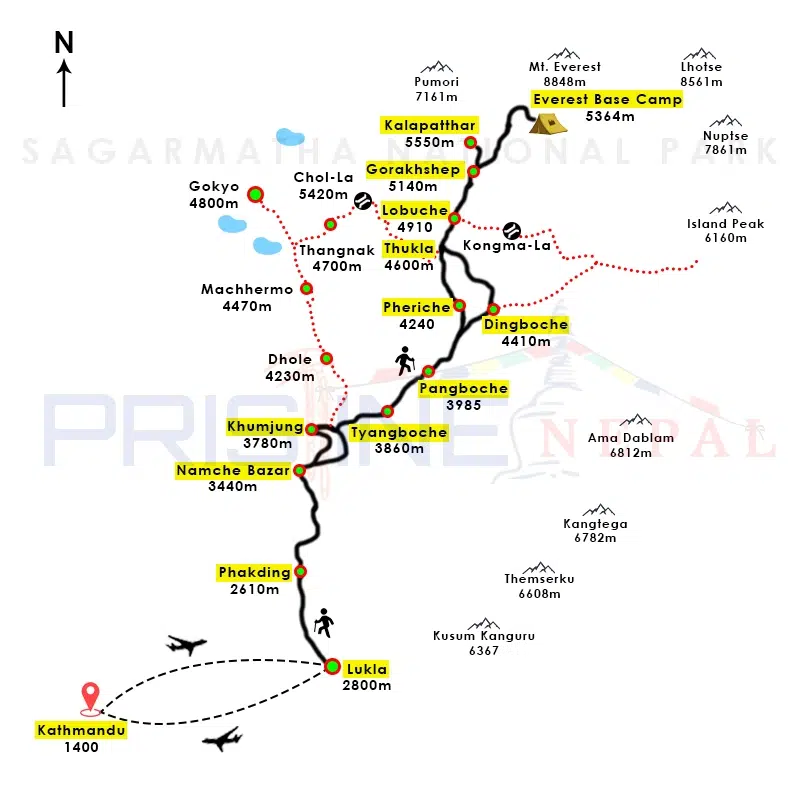
EBC Trekking Route Map

Things to Know More
What do you want to know?
- Preparation & Fitness for EBC:
- Best Time for EBC:
- Food and Accommodation
- Transportation in EBC Package
- Trekking Permits Provided
- Travel/Trekking Insurance
- How to get your Nepali Visa
- While you are in Kathmandu
- Typical Day in Trek
- Everest Base Camp Trek Cost
Preparation & Fitness for EBC
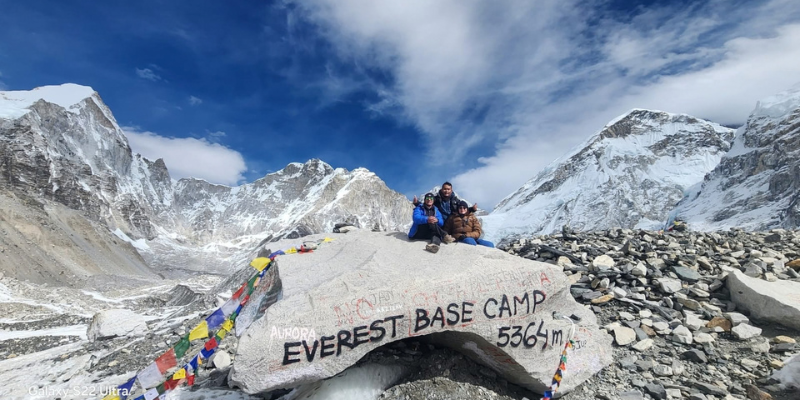
Fantastic! So, you are prepared to do some training that will increase your endurance, strength, and mentality for the Everest Base Camp Trek. Trust me, this won’t be easy, but it’s far from impossible – with enough time, you will be ready.
First, the reason that makes the trek difficult is high altitude, cold temperature, unpredictable weather, rugged terrain, distance, and accommodation.
If we tackle this difficulty then we are ready for the trek. Hence, starting with the first difficulty of EBC which is:
Tackling the High Altitude of EBC by Endurance Training:
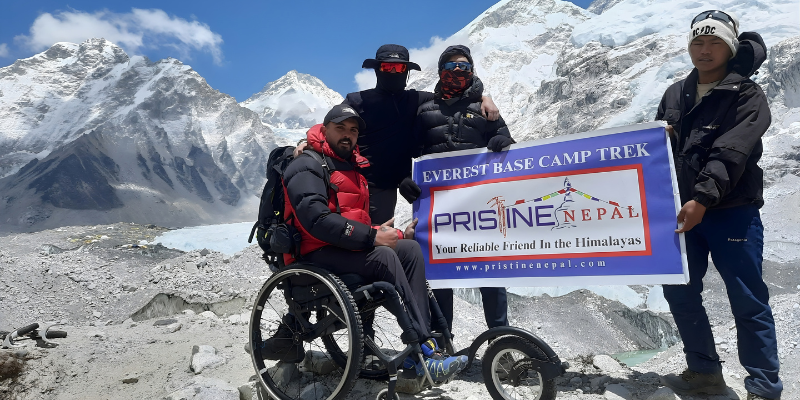
When I first went to Everest Base Camp Trek, I realized the trek wasn’t about speed- it’s about stamina. That’s where endurance training comes in.
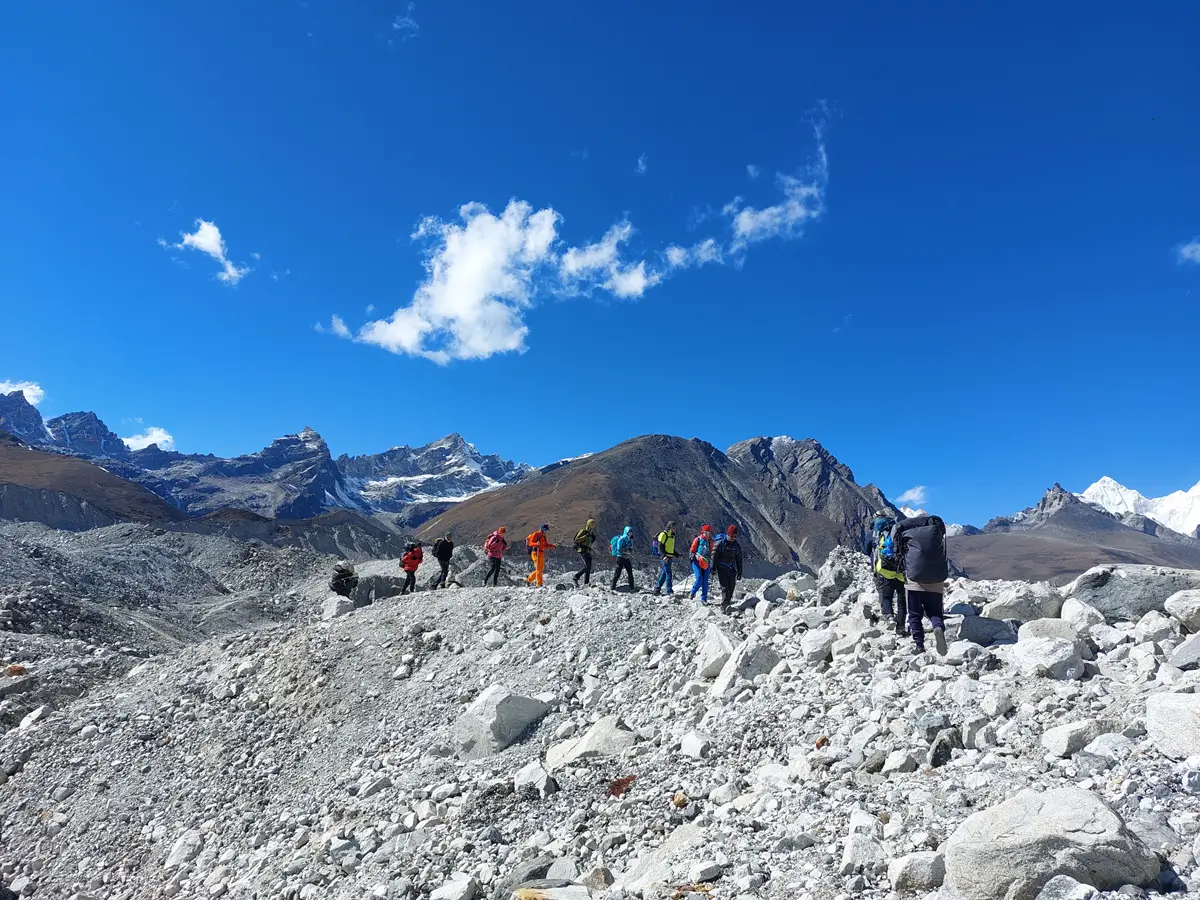
Why stamina? Because 5 to 6 hours of walking is not an easy task while gaining altitude. It is best to take time, walk slowly, and have patience.
To increase the endurance, start small, adding longer walks first & then increase the distance & altitude. Slowly, throw some trail running, and day hikes on weekends and get to know your gear and equipment.
The earlier you start your endurance training, the better you will be at maintaining your stamina for longer walks.
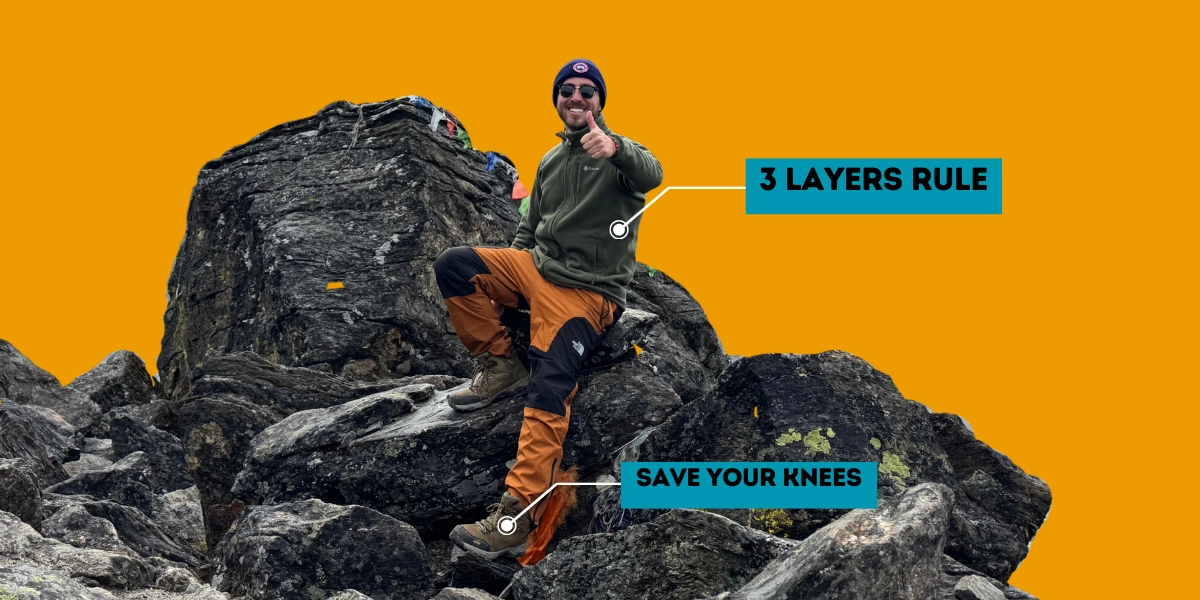
The pro tips?
Choose the tough uphills and carry your backpack with a weight limit of 5 kg minimum.
Strength Training for Rugged Terrain:
Ascending and descending those hills means serious leg pressure; you’re going to need some serious strength. I’m talking about strength workouts that focus on your legs and core. Get the power in your legs!
At first, start doing some squats and lunges with the endurance training. If you start to feel easy, grab a weight to mimic what you’ll be carrying on the trek.
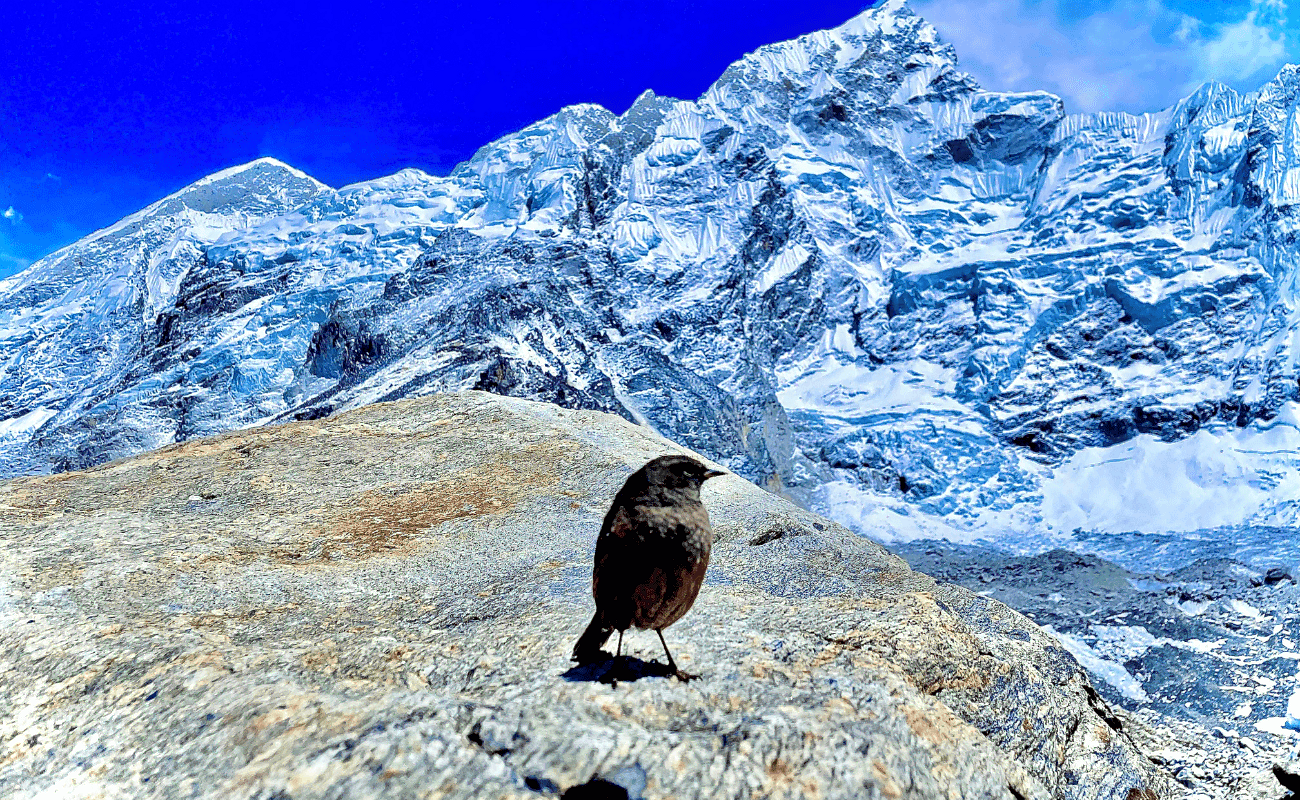
Hike, Hike Hike.
Hiking is the best way to increase your leg and core strength too.
Just don’t forget to warm up and do not overdo it. Slowly increase the difficulty level and you will be set for the rugged terrains.
Pro Tip: Try to use trekking poles while endurance training & strength training.
Hit the Gym and Get Moving:
Now, don’t think you will need to spend hours at the gym. It is only a few solid sessions to sharpen your body’s strength, stamina, and mentality.
Are you familiar with stair climbers? It’s a brilliant exercise to mimic the movement you’ll be doing on the trek. You can use your house stairs too.
Similarly, throw some strength endurance training which any trainer will know how to structure. If you want to do it yourself then start with a simple workout with aerobic exercise.
Besides gym equipment, throw some cycling and swimming activities in your training program.
Now, you have endurance training, strength training, and some gym activities going.
Boost your immunity against cold temperatures:
Sounds weird right? However, the best way to tackle the cold temperature of Everest Base Camp Trek is not only by wearing thick layers of clothes. It also boosts your immunity by starting to adopt a holistic approach that incorporates lifestyle changes, dietary adjustments, and proper self-care practices.
Starting with managing your stress which is a Lifestyle Change:
Manage stress:
You know what! Chronic stress can weaken your immune system. To tackle the stress, do some yoga, meditation, or engage in hobbies.
Prioritize Sleep:
Quality sleep includes 7-9 hours of sleep each night, even during the trek. Sleep is crucial for immune function as it allows your body to produce cytokines, that help fight infections.
Staying Hydrated:
Hydration supports the function of immune cells and helps flush out toxins. Drink plenty of water and consider herbal teas for added benefits, mostly at trekking.
Finally, wear warm clothes during trekking. Cover your mouth, ears and nose to prevent inhaling cold dry air.
Focus on a balanced diet that includes fruits, vegetables, whole grains, lean proteins, and healthy fats. Prioritize Vitamin A, Vitamin C, Vitamin D and Zinc which are the key nutrients for immunity.
Now, preparation is complete for your trek, but what about the weather in the trek?
Best Seasons that Trekkers Choose for EBC:
If you ask seasoned trekkers, Autumn is probably at the top of their list. But Autumn is not only the season that is the “best time to do EBC”.
The truth is, it depends on what kind of experience you are after. There’s no one-size-fits-all, but let me walk you through the seasons and share a few tips that might help you make your decision.
Autumn: The Classic Trekking Season:
September to November is autumn, the skies are clear, the days are dry, and the temperatures are just right – not too hot, not too cold. Honestly, the views are unbeatable during this time.
So, if the Autumn season is that good, what’s the downside?
The downside? It’s crowded. Autumn is the go-to season for most trekkers, so you won’t be alone on the route. But if you don’t mind a bit of company, it’s worth it.
Plus, the biggest festivals, Dashain and Tihar, also fall in the Autumn season which can add a special cultural touch to your trip.
Spring: Blooms, Sunshine, and Clear Views:
If you prefer warmer weather, Spring (from March to May) is another go-to season among trekkers. The days are longer, giving you more time to explore, rest, and enjoy.
Surprisingly, the trail is lined with blooming Rhododendron forests which is the national flower of Nepal. Trust me, it’s like the path is welcoming you.
During springtime, every morning will have a clear crystal view, and you will see mountains stretching out for miles.
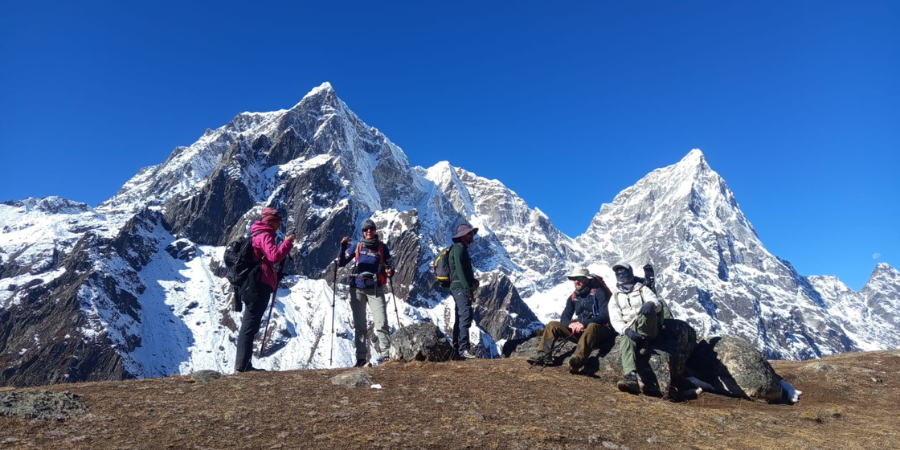
For all nature lovers, trekking EBC during Spring is a dream come true. But there’s a catch: nights can still be chilly and rainfall is unpredictable, so pack accordingly. And yes, the route will be busy, so if you don’t mind the little crowd, it’s the best season.
Monsoon Season: Only for a few Adventurous Trekkers:
Now, if you’re not for the crowd, and don’t mind a little challenge, the Monsoon season (from June to August) might be just for you.
The route gets quieter for sure, but you’ll need to be ready for heavy rainfall in lower regions & some fog in higher regions.
However, the perk during Monsoon season is the jaw-dropping dramatic views on a clear day. A lot of trekkers have captured some amazing photos during this season. Similarly, you have to be flexible with your dates in this season.
Be ready for unpredictable weather and flight delays or cancellations. But if you’re up for the challenge, the reward is a peaceful, serene trek without the usual crowds.
Winter: Snow, Peaceful, and Stunning
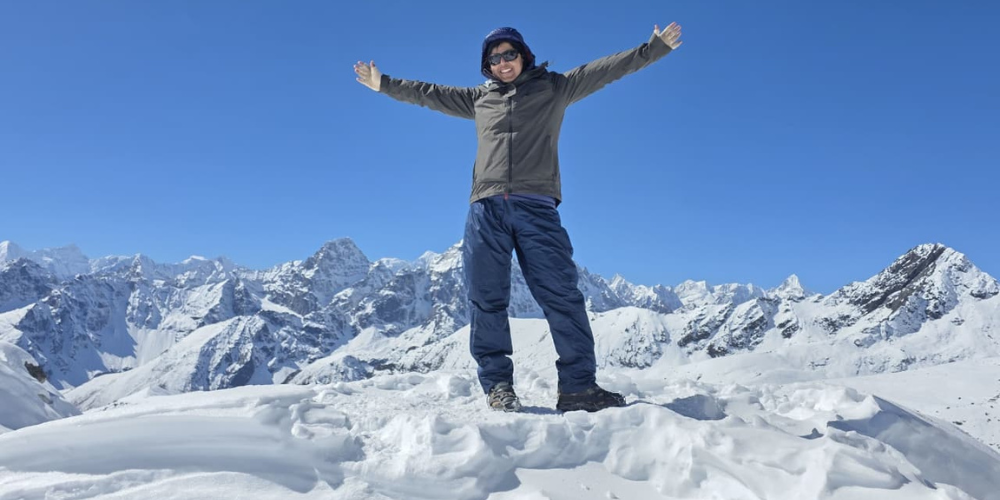
For those who don’t mind the cold, Winter (from December to February) offers a totally different experience. Sure, it’s cold – especially at night – but the trails are empty, and the views? Absolutely stunning. You’ll get the place almost to yourself, and if you’re lucky, you might even spot some rare wildlife.
A friend of mine did the EBC trek in Winter, and while she had to bundle up at night, she said it was one of the most peaceful experiences she’s ever had. But be prepared for fast-blowing winds and shorter days. Also, flight delays to Lukla are common due to fog, so you might need a bit of flexibility with your dates.
Which season is right for you to do EBC trek?
In the end, it’s all about what kind of experience you want. Love clear skies and don’t mind some company? Go in Autumn or Spring. Prefer a quieter, more adventurous trek? Consider the Monsoon or Winter months. And if you’re still unsure, have a look at our detailed Best time for EBC trek.
Food and Accommodation on the Trek:
So, you are concerned about food and accommodation! That’s good to know because that’s what I do before planning.
The good news is the accommodation in the Everest region ranges from teahouses to luxurious hotels, catering to different budgets and preferences.
The bad news is that the higher you go, the simpler things get and the accommodation is limited.
So, where will you stay?
From our EBC package, a total of 13 Nights is arranged on a twin-sharing basis, which includes:
- Kathmandu: Two nights at a star-category hotel (before and after the trek), such as Hotel Thamel Park or Hotel Jampa, with breakfast included.
- During the Trek: Five nights in private attached rooms at Namche Bazaar (3 nights), Lukla, and Phakding (1 night each), where you’ll have access to hot showers. The remaining six nights will be spent in more basic rooms at places like Tengboche, Dingboche, Lobuche, Gorakshep, and Pheriche.
While these spots might not offer luxury, they have the essentials, which are enough for every trekker. You’ll find charging points, hot showers, and even internet services, but be ready to pay extra for these comforts.
Tea House, Tea House, Tea House:
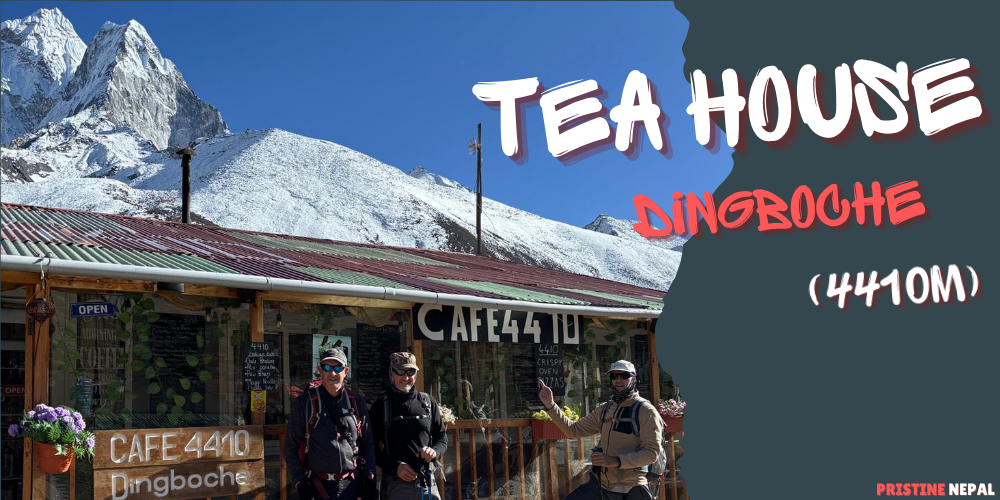
After Namche Bazar, the amenities get simpler. The higher you go, the more limited the options become. Most of the tea houses only have basic rooms with solar-powered electricity, and during peak season, it is tough to find room.
How do we manage rooms?
When you book with us, we book the room ahead of time which makes it easy for everyone.
What’s on the Menu?
Three meals a day are provided during the trek, including breakfast, lunch, and dinner. The food choices can be Continental, Nepali, Indian, Italian, & Chinese cuisines.
Expect to see Dal Bhat (a staple dish of rice, lentil soup, and vegetable curry) during the trek which is enough to fuel you up. Our guides and porters usually enjoy these meals during the trek.
But here’s something important to keep in mind – once you pass Namche Bazaar, meat dishes are a no-go. Actually, we recommend no meat in the whole trek. Since there are no refrigerators at higher altitudes, meats are carried for days without proper refrigeration.
For safety, it’s better to stick with vegetarian options. Vegan and vegetarian meals are widely available, so no worries if that’s your preference.
Breakfast, Lunch, and Dinner Tips:
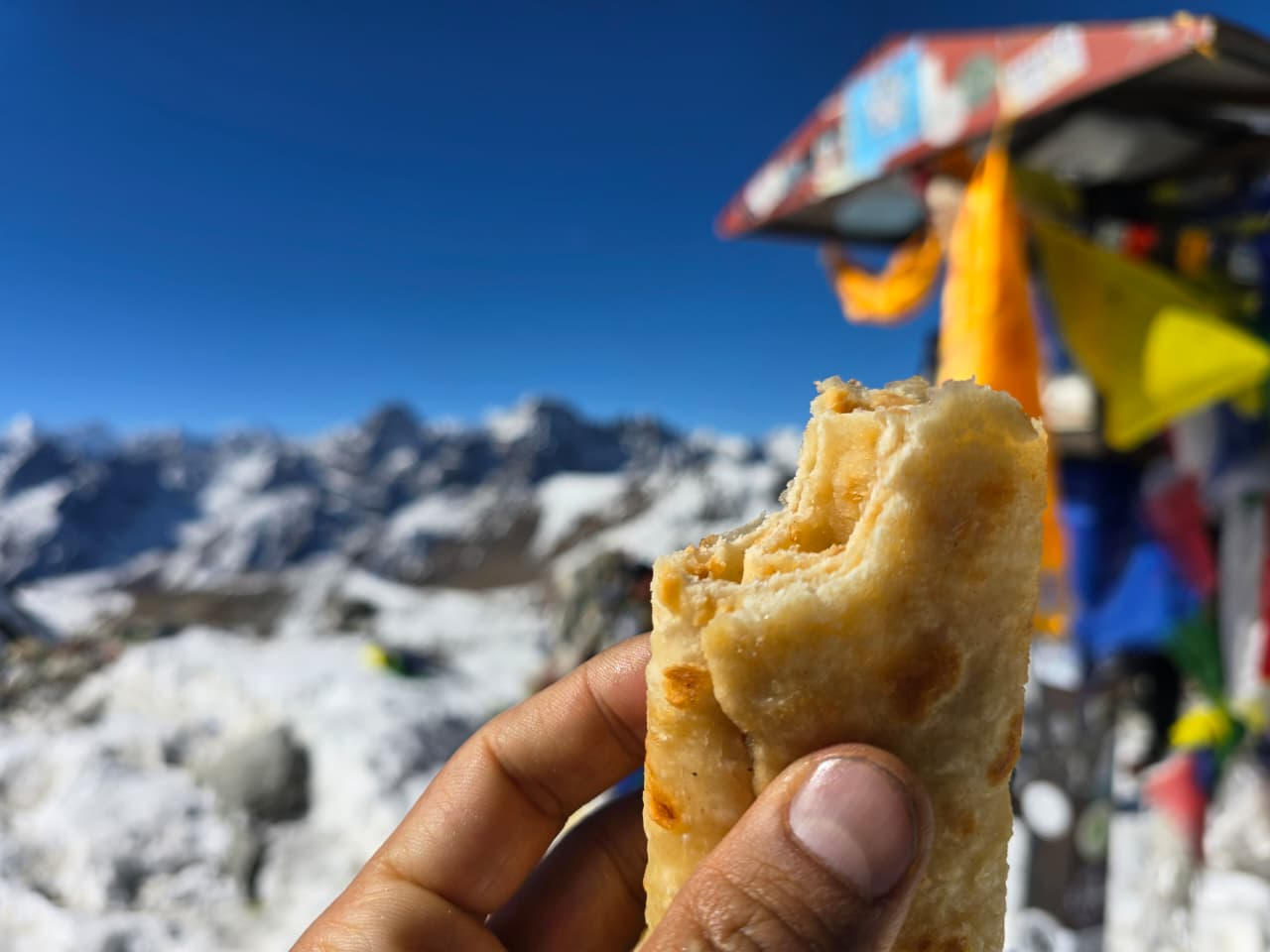
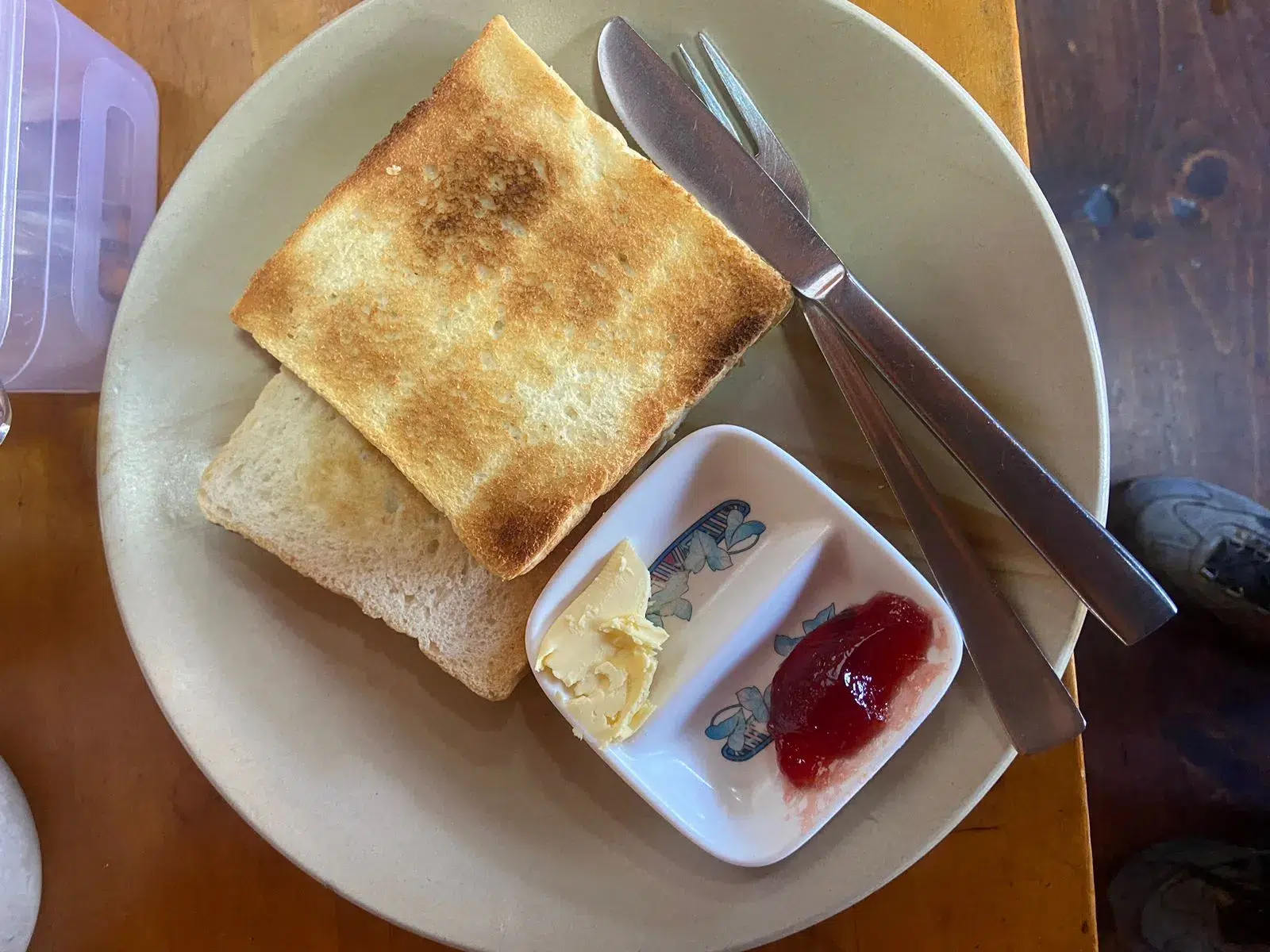
Breakfast at the teahouses usually includes simple but hearty dishes like eggs, porridge, toast, or Tibetan-style bread. For drinks, you can choose from tea, ginger tea, coffee, and even hot chocolate. Breakfast -lunch and dinner will often be similar, with choices ranging from fried rice to spaghetti or Nepali-style dal bhat.
Because you’ll be burning a lot of energy on the trail, I always recommend loading up on carbohydrates during lunch. There aren’t many snack options along the way, so fuel up before those long stretches.
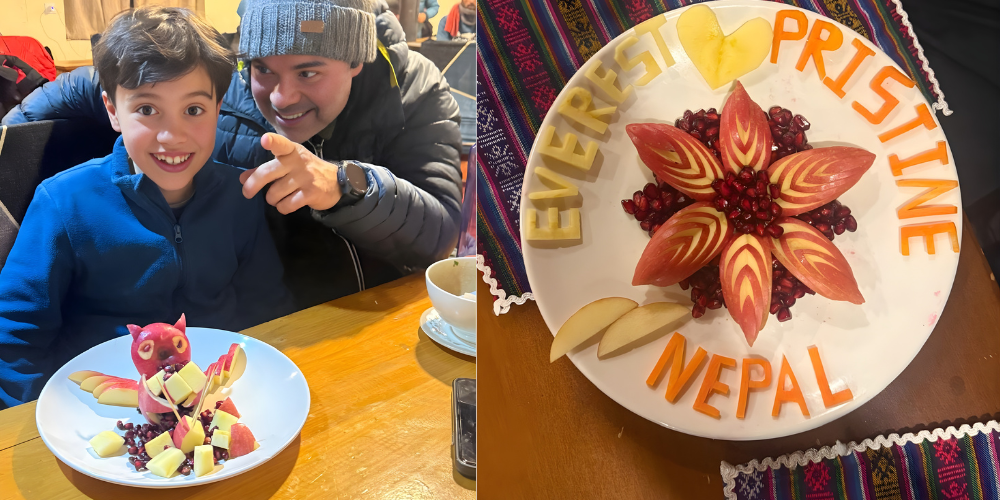
During Dinner, you can take it easy. After dinner, we serve seasonal fruits and give a short briefing as well as take your order for the next morning’s breakfast.
Prices Go Up as You Go Up
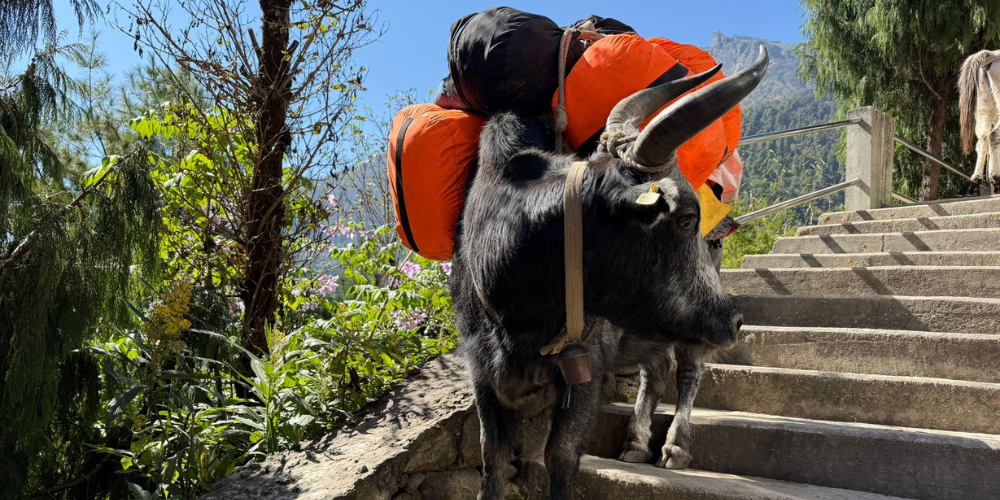
One thing to remember is that the higher you trek, the higher the prices. Since all supplies are transported by helicopters, yaks, or porters, the cost of food and essentials like water rises. It’s the price of trekking in one of the most remote and beautiful places on earth.
Safety & Special Requests
If you’ve got food allergies, don’t worry. Just let your guide know, and the chefs will take care of your meal preparation accordingly. We take food safety seriously, especially at high altitudes where staying healthy is a top priority.
Transportation & Lukla Flights:
Normally, we use private cars for airport pick-ups and drops. It is only 7 km from Tribhuvan International Airport to Thamel. We have two different airports for Lukla’s flights one in Kathmandu and the other at Ramechhap.
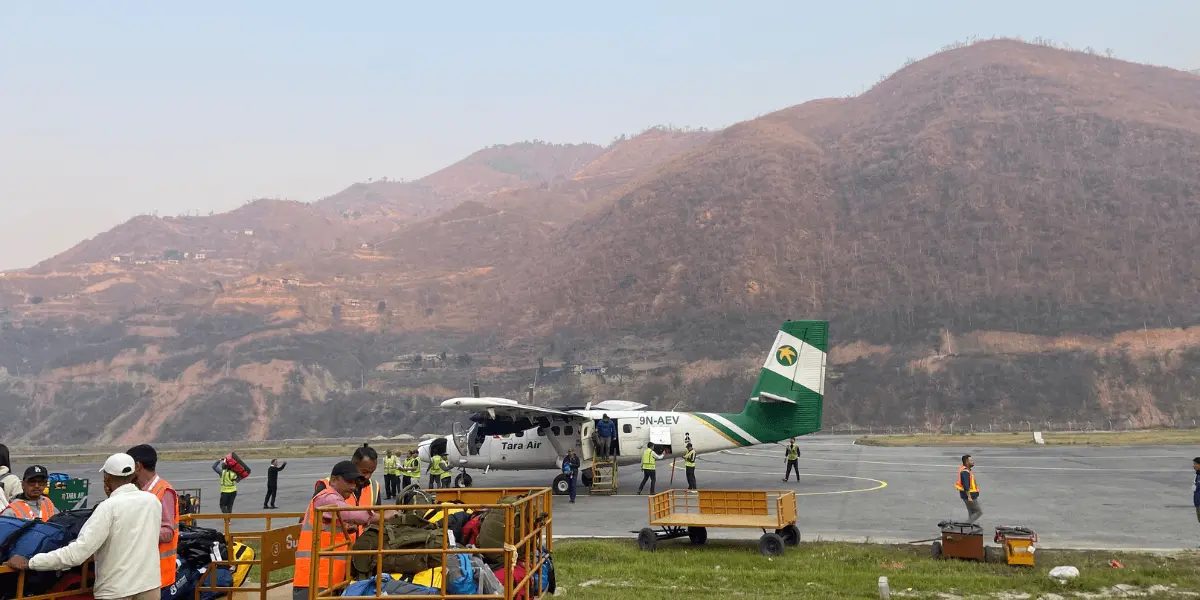
All Lukla flights operate from Manthali Airport, Ramechhap from mid-March-May and mid-September to November, and Kathmandu Airport from June to September and December to March.
Ramechhap is 132km from Kathmandu. So private vehicles on the ground and domestic airlines for Lukla are used.
Heli as Alternative Transportation:
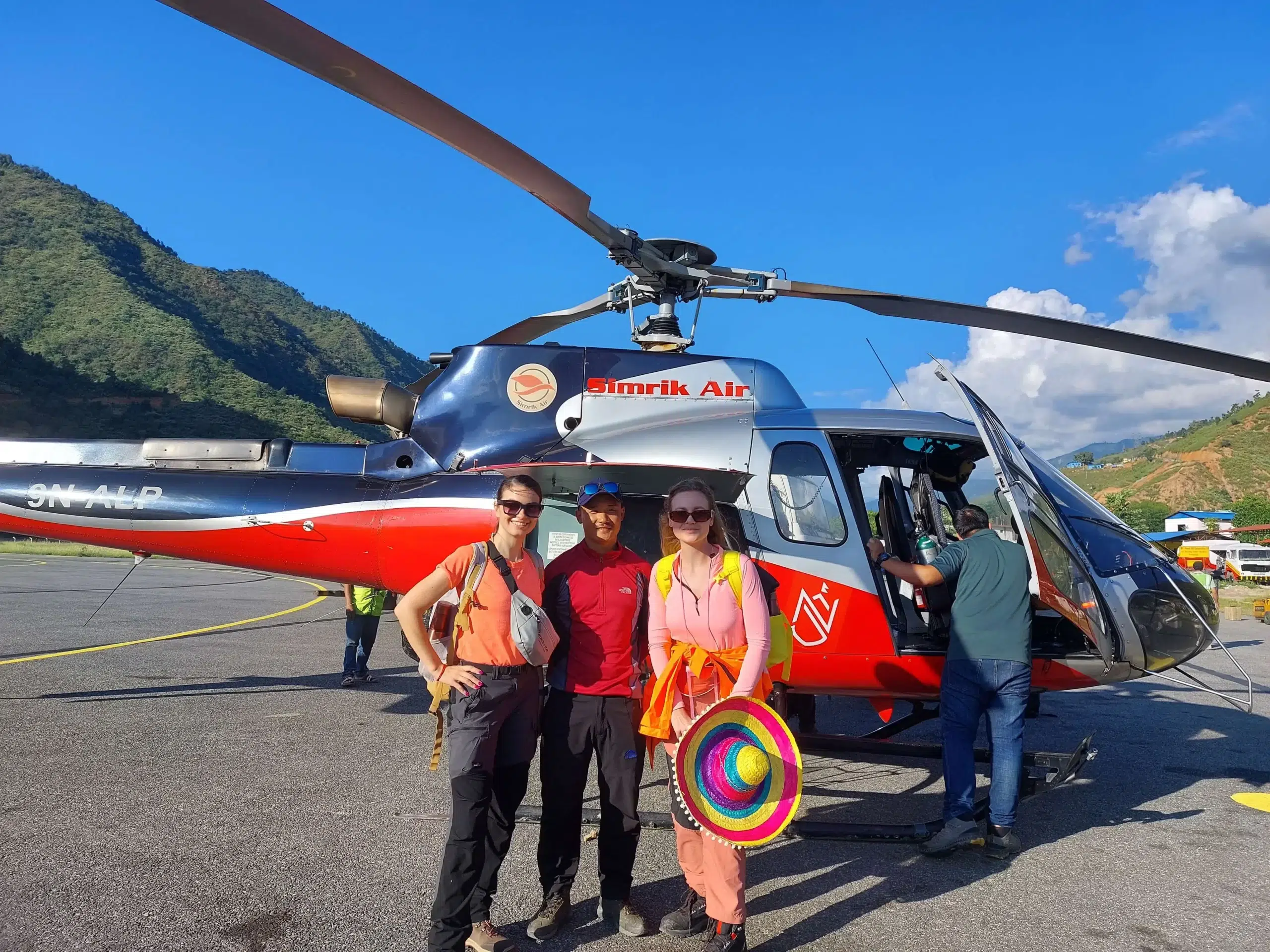
Sometimes, they cannot fly in or out of Lukla due to the bad weather. So, the helicopter can be the only option during bad weather. But it is very expensive. It costs $350 to $600 for sharing a helicopter for one way. Additionally, sharing a helicopter is not possible always.
What is the luggage weight limit?
At the airport, your luggage will be weighed before boarding the plane. The weight limit is up to 10kg luggage and 5kg hand-carry. Exceeding more than this weight will incur additional fees, which you are responsible for paying.
Porters & Responsible Trekking:
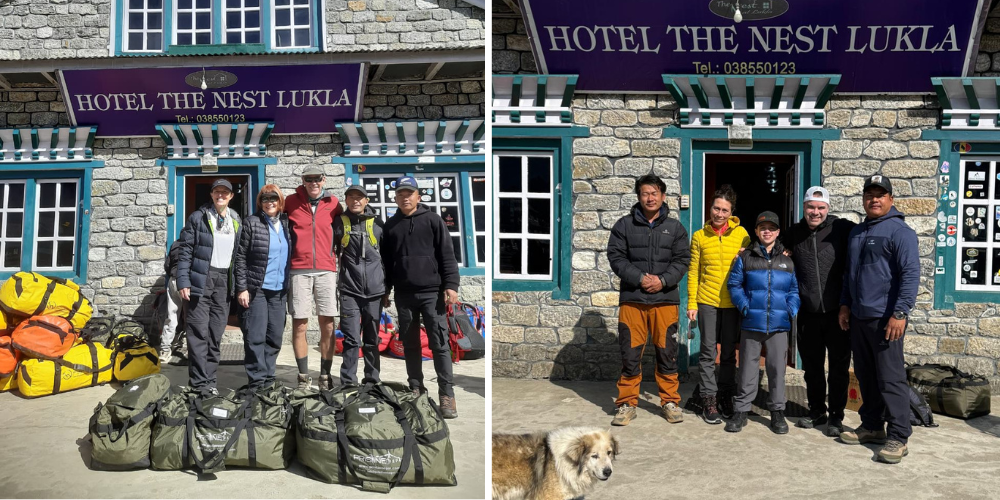
Pristine Nepal Treks strongly believes and values in responsible tourism. Hence, we hire all our porters from the Lukla region. Most porters are from mountain regions. They are strong, honest, and experienced in this trek. We prioritize porters who didn’t have the chance to go to school and who need steady work.
Trekking Permits Provided by Pristine Nepal:
To set off on this trek, there’s a list of permits you’ll need. But wait! You don’t have to manage these permits as we will be managing the permits.
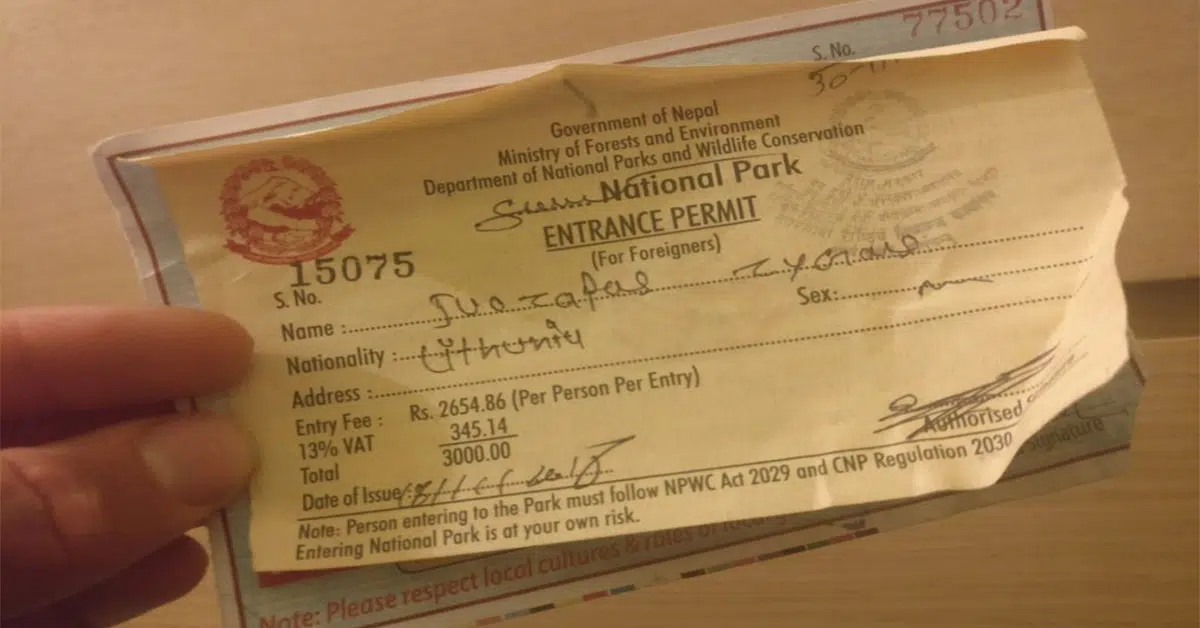
This permit section is just to remind you how the EBC trek works and the rules that you need to follow when entering the Everest zone.
Mandatory Permits for EBC Trek:
- Sagarmatha National Park Permit
- Local Rural Municipality Entrance Permit
The first permit lets you enter the Sagarmatha National Park area and the second one is to support the local communities.
How to Manually Get EBC Permits?
If you are thinking about how your guide is getting your permit, then it is from Lukla. Just a simple form, and passport details, and within a minute, you will have your permits in your hand.
However, if you prefer to have everything sorted in advance, the Sagarmatha National Park permit can be received in Kathmandu. Just swing by the Department of National Parks and Wildlife Conservation office according to Nepal Tourism Board.
The Cost of Permits?
- Sagarmatha National Park Permit: Approximately USD 22
- Rural Municipality Entrance Permit: Approximately USD 22
These prices were recently updated, so you’re looking at around $40-$45 total for both permits.
Travel/Trekking Insurance:
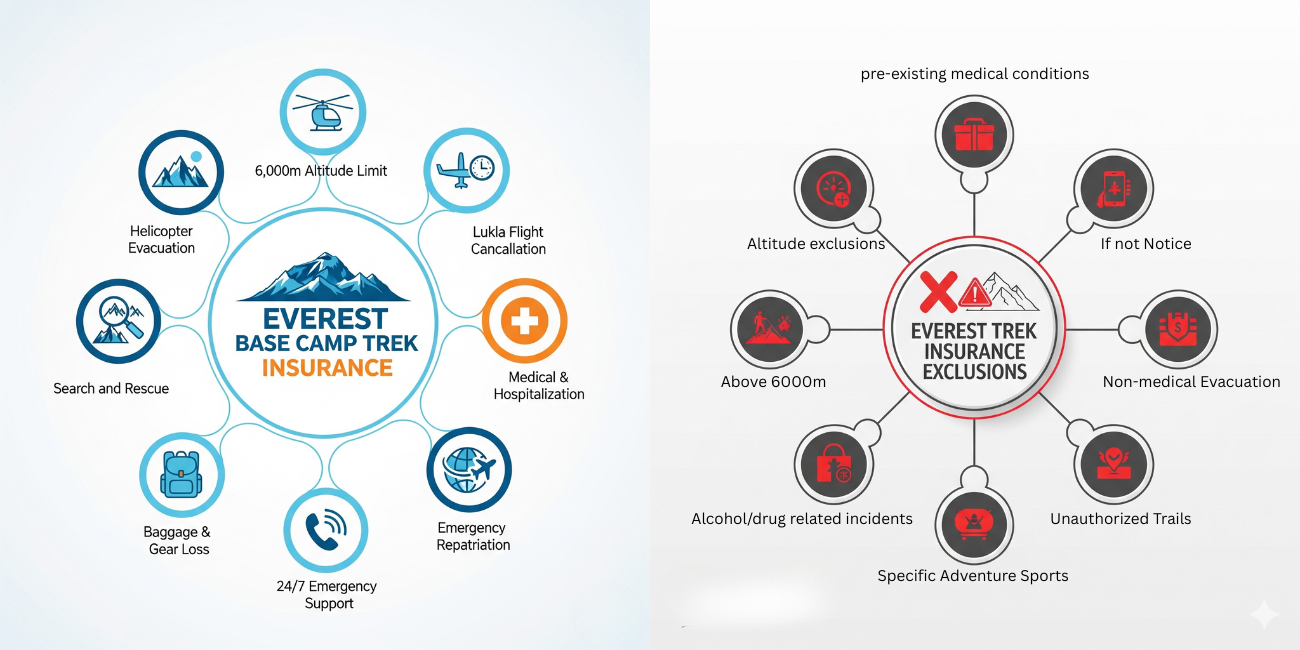
For the Everest Base Camp trek, having travel insurance is essential. We strongly recommend obtaining insurance coverage before arriving in Nepal. Your insurance should cover altitudes of up to at least 6,000 meters (19,685 feet), which includes the Everest Base Camp trek.
This coverage should address potential health issues at high elevations, emergency helicopter evacuation, medical expenses, lost or stolen luggage, and trip cancellations related to altitude concerns.
How to Get Your Nepali Visa:
Getting a visa on arrival in Nepal is pretty straightforward, but it’s always good to know the process before you land. Whether you’re arriving at Tribhuvan International Airport or crossing via a land border, you can easily obtain a tourist visa upon arrival. I’ll walk you through it, step by step, so you know what to expect.
The Basics of the On-Arrival Visa:
When you arrive, you’ll need to head over to the Department of Immigration at the airport. Depending on the season, you might encounter queues, especially during peak tourist periods.
If you’re in a hurry, you could skip the lines by getting your visa from a Nepalese Diplomatic Mission in your home country before you arrive. But if you’re like me and prefer sorting things out on the spot, here’s how it works.
Step-by-Step Guide to Getting Your On-Arrival Visa:
Step 1: Fill in Your Arrival Card and Visa Form:
Once you get to the airport, you’ll need to fill out an Arrival Card. You can also complete the Tourist Visa form online in advance through the official Department of Immigration website.
If you prefer, you can do this at the airport using the Kiosk machines. Either way, make sure to print your submission receipt with the barcode on it – this is only valid for 15 days.
Step 2: Pay for Your Visa (Price can Change):
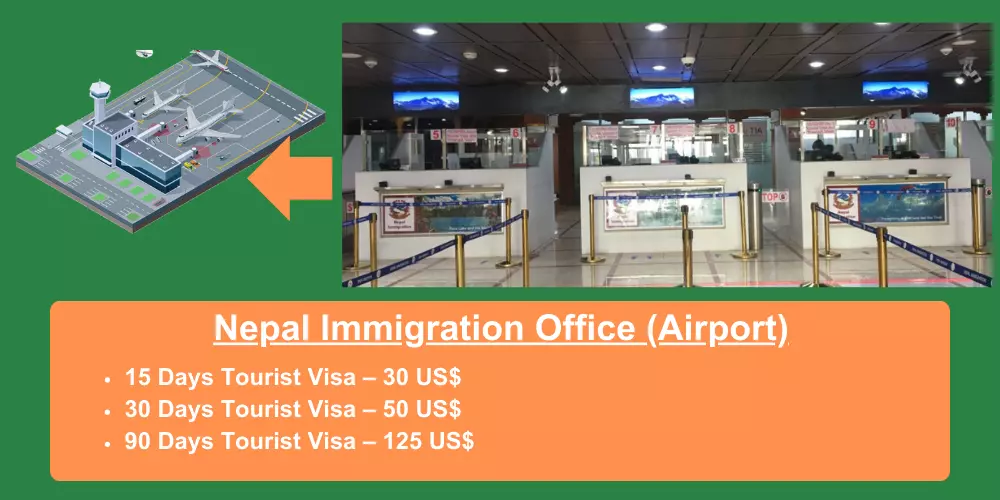
Next, you’ll need to make the visa payment at the airport bank. The cost depends on how long you plan to stay:
- 15 days: $30 USD
- 30 days: $50 USD
- 90 days: $125 USD
Once you’ve paid, they’ll give you a payment receipt, which you’ll need to keep for the next step.
Step 3: Immigration Desk:
Now that you’ve got your form and payment receipt, head over to the Immigration Desk. Hand over your documents – the filled-out Arrival Card, your visa form, the payment receipt, and your passport. The immigration officer will process everything and, if all is in order, you’ll receive your visa.
A Few Quick Tips
- If you’re traveling during the busy trekking seasons, like spring or autumn, expect longer queues. It’s always good to allow extra time just in case.
- Make sure to have some cash in USD (or an accepted currency) to cover the visa fee.
- If you’ve completed the online form in advance, it’ll save you a bit of time at the airport, but either way, the process is pretty smooth.
And that’s it! You’ll have your visa, and you’ll be all set to explore the stunning landscapes of Nepal. Enjoy your adventure!
While you are in Kathmandu
Landing in Kathmandu is where the real adventure starts, and we’ve got everything lined up to make your arrival as smooth as possible. Let me walk you through what happens once you step off the plane.
Airport Pickup: Warm Welcomes All-Around:
As soon as you land, one of our team members will be there to greet you at the airport. You’ll spot them easily – they’ll either be holding a company nameplate or a board with your name on it. You’ll be welcomed with a traditional garland as a nice little touch to kick off your trip. From there, you’ll be driven in a private vehicle straight to your hotel, with no hassle.
Accommodation in Kathmandu: Your Home Away from Home
You’ll spend two nights at a star-category hotel in Kathmandu – one night when you arrive and the other after you return from Lukla. We usually book places like Hotel Thamel Park, Hotel Jampa, or similar options, so you’ll be comfortable.
Your stay includes bed and breakfast (so you’ll need to sort your own lunch and dinner). It’s based on twin sharing, but if you’d prefer a different hotel, you’re welcome to book your own. Just keep in mind that any extra nights beyond what’s included in the package will be on you.
Briefing and Meeting Your Guide: Time to Get Prepped
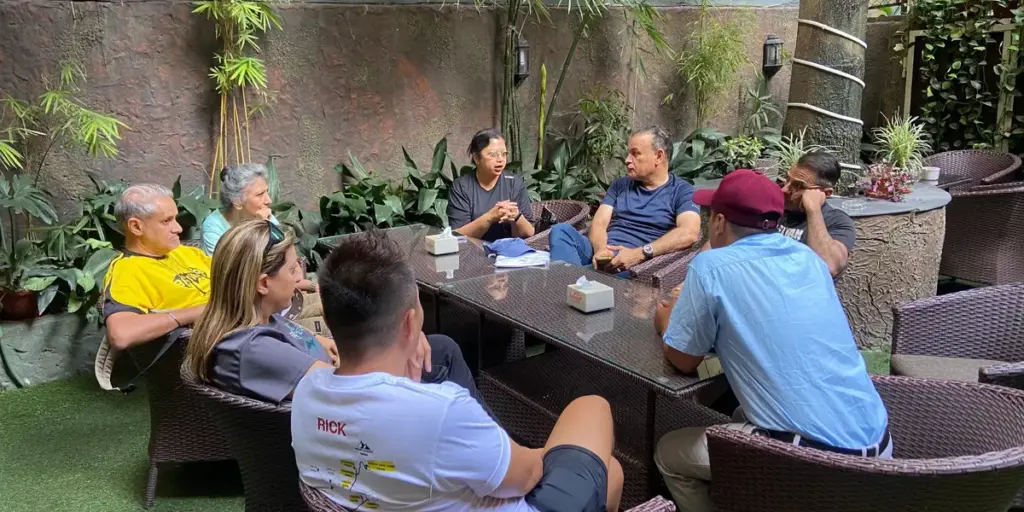
Once you’ve settled in, you’ll meet Mr. Chin Thapa, our company owner. He’ll sit down with you at the hotel and give you a full trek briefing – all the need-to-know info about your adventure ahead. You’ll also get to meet your trekking guide, who’ll be with you for the whole journey. It’s a good chance to ask any last-minute questions or sort out any concerns you might have.
During this meeting, you’ll also need to settle the remaining balance for your trek. We encourage you to pay in cash to avoid the 3.5% extra charge for online payments. But if you prefer, you can pay by credit card, just with that added fee.
Trek Preparations: Making Sure You’re Ready to Roll
After the briefing, we’ll go through your packing list to make sure you’ve got everything you need. If there’s anything missing, we’ll pop over to the nearest trekking shop to pick up the essentials. We can also help with renting a down jacket for the trip, which costs around USD 15 for the whole trek.
Extra Expenses for the EBC Trek: What to Budget For
We’ll also swing by a money exchange counter so you can get some local currency. We suggest exchanging around USD 300-500 for things like laundry, Wi-Fi, charging, snacks, and drinks along the way. These little extras can add up, so it’s good to be prepared.
Before you head to bed, Mr. Chin will give you all the details about your Lukla flight schedule for the next morning so you know exactly what’s happening.
Storing Luggage in Kathmandu: Keep It Safe
If you’ve got luggage or stuff you don’t need for the trek, you can leave it safely at your Kathmandu hotel. They’ll store it for free while you’re trekking, and you can grab it when you return – nice and easy, with no extra charge.
That’s the lowdown on your time in Kathmandu! It’s all part of making sure your your journey to Everest Base Camp gets off.
Typical Day on the Trek
Morning: Start with breakfast around 6:30-7:00 AM, pre-ordered the night before. Pack your duffel bag before breakfast for the porter to pick up. You only need to carry your daypack with essential items.
Trekking: After breakfast, begin your trek, enjoying the breathtaking scenery and exploring local villages along the way.
Lunch: Stop for lunch at a designated spot to refuel before continuing the trek to your overnight stop.
Arrival: Upon reaching the teahouse, enjoy hot tea and relax. Your guide will take orders for dinner.
Evening: Dinner is served around 6-7 PM, followed by fresh fruits. Your guide will brief you on the plan for the next day and take breakfast orders. Engage in conversations with fellow trekkers or your guide, play cards, or enjoy personal time before going to bed.
Why Book Your Everest Base Camp Trek with Pristine Nepal
Plenty of agencies in Kathmandu can get you to base camp. What’s worth comparing is what happens around the trek – before you arrive, on the hard days, and when a flight or the weather doesn’t cooperate.
- A real briefing before you fly. Our owner, Chin Thapa, sits down with you at your hotel and walks through the whole route – pace, altitude, what each day involves. Most clients tell us this is where the trip stops feeling abstract.
- Safety that’s routine, not marketing. Your guide carries a pulse oximeter and checks your oxygen each evening from Namche onward. We build full acclimatization days into Namche and Dingboche and don’t shorten them, no matter how strong you feel early.
- 314 five-star reviews and a TripAdvisor Travelers’ Choice award. We’re a local, government-registered agency based in Thamel – the people answering your questions before the trek are the same ones running it.
- Reachable day or night. Message us anytime; during Nepal hours you’ll usually hear back within minutes.
- Fair work for our porters. We hire from the Lukla region and prioritize porters who need steady work, with a strict 20kg weight limit.
- No hidden charges. The price you’re quoted is the price – guide, porter, permits, Lukla flights, and accommodation all included, with exclusions listed plainly above.
We’re not the biggest operator on Everest. We’re a small local team that runs every trip personally – and after a few hundred trekkers, that’s still how we like it.
Join Pristine Nepal Treks and embark on an unforgettable adventure at Everest Base Camp Trek!
Everest Base Camp Trek Cost 2026 : Complete Price Breakdown
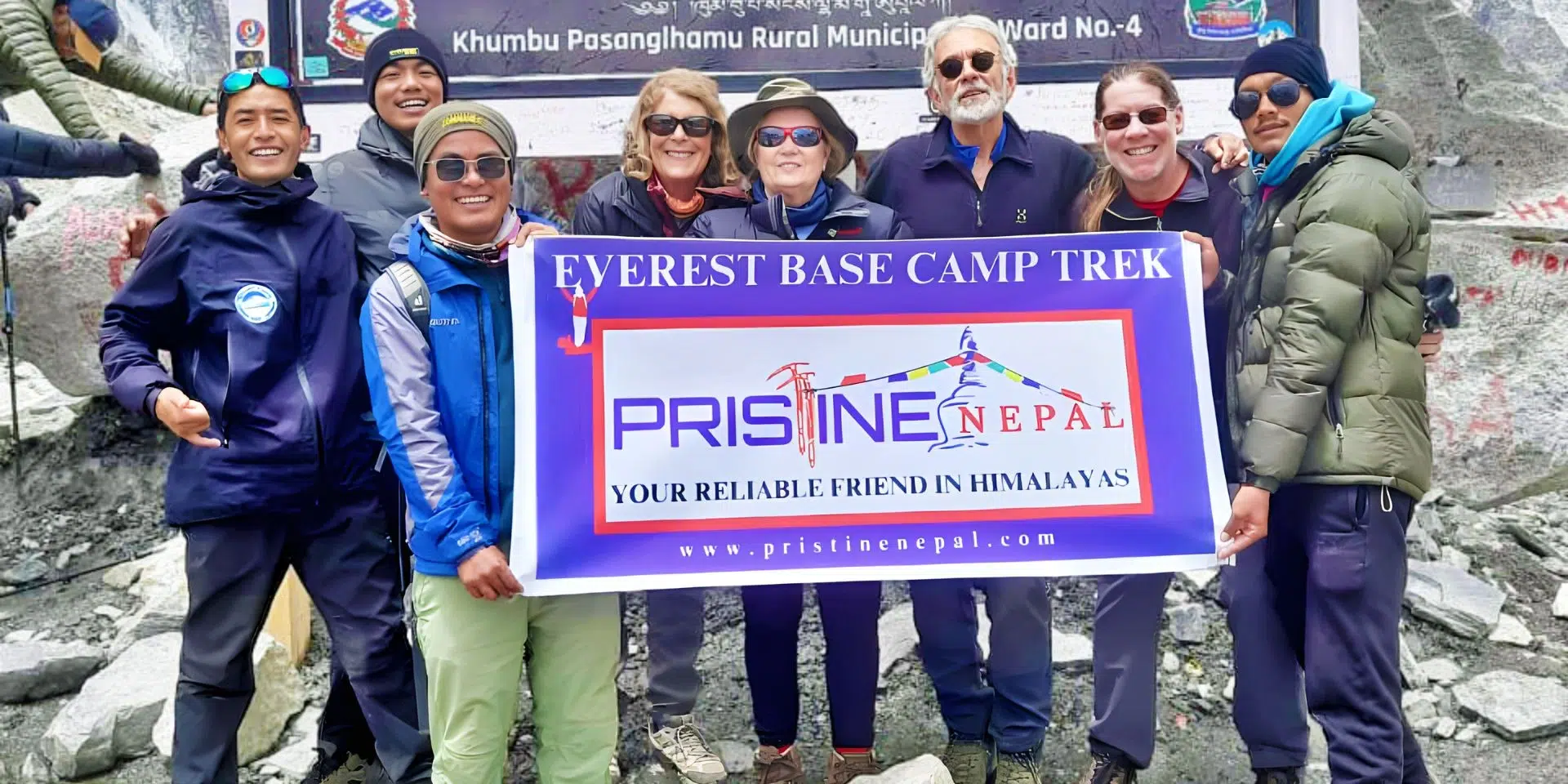
The total cost for a standard 12 to 14-day EBC trek typically ranges from $1,400 to $5,000, depending on the level of service and inclusions. At Pristine Nepal Treks, we offer a competitive Standard Package at $1,255 and a Deluxe Service Package at $1,730, ensuring high-quality support at an affordable price.
| Category | Estimated Cost (Independent) | Pristine Nepal package |
| Flights (Ktm-Lukla) | USD 350 – USD 450 | Included |
| Permits & Fee | USD 45 | Included |
| Accommodation | USD 10 – 80 per night | Included |
| Guide & Porter | USD 35 – 40 / Day | Included |
| Meals & Water | USD 35 – 45 / Day | Included |
| Total Estimate: | USD 1400+ | $1,255 (Save Money) |
Transportation: Lukla Flight Cost
The primary expense is the round-trip flight from Kathmandu (or Ramechhap) to Lukla. Prices currently range between $350 and $450. Choosing a package with Pristine Nepal removes the stress of booking these often-delayed flights yourself.
Accommodation & Food Along the EBC Trek
Lodging along the trail is primarily in teahouses. The cost can vary widely, from a low of $3 per night for a basic teahouse bed to an average of $10 to $15 per night for a room with two beds. Some higher-end teahouses with attached bathrooms can cost from $40 to $80 per night. Prices generally increase with altitude.
For food and drinks, a daily budget for food, drinks, and snacks is estimated at $35 to $45. Bottled water is a significant cost, as prices can rise from $1 per liter at lower elevations to $4 or more near Gorakshep. A key cost-saving tip is to use water purification tablets or a SteriPen, which can save up to $70 over the trek.
Guides and Porters Cost for EBC:
The services of a guide and porter are a major expense. A guide typically costs between $35 and $40 per day, while a porter costs between $12 and $30 per day. The investment in a guide provides a critical layer of safety and logistical support. Tipping is customary, and it is recommended to budget around $150.
Mandatory Fees and Permits:
A 30-day multiple-entry Nepal visa costs $50 and can be obtained on arrival. Trekkers also need to get two permits: the Khumbu Pasang Lhamu Rural Municipality Entrance Permit (approximately $22) and the Sagarmatha National Park entry permit (around $22), for a total of approximately $45. With travel agency, it will be covered in the package.
Travel Insurance:
This is a non-negotiable expense. A 30-day policy with high-altitude coverage up to 6,000 meters to cover emergency helicopter evacuations can cost between $100 and $300. However, it cannot be done inside Nepal which is why, trekkers are recommended to do it from their country.
More details included in the Everest Base Camp Trek Cost Breakdown.
General Questions
General
The Everest Base Camp Trek is considered moderately difficult. It involves challenging terrain, high altitudes, and long trekking days. Adequate physical fitness and acclimatization are crucial for a successful trek.
On rest day in Namche, after breakfast, you will first go to Tenzing Norgey Sherpa memorial park. Further, hike to the Everest viewpoint to catch a glimpse of Everest, Lhotse, Nuptse, Amadablam, and many others.
In the meantime, you will also be going to the highest situated Hotel Everest View 3,880m for a tea break. Return back and you can explore the Namche Bazar thoroughly.
At Dingboche, you will be hiking to Nangkartshang peak (5,121m) which is a 2-3 hour hike. The top offers you a stunning view of Island Peak, Lhotse, and Amadablam among many others.
- Avoid ascending more than 500 meters per day.
- Walk slowly and steadily.
- Include rest days after significant altitude gains.
- Drink plenty of water to stay hydrated.
- Avoid alcohol and smoking.
- Eat high-calorie foods.
- Protect yourself from extreme sunlight.