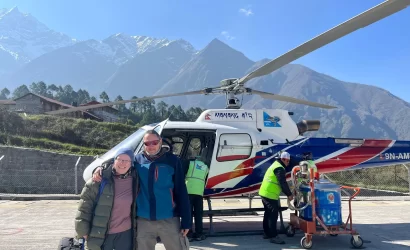


Are you ready to stop simply walking and finally start climbing? You’ve admired the Himalayas from the trails long enough, and now, it’s time for that definitive next step. Island Peak (known locally as Imja Tse) is the perfect mountain for you—a genuinely achievable, stunningly beautiful 6,189-meter peak that acts as the essential bridge between high-altitude trekking and technical mountaineering. This is not just another hike; it’s the start of your climbing career.

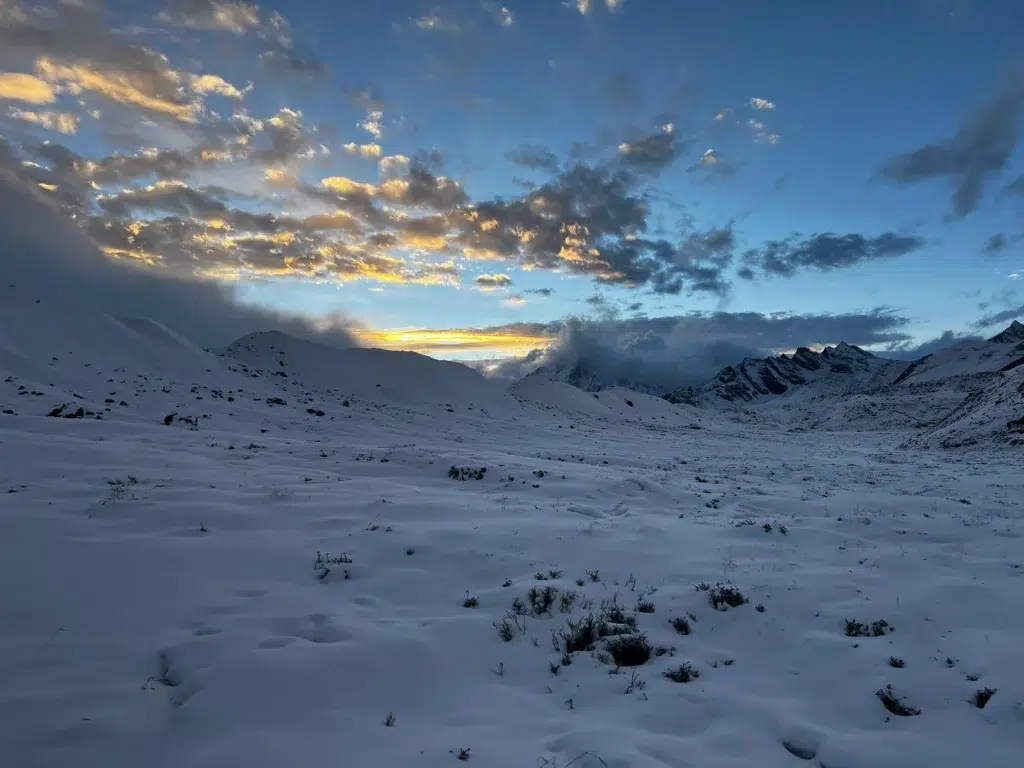
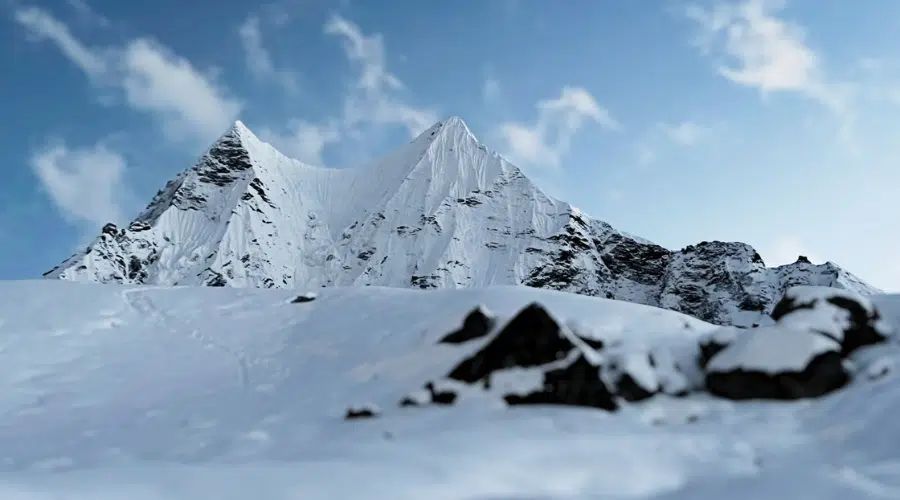








Therefore, Pristine Nepal Treks and Expedition is thrilled to offer you the safest, most comprehensive Island Peak Climbing package available.
This page is your complete, one-stop resource. We compiled everything a successful climber needs, from the exact daily itinerary and the true level of difficulty to the breakdown of costs and the mandatory gear checklist (rent or buy option). Furthermore, our expert guides ensure you have the necessary safety protocols and technical training to successfully reach that breathtaking summit. Let’s turn your mountain dream into a reality!
What Exactly is Island Peak (Imja Tse)
You are setting your sights on the jewel of the Khumbu. The mountain’s official Nepali name is Imja Tse, and it stands tall at a proud 6,189 meters (20,305 ft). Geographically, it is nestled in the heart of the mighty Khumbu Valley, making it an unavoidable and mesmerizing sight for anyone trekking to Everest Base Camp. In fact, it appears to dominate the southern end of the majestic Lhotse-Nuptse wall.
The Story Behind the Name:
Why do we call it “Island Peak”? Back in 1953, a British mountaineering team gave it this nickname because, when viewed from Dingboche, the peak stands isolated, rising like an island out of a vast, frozen sea of surrounding glaciers. The first ascent soon followed, led by Hans Gmoser as training for the historic Everest expedition. Consequently, the mountain gained immediate fame and has since become the most popular climbing objective in Nepal.
Trekking Peak vs. Expedition Peak:
This distinction is crucial for your planning. Island Peak is officially classified as a Trekking Peak by the Nepal Mountaineering Association (NMA). This means:
Ultimately, Island Peak offers the best of both worlds: the stunning visual reward of a genuine Himalayan summit without the extreme logistics and expense of a full-scale expedition.
Difficulty and Required Skills: The Honest Assessment
Let’s be straight: Island Peak is a challenging mountain, not a casual stroll. You need to respect the altitude and the technical sections.
Overall Climbing Grade: PD+
Island Peak is widely graded as PD+ (Peu Difficile Plus) on the Alpine Grading System. This French term translates roughly to “A Little Difficult Plus.” Therefore, while it is accessible to fit beginners, the ‘+’ indicates serious elements of danger and technical climbing that demand respect and proper training.
Navigating the Technical Sections
The summit push is mentally and physically demanding, especially between 5,800m and 6,189m. You will move through three distinct technical phases where ropes and gear are mandatory:
Glacier Crossing and Crevasses
After reaching Crampon Point, we move onto the wide, undulating glacier. This area is heavily monitored by our guides because of hidden crevasses. Consequently, you must be roped together with your team and may need to cross wide gaps using pre-placed aluminum ladders—a skill you’ll practice before the summit push.
The Steep Headwall Ascent (Jumar Work)
The final 100 to 150-meter climb to the summit ridge is nearly vertical. This is where the real work begins. Fixed ropes are permanently secured here. You will use an ascender (jumar) clipped into the rope to pull yourself up this steep section. This demands significant upper body and core strength, so start those pull-ups now!
Summit Ridge Exposure
Once you top the headwall, you traverse a beautiful, narrow, exposed summit ridge. Although the views are incredible, the ridge requires absolute focus and careful movement, as you are clipped into a fixed safety line the entire time.
Fitness vs. Climbing Prerequisites
You need two types of fitness to succeed:
| Fitness Type | Focus Required | Description |
| Trekking Fitness | Cardiovascular Endurance | The ability to walk for 6–8 hours daily, carrying a light daypack, for 14+ days straight. This is best trained through long-distance hiking, running, and cycling. |
| Technical Fitness | Core and Upper Body Strength | This is crucial for using the Jumar on the fixed ropes and controlling your decent (rappelling). Focus on functional strength: squats, lunges, and pull-ups. |
Prerequisites: No prior snow-climbing or mountaineering experience is strictly mandatory to book this trip with us. However, we insist on two things: First, you must be in peak physical condition. Second, you must be willing to learn the technical skills we teach you at Base Camp. Ultimately, your success relies on your commitment to the training provided by our certified guides.
Cost Inclusions and Excluison:
Here are the services Included in the Normal Everest Base Camp Trek Packages (USD 1,255):
- Airport picks up and drop by private vehicle
- Hotel Stay at Kathmandu including breakfast on the basis of twin sharing (Hotel Thamel Park or Hotel Jampa or similar)
- Kathmandu – Ramechhap – Kathmandu transfer by private vehicle
- Ramechhap – Lukla – Ramechhap domestic flight (Mid-March to May and mid-September to November)
- Kathmandu – Lukla – Kathmandu domestic flight (June to mid-September and December to mi-March)
- 10kg luggage and 5kg hand carry on Lukla flight
- A Sleeping bag with -20 degrees Celsius resistance
- Lodge accommodation
- Attached bathroom including hot shower: 1N at Phakding, 3N at Namche and 1N at Lukla
- Normal tourist Room on other Tea houses
- Meals: Breakfast, lunch and dinner, serving tea or coffee cup as per meal only on the mountain during trekking
- Fresh fruits with dinner
- Water purification tablets
- Trekking permits & Climbing Permits
- An experienced government license holder trekking guide & Sardar/Climbing Guide
- One porter for two trekkers from Lukla (Up to 20kg weight restriction for porter)
- First Aid Kit including an oximeter (daily oxygen level checkup)
- Pristine Nepal Trek’s Duffle Bag (No need to worry about this; we provide it at no extra charge. You will use it for packing your supplies and you can bring it with you at home as a souvenir.)
- Pristine Nepal Trek’s T-shirt as a souvenir
- Micro-Spikes
- Certificate of completion/achievement from PNT & Climbing Certificate From NMA (Nepal Mountaineering Association)
- Farewell dinner at Nepali restaurant in Kathmandu
- (Note: No compensation from Lukla delayed and cancelled flights)
Here are the service excluded in the EBC packages:
- Nepal visa fee ($30 for 15 days and $50 for 30 days)
- Travel insurance including helicopter evacuation up to 6000m and medical expenses
- Tips to guide and porter
- Personal expenses such as laundry, wifi internet, battery charges, snacks & deserts, soft & hard drinks, horse riding
- Anything that is not included in the inclusion section
- Extra nights hotel in Kathmandu in early arrival, late departure, early return from the mountain in any cases
Costs, Permits, and Budgeting: Your Investment in the Summit
Climbing Island Peak is a serious expedition, and we believe in 100% pricing transparency. Your trip cost covers more than just trekking; it includes mandatory government fees, professional mountain guides, and essential high-altitude logistics.
Total Investment Range: $3,500 – $5,500 USD But in Pristine Nepal Treks, its only $2199
The overall cost for a comprehensive 18-22 day Island Peak Climbing package (including the EBC acclimatization trek) typically falls between $3,500 and $5,500 USD per person. But we believe that every climbers dream should be complete with a peace of mind.
If you look at the price range, it depends heavily on the group size, the quality of services provided, and the specific climbing season you choose. So, $2199 is the best budget price for 20 Days Island Peak Climbing.
Mandatory Himalayan Permit Structure
Nepal requires specific permits and fees for climbing a 6,000m trekking peak like Imja Tse. These fees are fixed by the government and are non-negotiable, constituting a core part of your budget:
| Fee Type | Authority / Purpose | Seasonal Cost Variation (USD) |
| NMA Peak Royalty Fee | Nepal Mountaineering Association (Climbing Permit) | Spring (Mar-May): $250 | Autumn (Sep-Nov): $125 | Winter/Summer: $70 |
| Sagarmatha National Park | Entry into the Everest Conservation Area | Approx. $30 USD |
| Khumbu Municipality Fee | Local Government Tax (Replaces TIMS Card) | Approx. $20 USD |
| Garbage Deposit | Ensures proper waste disposal at Base Camp (Refundable) | Approx. $500 USD (Posted by Agency) |
Breakdown of Service and Logistics Expenses
The bulk of your investment covers the essential logistics, ensuring your safety, comfort, and summit success:
Group Climbing Gear: Provision of fixed ropes, snow bars, ice screws, and safety lines necessary for the summit push, which are installed by our climbing Sherpas.
Professional Guide & Porter Fees: Mandatory for a safe climb. This includes the wages, insurance, and gear for the Sardar (lead Sherpa), certified Mountain Climbing Guide (required for the technical section), and local trekking guides/porters. We guarantee ethical wages and proper insurance.
Domestic Flights: Round-trip airfare from Kathmandu to Lukla (Tenzing-Hillary Airport) is the most variable logistic cost and is crucial for itinerary execution.
(Trip to Ramechhap fare for Lukla Flight is also included incase Kathmandu Domestic Airport is closed)
Accommodation and Food: Covers full 19 nights of lodging (teahouses on the trek, full-service tent camping at Base Camp) and three hot, nutritious meals per day.
Group Climbing Gear: Provision of fixed ropes, snow bars, ice screws, and safety lines necessary for the summit push, which are installed by our climbing Sherpas.
20 Day Island Peak Climbing Detailed Itinerary
Activities: Arrival at Tribhuvan International Airport, visa-on-arrival if necessary, transfer to Thamel (30 minutes), meet the trekking guide/Climbing Guide, briefing about the Island Peak Climbing, settle payment balance (preferably in cash due to bank charges).
Includes: Accommodation, briefing, and assistance with gear if needed.
Activities: Sightseeing in Kathmandu Valley including the World UNESCO Heritage Sites with a tour Guide. Trek & Climbing Preparation, Gears Chec Up, Permits Issue and other important works will be done today.
Activities Morning Flight to Lukla either from Kathamndu or Ramechhap.
Normally, Lukla flight is operated only in the morning from 6am to 11am. If weather permits, you can have flight in the afternoon as well. Lukla weather becomes cloudy normally in the afternoon. Lukla flight is done only with best visibility.
Similarly, only 13 to 17 seater small planes can make flight to Lukla. There are 400 to 800 people on each day to fly to Lukla in busy season. They need at least 25 to 50 flights every morning in peak season and they should finish it in the morning.
Due to the single runway and heavy air traffic in Kathmandu airport, they can’t provide flight permission only for Lukla flight in the morning. That is way they can’t have all those Lukla flight from Kathmandu airport.
So, they bring all those Lukla flight from Ramechhap which is the nearest airport from Kathmandu.
Kathmandu to Ramechhap Distance: 142 km (88.2 miles)
Operating Time: March, April, May, September, October & November
Manthali Airport Altitude: 474 m (1,555.1 ft)
It is a 4 to 5-hour drive to Ramechhap from Kathmandu and the domestic airlines fly to Lukla early in the morning, because Lukla weather is comparatively better in the morning. You need to be in Ramechhap before 7 am so we will need to depart from Kathmandu around 2 am.
Lukla to Phakding Distance: 7.8km/4.8miles
Duration: 2-3 hours
Difficulty Level: Easy
Phakding Altitude: 2,660m (8,727 ft)
Activities: Trek from Phakding to Namche Bazar (6 hours). Cross several suspension bridges, pass through Monjo (checkpost), and climb steeply to Namche Bazar.
Activities: Trek from Phakding to Namche Bazar (6 hours). Cross several suspension bridges, pass through Monjo (checkpost), and climb steeply to Namche Bazar.
Activities: Trek from Namche Bazar to Tyangboche (6 hours), cross Phungi Thanga, climb uphill to Tyangboche, visit the monastery
Activities: The day begins with eye-catching mountain views as we descend from Tengboche through a beautiful, sheltered section of birch, rhododendron, and pine forest. This initial downhill walk quickly leads us to the Imja Khola, where we cross a bridge, marking a significant transition point in the landscape. Immediately after the river, the trek changes character dramatically: we climb slowly toward the higher altitude, leaving the main treeline behind for shorter, hardier vegetation like juniper and dwarf rhododendron bushes. This climb brings us to Pangboche, which you recognize as the last permanent village before the temporary, cozy settlements further up the valley.
Continuing from Pangboche, the path leads into a more exposed and windswept alpine area, delivering magnificent, close-up vistas of Mt. Ama Dablam, a constant, stunning companion on this stretch. We walk with a gradual upward slope across this high-altitude landscape before crossing the final small bridge of the day. This last section brings us directly into the wide, scenic Pheriche Valley. We settle into one of the many comfortable lodges here, resting in a location that serves as a summer grazing area for yaks and provides an incredible panorama, including the impressive sight of Taboche and the massive North Face of Ama Dablam.
Activities: Rest day at Pheriche for proper acclimatization at this high altitude on this day take a slow walk uphill to Nagarjuna hill above Pheriche and Imjatse Valley near Dingboche for best views of surrounding peaks including Island Peak, Mt. Makalu towards east.
Activities: After Pheriche, climb uphill for an hour then a nice good walk to Thugla ( Dugla) on the midway of Pheriche-Dingboche and Lobuche, with views of Taboche, Cholatse, Lobuche, Pumori, Amadablam.
Thugla a popular lunch spot for people heading up the hill to Everest base camp, after a lunch break an hour climb to a ridge called as Thug-la pass with many stone memorials of unfortunate climbers died on Everest-Lhotse-Pumori expeditions. From this lovely spot, an hour more of pleasant walk brings you at Lobuche on route Everest base camp.
Activities: Walk this morning is gradual with few short steep up but can be tough due to high altitude gain with awesome views of Mt. Pumori, Lingtren, Khumbutse and Mt. Everest. After few hours of strenuous and scenic walk reaching at Gorakshep as the trek leads over moraine and glaciers to Gorakshep with few lodges, located beneath Kalapathar Hill and Pumori peak on route Everest base camp.
Gorakshep was the original base camp in early 1950’s to 1970’s, here with overnight stop after reaching our main highlight of this adventure at Everest base camp. From Gorakshep few hours of walk leads to base camp over rocks, boulders, moraine and glacier on reaching world highest Everest base camp, enjoy the surrounding views enclosed within Everest hidden behind high peaks of Lho-La-Nuptse with close views of notorious Khumbu Ice-Falls.
In mountaineering high season April to June, this place will be flooded with hundreds of colorful tents, climbers, and staff. After reaching our goal and highlight head back to Gorakshep for last overnight stop in high Khumbu.
Activities: Early morning a steep climb to the top of Kalapathar for the fantastic panorama of surrounding giant peaks including Mt. Everest at close distance, this will be the highest point on trekking at 5,545 m / 18,192 ft. After a fantastic time with super views downhill to Gorakshep and continue trek to reach Imjatse Valley towards Dingboche an overnight before heading Island peak.
Activities: The morning walk starts with a gentle walk to follow Imja Khola heading towards Chhukung. Chhukung is a beautiful place to stop before going to Island peak. This is only 3 to 4 hours from Dingboche so you will be there before lunchtime & you may have free afternoon. Save your energy for climbing.
Activities: From Chukung walk on Imjatse Valley to Parsya Gyab at Island Peak Base Camp, leading with steep climb over moraine of Lhotse glacier then following a glacial streams to the snout of Imja glacier and then cross a dry lake between Lhotse and Imja glaciers to reach at base camp at Pareshaya Gyab, afternoon free or take a short walks and practice climb.
Activities: From base camp, climb leads further to set up High Camp to make the climb to the summit more approachable, normally climbers make it from base camp to the summit but it is always safe and best to add more camp, morning on leaving base camp to high camp of Island Peak leading over moraines and then scrambling up on open gully leading in between two well defined ridges and to high camp below a small hanging glacier at 5, 280m, afternoon with last and final preparations for the big climb next day.
Activities: Big Day of this awesome adventure! After full preparations start before dawn climb across the broad open gully, following snow-covered glacier, avoiding crevasses climbing northwards over the snow-covered screen in the margin between glaciers of the top ridge.
Climb leads to cross a gully with some stone and icefall danger, a steep snow and ice ramp leads upwards for nearly 100 meters (300ft) to the summit, on reaching top fulfilling adventure of a lifetime experience with success with unmatched views of Mt. Everest 8,848 m, Lhotse 8,501 m, Mt. Amadablam 6,856 m, Mt. Makalu 8, 463 m, Chamlang and Baruntse peaks. After an exciting and tough climb descends on the same route towards base camp.
Activities: After the climb of Island / Imjatse peak, return journey to Lukla as the morning walk leads with few uphill over dry moraine, then reaching at Chukung with striking views of snowcapped mountains, after short rest continues to walk to our overnight stop at Dingboche in the comfort of a nice cozy lodge with great
Activities: Leaving Dingboche with close views of Amadablam, morning starts with downhill back into tree lines, walk leads past Pangboche and from the bridge an hour climb brings you back in Tyangboche Monastery halt in this pleasant environment then downhill to Phungitenga. After crossing the bridge on Imja Khola brings you a steep climb to Shanasa for an hour. From Shanasa, the trail is easy and beautiful to Namche for a joyful overnight.
Activities: From Namche continue downhill walk to Dudh Kosi River, from here with short ups and downs to reach at Sagarmatha National Park to Monjo village for an overnight stop in the nice village. After an exciting and fabulous trek and Island Peak Climbing with a visit to Everest base camp, last day walk of this adventure leads on the same trail with the last climb to Lukla an overnight stop, with last night dinner celebration with fellow staff-guides and members. Mostly, all the porters stay at Lukla so this is time to say goodbye to your porters.
Activities: From Lukla an early morning flight to Kathmandu, at Kathmandu domestic airport our guide and staff transfer you back to your hotel with rest of the day free for individual activities.
Activities: After a memorable adventure experience on Island Peak Climbing with fabulous views of world highest mountains, our staff transfers you to the airport for your final departure homeward bound.
This itinerary includes the full trek to Everest Base Camp and Kala Patthar, providing optimal altitude acclimatization before the final climb.
Timing and Seasonality: Critical Planning Detail
Listen, success on Island Peak isn’t just about fitness; it’s about timing. You need to hit the mountain when the weather is stable, the visibility is peak, and the temperatures are survivable. We strictly guide during the two primary Himalayan climbing seasons to maximize your chance of summiting.
The Peak Climbing Seasons
We confidently run our Island Peak expeditions during these two proven windows, offering the best conditions for a safe and successful ascent:
- Autumn (Mid-September to November): The Gold Standard.
- The monsoon rains finish clearing the atmosphere by mid-September, delivering incredibly crisp, clear skies and unparalleled mountain views—perfect for photography and safe movement. Consequently, the weather remains highly stable, with mild daytime trekking temperatures. If you prioritize guaranteed visibility and stable conditions, this is your best climbing season. However, be aware that October is extremely popular, so you must book your slot early to avoid disappointment.
- Spring (March to May): The Pre-Monsoon Buzz.
- This window offers a slightly less crowded experience. While March remains cold, April and May bring significantly warmer climbing conditions. The trails showcase blooming rhododendrons, and the whole Khumbu valley is alive with the energy of the main Everest expedition season. Furthermore, conditions are generally stable right up until the end of May, giving you a strong summit chance before the rains arrive.
Why You MUST Avoid the Off-Seasons
Attempting to climb Imja Tse outside of the primary windows severely compromises safety and enjoyment. Do not risk your investment and safety during these periods:
- Monsoon (June to August): This season virtually shuts down the region. Flights to Lukla cancel daily due to fog and heavy rain, causing major itinerary disruptions. The trails become muddy, slippery, and leech-ridden, and the famous mountain views are completely obscured by cloud cover. It’s simply not worth it.
- Deep Winter (December to February): While the skies can be clear, the temperatures are dangerously cold. Nighttime temperatures plummet well below freezing, and the harsh cold during the critical pre-dawn summit push poses a serious risk of frostbite. Moreover, heavy snowfalls can increase avalanche risk and make the technical headwall ascent much more difficult.
Temperature Ranges (Average Night/Day at 4,000m $\to$ 5,200m)
Temperatures are measured in Celsius for consistency in mountaineering standards.
| Month | Conditions | Day Temp | Night Temp |
| March | Cold, increasing snow | 0°C to 8°C | -15°C to -8°C |
| April | Pleasant, mild | 5°C to 15°C | -10°C to -2°C |
| May | Warmest, pre-monsoon | 10°C to 20°C | -5°C to 5°C |
| September | Post-monsoon, warm | 5°C to 15°C | -8°C to 0°C |
| October | Clear, ideal | 0°C to 10°C | -12°C to -5°C |
| November | Dry, getting cold | -5°C to 5°C | -20°C to -10°C |
Preparation and Training Plan: Actionable Advice
Phase 1: Physical Conditioning (6-4 Months Out):
Your training must prioritize duration and consistency over intensity. You need the ability to maintain a slow, steady pace for 8–10 hours a day.
Core Strength: A strong core maintains posture under a pack and is critical for transferring power during the Jumar ascent.
Cardiovascular Endurance (The Long Haul):
- Focus: Long-duration movement. Twice a week, complete sessions lasting 3–6 hours (hiking, running, cycling, or stair climbing).
- Specificity: Mandatory weighted hiking. Once a week, hike on uneven terrain with a 10-15kg (22-33 lb) pack. This simulates the weight of your daypack and altitude effects.
Altitude Simulation: Utilize long stair-climbing sessions or step-mills to mimic the slow, continuous vertical gain of the mountain.
Strength & Power (The Descent and Ascent):
- Lower Body (Descent): Focus on eccentric (lowering) strength to protect your knees from the relentless downhill trekking. Incorporate deep squats, lunges (both forward and reverse), and box step-downs.
- Upper Body (The Jumar): The vertical headwall is a brute strength test. You must be able to pull your body weight up a rope repeatedly. Train your back and biceps using pull-ups, weighted rows, and heavy rope climbs. Aim to perform 10 consecutive pull-ups before your trip.
Phase 2: Technical Familiarization (3-1 Month Out)
Our technical training on Day 14 at Base Camp is essential, but having muscle memory beforehand is a major advantage on summit night.
- Rope Skills: Visit a local climbing gym. Practice clipping into fixed lines, manipulating a Jumar (ascender) for the upward climb, and using a figure-eight descender or ATC for controlled rappelling.
- Gear Practice: Buy your climbing boots early and wear them on weighted training hikes (at least once a week). Break them in thoroughly to prevent devastating blisters at altitude. Practice adjusting your harness, helmet, and crampons.
Phase 3: Mental Toughness (Final Month)
Island Peak is as much a mental game as a physical one, especially during the alpine start. You need to train for the inevitable discomfort.
- Practice Discomfort: Schedule a few long training days where you start before dawn (e.g., 2 am or 3 am) to simulate the required alpine start time.
- Simulate Fatigue: Practice moving efficiently even when fasted or slightly sleep-deprived. This prepares you for making complex decisions (like clipping safely) under pressure and exhaustion at 6,000m.
Packing Lists for Island Peak Climbing & EBC Trekking
You must arrive with the correct gear. Do not compromise on the quality of your high-altitude equipment. We rent the technical hardware (harness, helmet, crampons) as part of our package, but you are responsible for your personal outerwear and trekking items. Remember: this gear saves your life at 6,000m.
Technical Climbing Gear (Provided/Mandatory)
We supply the specialized technical hardware required for the crevasse crossings and the headwall. This cost is included in your package; you only need to bring your personal shell clothing and down gear.
| Item Name | Required Specification | Notes on Use |
| Mountaineering Harness & Helmet | NMA-standard, high-quality gear. | Provided by Pristine Nepal Treks. |
| Ice Axe | Classic Piolet (Trekking style) | Essential for balance and self-arrest. |
| Jumar (Ascender) | For ascending the fixed ropes on the headwall. | Mandatory: You must practice this at Base Camp. |
| Figure-8 / ATC (Descender) | For controlled abseiling (rappelling) on the descent. | Provided by Pristine Nepal Treks. |
| Mountaineering Boots (8,000m) | Mandatory: Plastic shell or high-altitude double boots (e.g., La Sportiva G2/Nepal Extreme). | Do not use standard hiking boots. This is your personal responsibility. |
High-Altitude Outerwear & Sleeping
Your body is the barrier against the Himalayan cold. Layering is key, but the quality of your shell and down gear is non-negotiable.
- Expedition Down Jacket (1)
- Waterproof Shells (Jacket/Pants)
- Windproof Jacket (1)
- Thermal Layers
- Gloves/Mittens
- Beanie & Neck Gaiter
- Sleeping Bag (1)
Trekking Essentials & Personal Items
- Daypack (40L minimum)
- Duffle Bag
- Trekking Boots (1 pair)
- Trekking Poles (1 pair)
- Socks & Undergarments
- UV Protected Sunglasses (1)
- Headlamp
- Toiletries & Sun Protection
- Snacks & Hydration
- Entertainment & Electronics
Documentation & Medical Requirements:
You cannot leave home without these:
- Passport: Required for entry gate registration.
- Visa: Ensure you have the proper entry and stay visa for Nepal.
- Travel Insurance: Non-Negotiable. Must cover medical expenses and emergency helicopter evacuation up to 6,200 meters.
- Prescriptions: Medications that helps in Altitude Sickness (carry adequate supply, discuss with your doctor) and emergency medications (carried by our guide).
Know More About Trip
Choosing Your Operator: A Safety Checklist:
Pristine Nepal Treks urges you to vet your guiding company rigorously. Do not base your choice solely on the cheapest price—your safety is non-negotiable. Ensure your operator meets these non-negotiable standards:
| Checklist Item | Why it Matters for Your Safety |
| NMA Certification | The technical guide must be NMA-certified for technical knowledge of rope installation and rescue. |
| Staff Insurance | 100% comprehensive insurance for all guides and porters (including rescue). Ethical and required for immediate support. |
| Summit Day Oxygen | Mandatory provision of supplementary oxygen (for emergency use) carried past Base Camp. |
| Permit Transparency | The company provides clear proof that all NMA and National Park fees have been paid. |
Success on Island Peak is manufactured long before you land in Lukla. A dedicated 6-month training plan is highly recommended to manage the relentless altitude and the technical challenge of the headwall. Don’t just get fit; get mountain fit.
Conclusion and Next Steps
We assign one porter for every two trekkers. Your duffel bag is carried by them. However, please be aware that the Lukla flight luggage limit is 15 kg max—10 kg in your duffel bag and 5 kg in your carry-on. Extra weight will cost you $1–2 USD per kg. Consequently, pack light and smart! If you are short on gear, you can buy or rent any item you need in Thamel, Kathmandu, before the trek begins.
Island Peak is an achievable dream, but it’s a serious 6,189m goal. Therefore, you now possess the complete blueprint—the 20-day itinerary, the intensive training plan, and the mandatory safety demands—that will confidently put you on that spectacular summit ridge. Furthermore, we’ve proven our unwavering commitment to safety, transparency, and expert local guiding with the best Sherpa team in the Khumbu.
Now, the moment for commitment is here. We run our expeditions only during the safest windows (Spring and Autumn), and our capacity is strictly limited to ensure guide-to-client ratios remain excellent. Consequently, if you are serious about earning your first Himalayan summit, you cannot afford to wait. Waiting means risking your preferred date and the optimal climbing conditions.
Take the final step: Secure your spot now! Explore our specific departure dates or contact Pristine Nepal Treks and Expedition today for a one-on-one consultation to finalize your booking. We’ll handle every complex logistic; you focus 100% on the training. Let’s climb!