


Let’s get one thing straight. You are going to smell. Bad.
Like, “clearing out a room” bad.
After guiding hundreds of people up to 5,364 meters, the biggest shock for beginners isn’t the thin air or the endless steep climbs. It’s the bathroom situation. Most booking agencies lie about this because they want your deposit, but we don’t sugarcoat the mountain. If you can’t handle a manual-pour squat toilet in a freezing wooden box at 2:00 AM, you might want to rethink this trip.
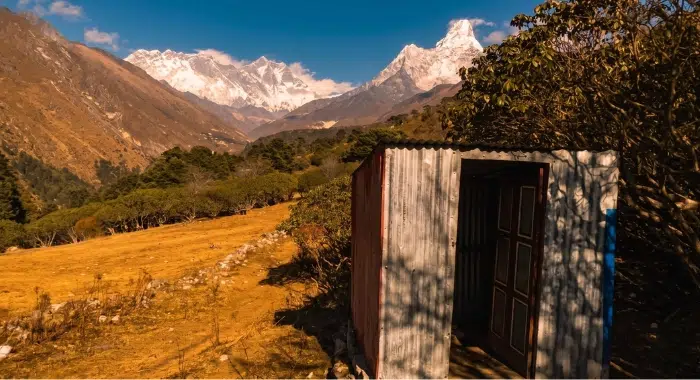
Is EBC Actually Dirty? My Unpopular Opinion.
Yes and no. The main trails are actually pretty clean, mostly because local groups work their butts off to sweep them. Same goes for the dining rooms.
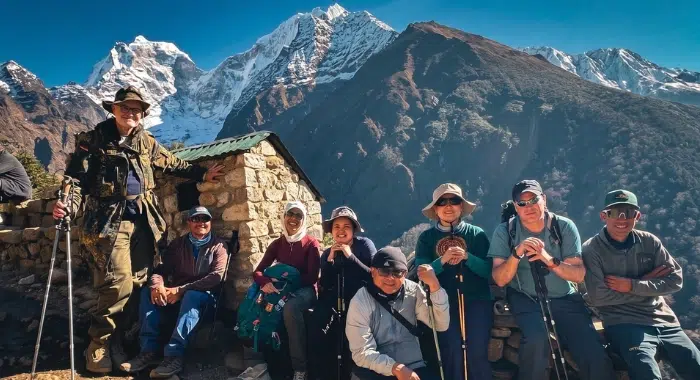
But the communal bathrooms? A total disaster zone.
Imagine fifty exhausted trekkers sharing two toilets every single night. Things start to get really messy, icy, and downright gross, and especially during the chaotic spring and autumn peaks.
Your hygiene routine is your only shield against getting a nasty stomach bug that will ruin your entire trek.
The Toilet Breakdown: Squats, Scarcity, & Survival
Let’s talk about porcelain. Or the complete lack thereof.
A few years back, the western toilets were only found up to Namche Bazaar, but now – beside Gorekshep and Lobuche, you can find western toilet in almost all tea houses.
But ofcourse, you will encounter the manual pour squat toilet which means, you will need to use the water bucket to flush. The design of these manual pour squat toilets is simple. Ceramic hole in a wooden floor, no tank, no handle. Just a bucket of ice water and a jug next to it. But, don’t judge too quickly because above 4000m, that’s what keeps the mountain clean, and maintain hygiene.
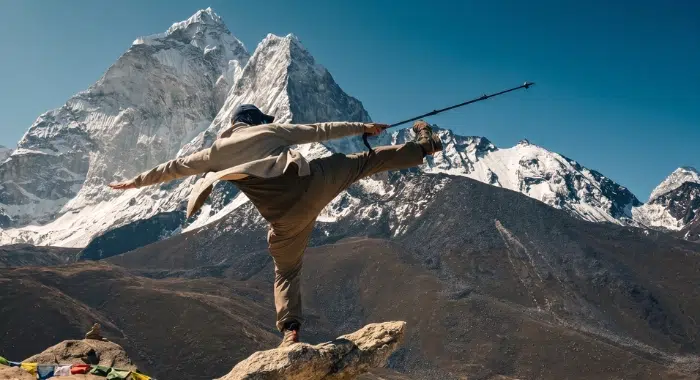
Also, another reason why squat toilets are best in mountains is, western toilets do not work there. Waters are usually frozen at higher altitude; flush will not work because all the waters are frozen. The savior at last is the water buckets and jugs.
I know, beginners will panic after experiencing and most peoples do not even know what’s squat toilets. But you will get used to it in the Everest Base Camp trek. Also, most of the teahouses has already build toilets inside teahouses, which makes it more easier than going outside for toilets.
The Golden Rule of Using Toilet Papers
Here is another big surprise for you, never – ever, flush toilet papers. Why?
Himalayan pipes are narrow and frozen. If you flush paper, you clog the system. The entire teahouse will hate you.
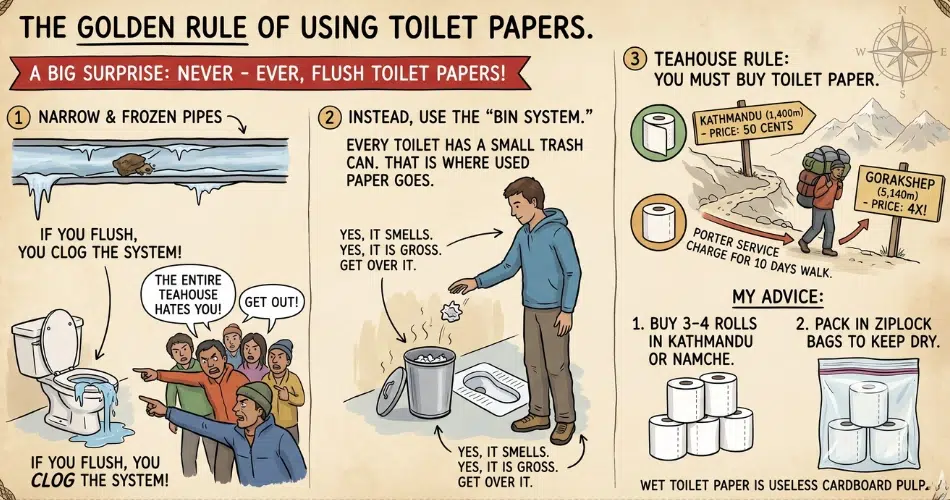
Instead, you use the “bin system.” Every toilet has a small, often lidless trash can next to it. That is where your used paper goes. Yes, it smells. Yes, it is gross. Get over it.
Also, teahouses do not provide toilet paper. You must buy it.
Now, for the tips, toilet papers usually cost about 50 cents in Kathmandu. By the time you reach the Gorakshep which is at 5,140m, the roll costs 4 times the price. Why? Because it is very hard to deliver there and the only way to deliver there is through porter. That, price is the service charge for 10 Days walk.
My advice will be, buy 3-4 rolls in Kathmandu or Namche. Pack them in Ziplock bags to keep them dry. If your toilet paper gets wet on a rainy day, it is useless cardboard pulp.
The Shower Dilemma: Gas Geysers, Cost Spikes, and the 4,000m Limit
Let’s talk about hot water. Or the expensive illusion of it.
Up in the Khumbu, a hot shower is not a basic human right. It is a luxury commodity. Actually, you will pay. Heavily.
The cost of the Hot Shower in Trekking
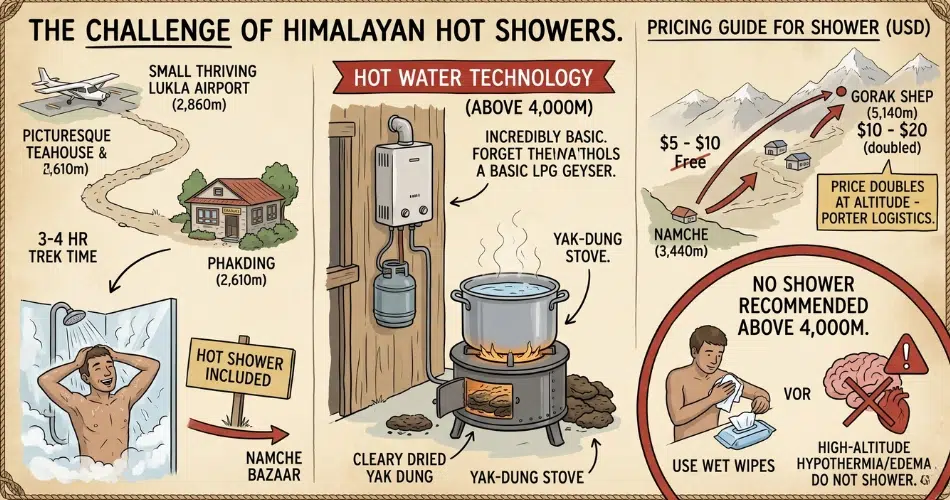
After you reach Lukla and trek to Phakding (2,610m) with a 3 to 4 hours of trek, a hot shower might sound a relaxing activity. Till Namche Bazar, you will enjoy the hot shower in teahouses.
But once you trek above Namche, you will be charged for the hot water, like $5 to $10. And, by the time you reach Gorak Shep 5,140m, that same shower will cost double. Why?
The technology is incredibly basic.
Usually, the hot shower is provided either by a LPG gas geyser hanging on a wooden wall outside, or heated over a yak-dung stove. Forget about the solar panel hot water system there. Forget about the water coming from the pipe. No shower above 4000m, use the wet wipes.
Beside that, showering above 4,000m is not recommended for any trekkers.
Why you must stop showering in Everest Base Camp Trek?
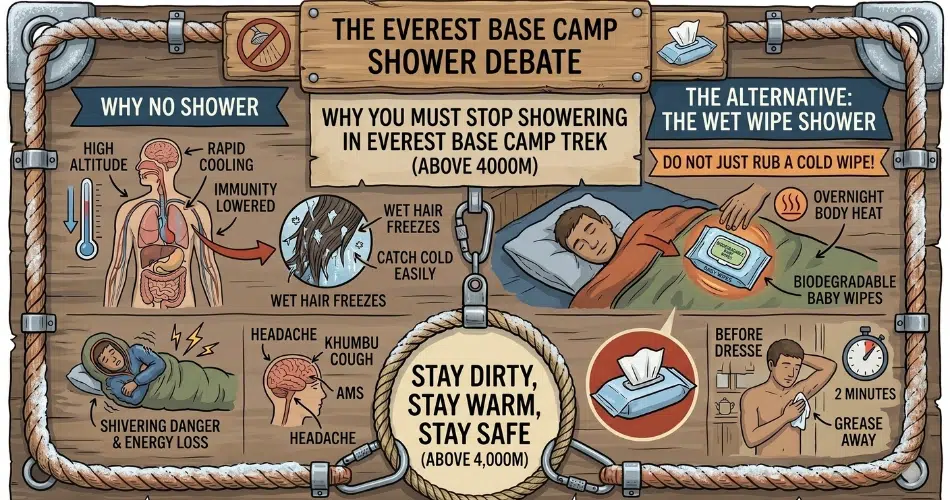
When you take a hot shower above 4000m with freezing cold temperature, your core temperature will drop immediately after you finish showering. Your wet hair freezes, you catch cold easily and shivering at high altitude is very dangerous.
Another reason for not to shower above 4,000m is, your body will use massive amount of energy trying to warm yourself back. While that energy should be using to acclimatize and fight off AMS, your energy will be used for warming your body.
In short, rapid cooling means lowering your immunity and inviting the Khumbu Cough, AMS, headache and so on.
Above 4,000m, stay dirty, stay warm and stay safe.
So, what works?
If you want to stay clean, master the Wet Wipe Shower.
Do not just rub a cold wipe on your freezing chest. Before you sleep, slide a pack of biodegradable baby wipes inside your sleeping bag. Let your body heat warm them up overnight.
In the morning, before you put your trekking clothes on, wipe-down all those “high-friction” areas. You know the ones.
It takes exactly two minutes. It keeps the grease away.
Daily Maintenance: Small Habits, Big Survivals
Look, nobody fails a trek because they didn’t wash their hair. Honestly, they fail because they got lazy with the small stuff and ended up with a raging stomach bug or shredded, blistered feet.
You need to treat daily hygiene like a military drill. The Teeth and Tummy Trap.
Brushing your teeth. Sounds simple.
But if you use tap water to rinse your toothbrush on the EBC trail, you are playing Russian roulette with your bowels. Basically, the local water contains microbes that your Western stomach may not handle.
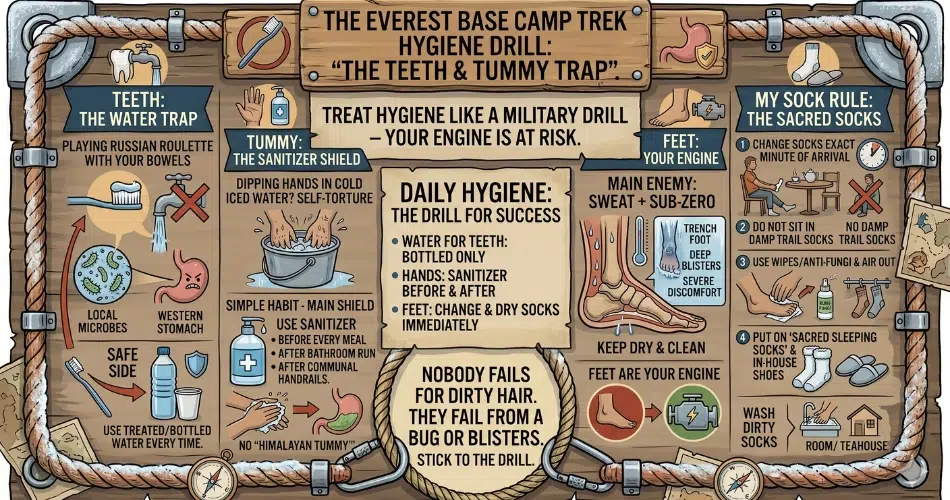
If you want to be more safe side, use treated or bottled water every-single-time. Even to rinse your teeth.
As for your hands. Bring a sanitizer with you.
Dipping your hands in a cold iced water every time is a self-torture. Use sanitizer before every single meal, after every bathroom run, and after touching communal handrails.
This simple habit is your main shield against “Himalayan Tummy.“
As for the feet, you need to keep your feet dry and clean every time. our feet are your engine. If they fail, your trek is dead. Why?
The main enemy here is sweat. Sweat plus sub-zero cold equals a fast track to trench foot, deep blisters, and severe discomfort.
My Rule: Change your socks the exact minute you arrive at the teahouse.
Do not sit around in damp trail socks. Just take out your socks, use wet wipes or anti fungi powders, and let them air out for 20 minutes while you drink tea or sitting near to heater.
After that, put on your “Sacred Sleeping Socks” and slipper or in-house shoe.
And if your trail socks are dirty, wash them and dry them in your room or ask your guide or teahouse, where to dry them.
Menstrual Hygiene: Managing Your Period at 5,000m
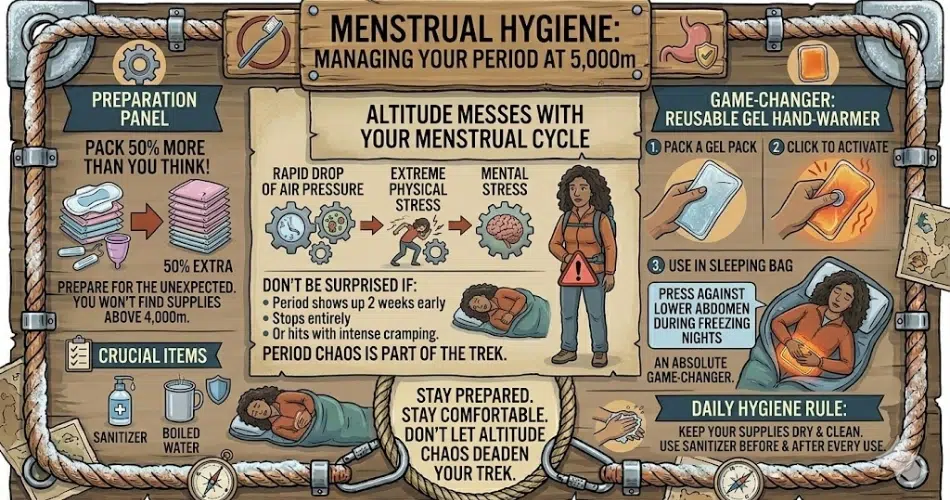
Here is something that booking brochures never mention in trekking and that is: altitude messes with your menstrual cycle. Big time.
The extreme physical stress with a rapid drop of air pressure, and mental stress, will act like a biological disruptor. Therefore, don’t be surprised if your period shows up two weeks early or stops entirely during trek, or hit with the most intense cramping of your life. Prepared for this chaos is preparing for the trek.
Don’t forget to pack the necessary items because you won’t find above 4,000m altitude. Pack 50% more than you think, carry sanitizer and use boiled water.
Also, a quick tip, keep a reusable gel hand-warmer packet in your pack. You can click it to activate heat instantly and press it against your lower abdomen during the freezing nights in your sleeping bag. It is an absolute game-changer.
Laundry Logistics: The Myth of Fresh Clothes
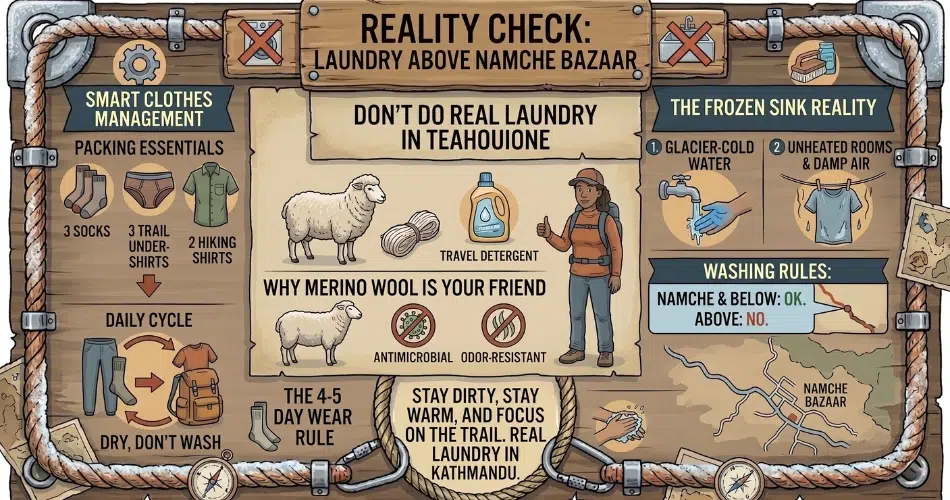
Let’s destroy a major beginner fantasy: you are not doing real laundry on the EBC trail.
I see people packing scrub brushes and travel detergent, thinking they’ll wash their clothes in the teahouse sinks. Don’t. It is a complete waste of energy and pack space.
The Frozen Sink Reality
Why is laundry a bad idea? Two reasons: water temperature and ambient air.
First, the water coming out of those taps is literally melted glacier water. It is so cold it will turn your hands blue in seconds. Attempting to scrub socks in that will drain your energy and lower your body temperature.
Second, the air is cold and damp. Teahouse bedrooms are unheated, and there is no breeze inside.
If you want to wash a pair of socks or shirt, you can wash it in Namche but above Namche, do not wash.
The best way to avoid washing your socks or clothes is by using the Merino Wool. It will be expensive but it is worth it.
Why Merino?
Merino has natural antimicrobial properties, meaning bacteria cannot easily cling to the fibers, so it doesn’t hold body odor. You can wear a high-quality Merino t-shirt and socks for 4 to 5 days straight without smelling bad.
Next, pack at least 3 sets of trail underwear, 3 pairs of trail socks, and two hiking shirts at least. Cycle through them. Let one set air out on the back of your pack during the day while you wear the other.
If you sweat a lot, dry your clothes in your room daily, not by washing them. Save the real laundry for your return to Kathmandu. Stay dirty, stay warm, and focus on the trail.