


Step off the bustling streets of Kathmandu, and your senses are instantly hit with an unforgettable rush. The earthy scent of burning incense fills the air, the rhythmic, metallic ring of singing bowls echoes through narrow alleys, and walls are draped in fabrics of every imaginable color.
Naturally, you want to bring a piece of this magic home with you. But as you stand in a crowded stall, a wave of hesitation hits: Is this blanket actually made of real yak wool? Is this intricate painting a mass-produced print? Am I paying a fair price, or a tourist tax?
Buyer anxiety is completely normal here. When you don’t know what to look for, it’s easy to mistake machine-made replicas for generational masterpieces. This insider guide cuts through the noise. We are giving you the exact, practical knowledge you need to identify authentic craftsmanship, find the right shopping hubs, and know exactly what to buy in Nepal as a souvenir with absolute confidence.
The “Big Three” Deep Dives & Authenticity Checklists
Thangka Painting
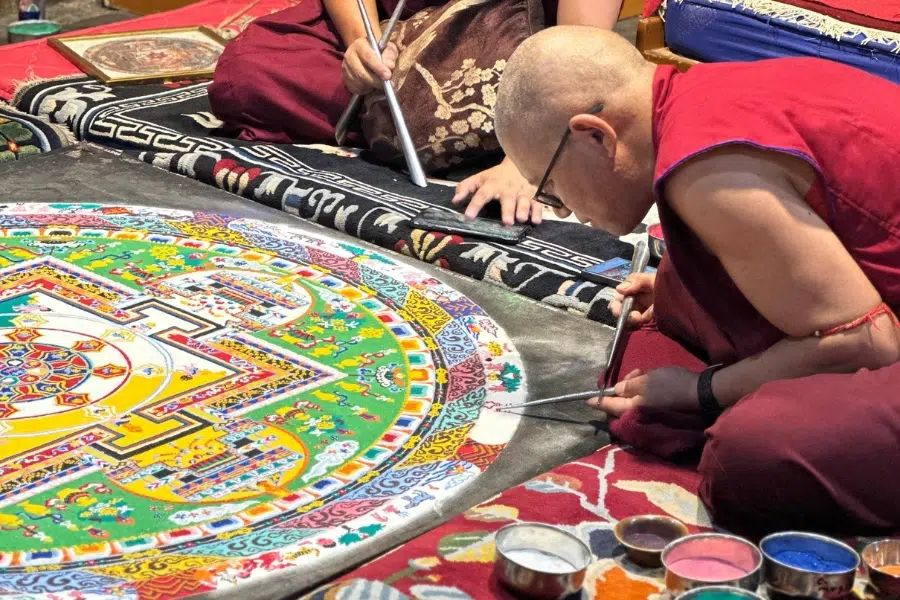
A Thangka is a sacred Tibetan Buddhist painting on cotton or silk applique, traditionally depicting a deity, scene, or mandala. They serve as visual aids for meditation and require incredible precision. Because a masterpiece can take months to complete, the market is flooded with quick canvas prints aged with tea stains.
- The Phone-Flashlight Test: Turn on your smartphone’s flashlight and shine it closely at an angle across the canvas. A genuine hand-painted Thangka will show slight textures, tiny ridges, and imperfections where the paint layers (often made from ground minerals and stones) sit on the canvas. If it is completely smooth, perfectly uniform, or shows microscopic digital dot patterns, it is a machine print.
- The Back of the Canvas: Ask the shopkeeper to let you view the unlined back of the painting. Authentic hand-painted Thangkas will often show faint pencil layout lines, charcoal sketches, or minor ink bleeds that seep through from the artist’s brushwork.
- Pricing Reality: Expect to pay between $30 and $100 for basic student or apprentice work. For detailed, handmade pieces by mid-level artists, prices range from $150 to $400. A true master-level piece utilizing complex geometry and genuine authentic thangka painting price Kathmandu gold dust easily starts at $500 and can climb into thousands of dollars.
Tibetan Singing Bowl
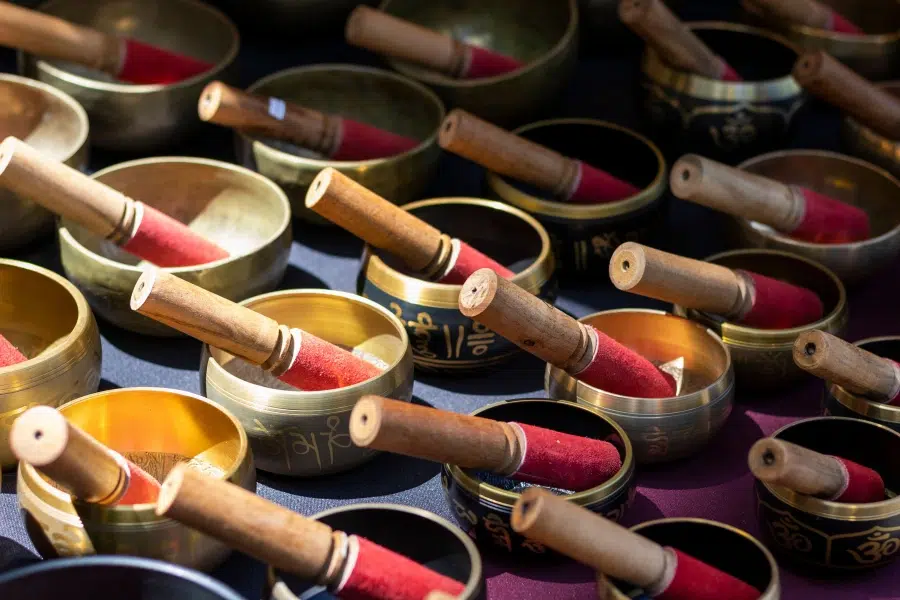
Singing bowls are used globally for sound therapy, meditation, and healing. Traditionally made from an alloy of seven auspicious metals (including copper, tin, iron, and silver), they produce a complex sound with deep, layered overtones. Cheap imitations are simply molded brass or aluminum spray-painted to look rustic.
- The Visual Hammer Test: Inspect the body of the bowl. Machine-made bowls are perfectly smooth, uniform in thickness, and often feature flawless, laser-etched designs. Genuine singing bowls are hand-hammered; they feature subtle, uneven rims, slight variations in wall thickness, and faint, dimpled hammer marks across the surface.
- The Sound and Vibration Test: Strike the bowl with a wooden mallet and hold it on your open palm. A machine-molded bowl will produce a high-pitched, loud tone that dies out completely within 4 to 5 seconds. A handmade vs. machine-made singing bowls comparison reveals that a genuine hammered bowl produces a deep, resonating sound with multiple harmonic layers that you can physically feel vibrating down through your arm for up to 30 seconds or more.
- Pricing Reality: Machine-made gift bowls cost $10 to $25. Genuine hand-beaten singing bowls are sold by weight rather than by aesthetic, typically averaging $30 to $60 per kilogram depending on the resonance quality.
Pashmina & Cashmere
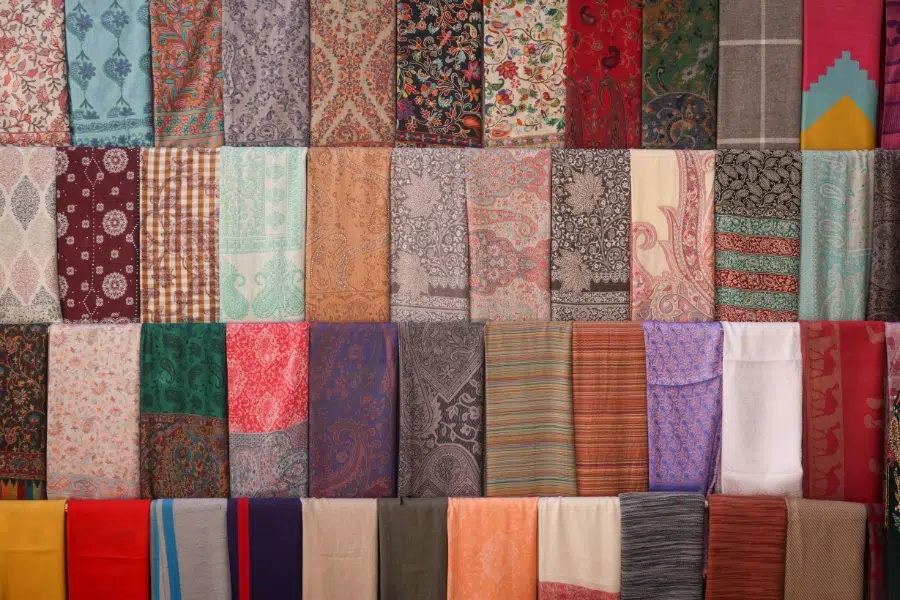
Derived from the soft undercoat of mountain goats residing in the high-altitude regions of the Himalayas, true Pashmina is incredibly lightweight, exceptionally warm, and luxuriously soft. Because it is highly sought after, synthetic polyester and viscose blends are frequently mislabeled as 100% cashmere.
- The Wedding Ring Test: Take a full-sized Pashmina shawl and attempt to slide it through a standard wedding ring. Because genuine, high-quality fibers are incredibly fine, the entire shawl should glide smoothly and effortlessly through the ring without snagging or bunching up.
- The Burn Test (Ask for a Thread Sample): Reputable dealers will happily pull a single loose thread from the fringe of the item to let you test it. Light the thread with a match. Genuine Pashmina is organic hair; it will burn slowly, smell distinctly of burnt hair, and leave behind a crumbly, powdery gray ash. Synthetic fakes will melt rapidly, smell like burning chemicals/plastic, and harden into a solid, unyielding plastic bead.
- Pricing Reality: If a street vendor offers you a “100% pure Pashmina shawl” for $15, it is synthetic. True, ethically sourced, and hand-woven pure Pashmina shawls generally start around $70 to $100, climbing significantly higher for intricate patterns or embroidery.
Quick Reference Comparison Table
| Souvenir Type | Genuine Artisan Quality | Cheap / Machine-Made Replica |
| Thangka Painting | Textured paint layers under light, faint pencil/ink marks on the back, rich natural mineral pigments. | Completely flat surface, zero canvas bleed, perfectly uniform patterns (digital print). |
| Singing Bowl | Visible, subtle hammer dimples; uneven rims; rich, long-lasting vibrational resonance. | Perfectly smooth walls, shiny or printed patterns, high-pitched ring that fades out instantly. |
| Pashmina Shawl | Passes the wedding ring test, burns to powdery ash, smells like natural burnt hair. | Bunches up or friction-locks in a ring, melts into a hard plastic bead, smells like synthetic chemicals. |
Where to Shop (Beyond Just Thamel)
While knowing how to spot quality is essential, knowing where to shop in Thamel for souvenirs and across the broader Kathmandu Valley will save you time and money.
Thamel
The ultimate tourist hub. Thamel is unbeatable for sheer convenience, variety, and last-minute packing. It is the best place to pick up casual items like embroidered trekking t-shirts, locally made hemp backpacks, yak wool blankets (which are usually a soft acrylic blend—great for cozy utility, but not pure wool), and standard trinkets.
Patan (Lalitpur)
If your goal is to buy high-end artwork, skip the main tourist strips of Thamel and head south to Patan. Known historically as the city of fine arts, Patan is the literal heart of Nepal’s metal statue, fine silver jewelry, and high-quality Paubha or Thangka painting production. Wandering the quiet artisan courtyards surrounding the Patan Durbar Square connects you directly with the families who have been casting bronze statues for centuries.
Bhaktapur
Famous for its ancient brick architecture, Bhaktapur is the undisputed capital for traditional wood carvings and pottery. If you want a hand-carved lattice window frame, a traditional puppet, or terracotta pottery pieces, this historic city offers a much more relaxed, low-pressure shopping atmosphere where you can watch the woodcarvers work live on their porches.
Asan Bazaar
For travelers seeking a truly raw, local shopping experience, Asan is the oldest market square in Kathmandu. This is not a tourist gift market—this is where locals buy. Head here to buy fresh Himalayan spices like Timmur (Sichuan-adjacent biting pepper), authentic local lentils, and loose Himalayan orthodox teas directly from large burlap sacks at local market prices.
Crucial Customs & Legal Regulations
Important Notice for International Travelers
- The 100-Year Antiquity Law: Nepal enforces strict heritage protection laws. It is completely illegal to export any object or artifact that is more than 100 years old. If you purchase a statue, wooden carving, or painting that has been artificially aged to look antique, ensure the shop provides a certificate of non-antiqueness. For highly valuable or ancient-looking items, you must get clearance and an official stamp from the Department of Archaeology (located in Ramshah Path, Kathmandu) before heading to the airport to avoid confiscation or legal penalties.
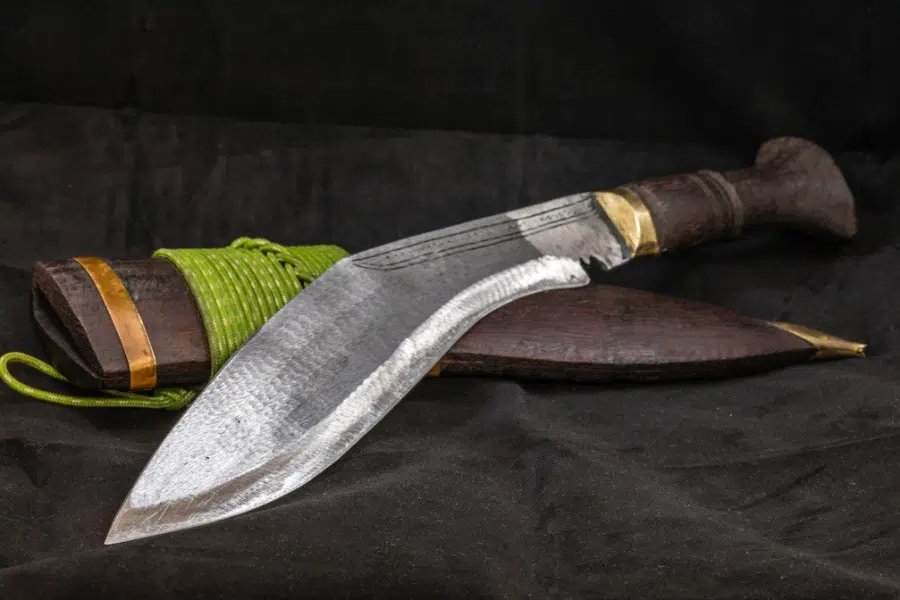
- Buying a Gurkha Knife (Khukuri): The legendary curved steel knife of the Gurkha soldiers makes an incredible souvenir. However, understand the customs rules for buying a Gurkha knife, khukuri. A Khukuri is legally classified as a weapon. It is strictly prohibited in your airline carry-on luggage. It must be safely wrapped, packed securely, and placed inside your checked baggage. Furthermore, always check your home country’s customs import laws regarding fixed-blade knives before buying one to ensure it won’t be seized upon arrival.
The Etiquette of Bargaining in Nepal
Bargaining is a standard part of the shopping culture in open-air markets and standalone souvenir shops across Nepal—but it should always be approached as a polite social interaction rather than a hostile negotiation.
The golden rule is to always bargain with a warm smile. When a street vendor or market stall operator quotes a price, a safe baseline is to counter-offer at roughly 60% to 70% of their initial quote, then slowly negotiate upward until you meet a mutually agreeable middle ground.
However, remember to read the room. If you are shopping inside a modern department store, an established supermarket, a boutique bookshop, or a certified “Fair Trade” cooperative shop supporting local women weavers, the prices are fixed. Look for a “Fixed Price” sign on the wall. In these establishments, trying to haggle is considered bad form.
Bringing the Heritage of Nepal Home
Every genuine souvenir you buy from an independent artisan in the Kathmandu Valley directly sustains traditional craftsmanship, ensuring that ancient skills are passed down to the next generation of creators. By taking the time to check for quality, asking the right questions, and shopping in specialized local hubs, you ensure your money supports real families while taking home a genuine piece of Himalayan heritage.
While exploring the vibrant artisan markets completes your cultural immersion in the cities, the ultimate way to truly experience the spirit of Nepal is out on the open trail, surrounded by the highest peaks on Earth.
Ready to transition from the historic streets to the breathtaking mountain passes? Discover our fully guided, culturally immersive trekking packages at Pristine Nepal and let us handle the logistics of your journey from the valley to the clouds.
