

We consider Everest Base Camp to be a tough trek, but if we had to select the hardest day on the Everest Base Camp Trek, then we would probably get multiple different answers. The EBC trek isn’t hard because of one killer climb. It’s hard because of altitude, cold, distance, and fatigue stacking up on top of each other, day after day, until even a “short” walk feels like a war of attrition.
If we disregard the EBC Chola Pass trek, or Everest Three High Passes trek, and just the classic Everest Base Camp Trek, then one day stood out clearly above the rest: “Day 9: Lobuche to Everest Base Camp via Gorakhsep”. But a few others deserve an honest mention too, because depending on your fitness, your acclimatization, and honestly your luck with the weather, any of these can turn into your worst day on the mountain.
The Hardest Day: Lobuche to Gorak Shep to Everest Base Camp
Summarizing the days and selecting one day as the hardest day on the Everest Base Camp trek, it comes down to the 9th day, which is Lobuche to Gorak Shep to Everest Base Camp. The day that starts in Lobuche (4,910m), pushes on to Gorak Shep (5,164m), and then continues straight to Everest Base Camp (5,364m) is the day most trekkers point to when they talk about their limit.
On paper, it doesn’t look brutal. The distance from Lobuche to Gorak Shep is only around 4.5 km, typically covered in 3 to 4 hours. Add the Base Camp round trip from Gorak Shep, and you’re looking at roughly 8 hours of walking total for the day, not the longest day of the trek by distance. So why does almost everyone rank it as the hardest?
The altitude does the damage. By this point you’re consistently walking above 5,000 meters, where the air holds close to half the oxygen it does at sea level. Every incline that would be nothing at home turns into a slow, deliberate slog. Trekkers repeatedly describe the same sensation: legs that aren’t tired, lungs that won’t cooperate. You take a few steps, you stop, you breathe, you go again. It’s not the terrain that wears you down the trail itself is mostly manageable, rocky moraine and gentle rises rather than punishing switchbacks; it’s your own body fighting you at every step.
The cold adds to it. Gorak Shep sits exposed on a dried lakebed with almost no wind protection, and trekkers who’ve stayed there often mention it as the coldest night of the entire trek, with temperatures dropping to -15°C or lower even outside of peak winter. You’re doing this demanding push on a night of poor sleep, thin air, and a body that’s already running on a caloric deficit.
Then there’s the psychological weight. Base Camp isn’t the dramatic finish line a lot of first-timers expect; there’s no signboard, no crowd, just the Khumbu Icefall and a jumble of glacial rock (Everest itself isn’t even visible from here; that view is saved for Kala Patthar). Knowing this, and still pushing through the hardest physical stretch of the trip to get there, takes a different kind of effort than earlier days. Add in that many itineraries have you climbing Kala Patthar (5,545m) for sunrise or sunset on the same day or the one after, and you’ve got back-to-back high-altitude pushes with barely a chance to recover in between.
Put together the thin air, the exposed cold, the accumulated fatigue of eight days on the trail, and the mental push of the “final” destination, this is the day that consistently gets flagged as the toughest of the classic EBC route.
Other Hard days on the EBC Trek.
Phakding to Namche Bazaar (Day 2)
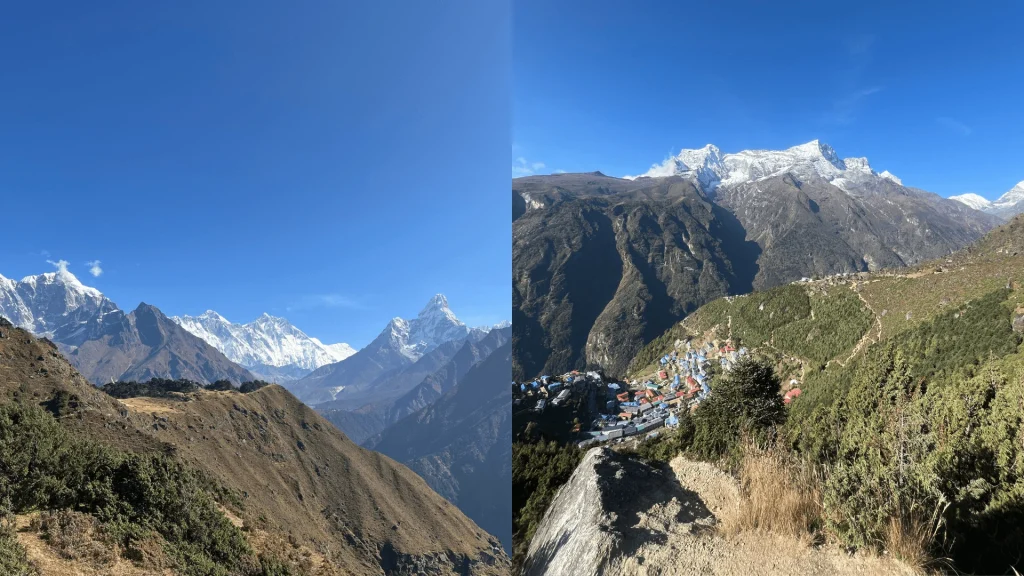
This is the trek’s first real reality check, and for a lot of trekkers, it’s still the hardest day even after they’ve been to Base Camp. After an easy warm-up day from Lukla to Phakding, day two throws you straight into roughly 800 meters of elevation gain, much of it in one long, punishing climb after you cross the Hillary Suspension Bridge (also called the Larja Bridge).
That bridge crossing itself unsettles plenty of people: a long, swaying steel crossing high above the Dudh Kosi River, often crowded with yak trains coming the other way. Once you’re across, the trail switchbacks relentlessly through pine forest almost all the way into Namche. What makes this day particularly rough is timing: your body hasn’t acclimatized to altitude yet, you’re carrying a pack that still feels unfamiliar, and you’re doing your first serious climb of the trip on legs that haven’t been broken in. Trekkers who train specifically for Base Camp often say this is the day their preparation gets tested first, before altitude even becomes a factor.
Phunki Thanga to Tengboche (Day 4)
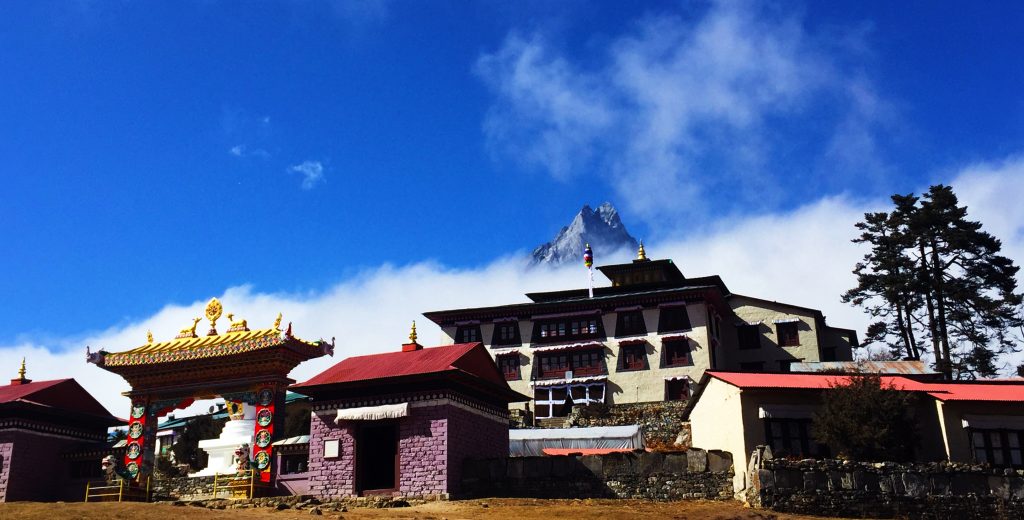
This is a short day by distance, but it has a nasty trick built into it. After your acclimatization day in Namche, the trail actually drops down to the river at Phunki Thanga (around 3,250m) — meaning you lose elevation you’d already earned before climbing roughly 600 meters straight back up to Tengboche (3,860m), home to the famous monastery.
Losing hard-won altitude only to climb it right back is demoralizing in a way that’s hard to explain until you’ve done it. The climb itself is steep, dusty, and often shared with slow-moving yak caravans that force you to stop and press against the hillside as they pass. It’s warm at this elevation too, which surprises people expecting the Himalayas to be uniformly freezing, and that heat plus the climb plus the psychological letdown of losing elevation makes this one of the most quietly exhausting days on the route.
Thukla Pass (Day 7)
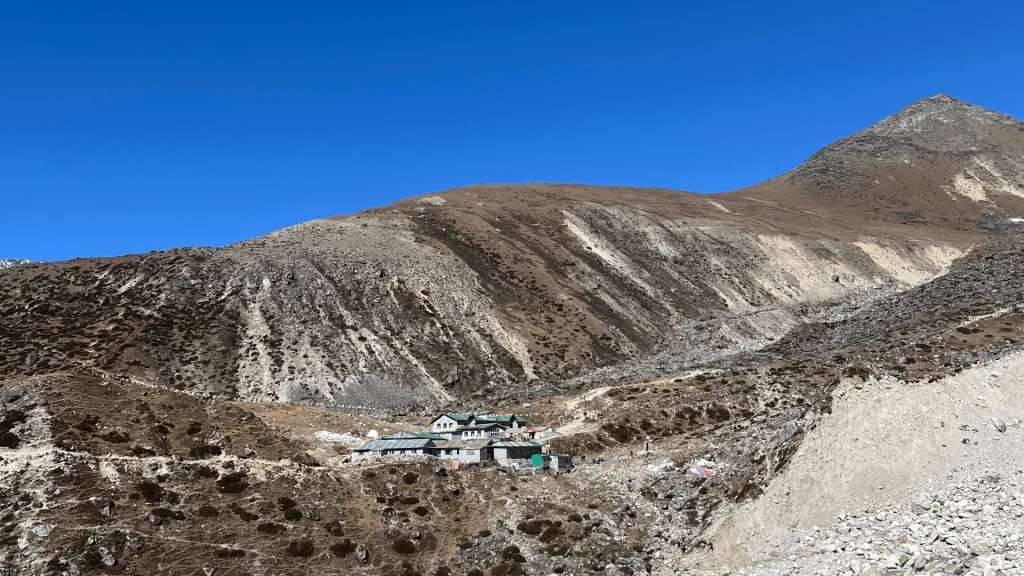
This is less about physical difficulty and more about the emotional weight of the day. The climb after lunch at the Thukla Pass (sometimes written Dukla or Chukpo Lare) is short and steep, but what waits at the top is what makes it memorable: a plateau covered in stone memorials and chortens built for climbers and Sherpas who died on Everest and the surrounding peaks.
Physically, the climb involves a real gain over loose, rocky switchbacks at an altitude where you’re already starting to feel thinner air — by now you’re around 4,600 to 4,900 meters. But most trekkers who describe this day talk more about the mood than the muscle burn. Walking through a field of memorials, some bearing names of guides or climbers whose stories you might know, tends to sober even the chattiest trekking groups into silence. It’s a hard day less because of what it demands from your legs and more because of what it asks of your head.
Descent Back to Namche
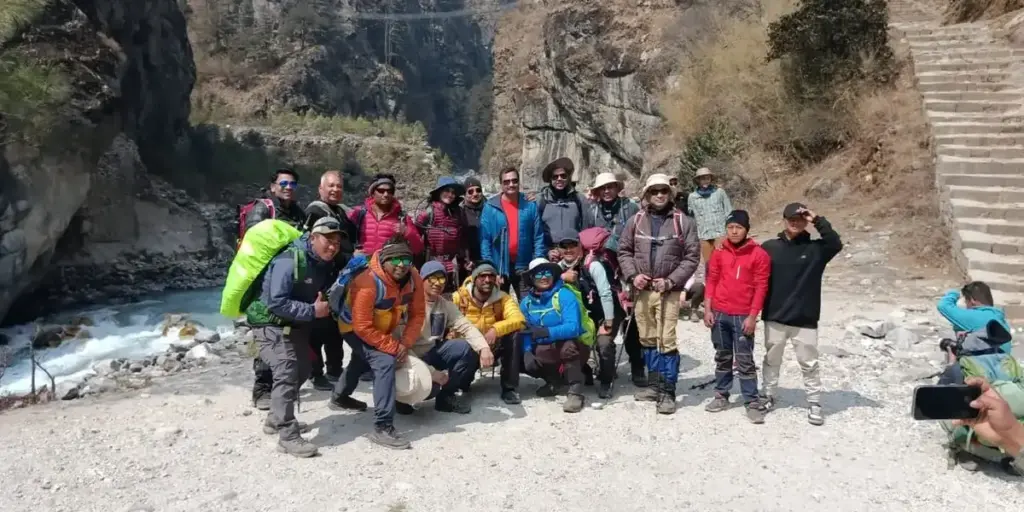
Not everyone expects this one, but plenty of trip reports mention the descent days as unexpectedly brutal. After days of slow, careful ascent, the return trip compresses that same elevation change into far fewer days, sometimes dropping over 1,700 meters in two days. Your lungs get relief, but your knees take the punishment instead, especially on the steep sections back down into Namche. Trekking poles help enormously here, and most guides recommend not underestimating this stretch just because you’re technically “going home.”
So, What Actually Makes a Day “Hard” on the EBC Trek?
It’s worth stepping back and noting that difficulty on this trek isn’t just about steepness. Four factors combine differently on every “hard” day:
- Altitude and oxygen levels — the single biggest factor above 4,000m, and one that no amount of gym training can fully prepare you for.
- Elevation gain and loss — both count. Losing altitude you’ve already earned, like on the Tengboche day, is often more demoralizing than a straight climb.
- Cold and exposure — nights at Lobuche and Gorak Shep are consistently named as the coldest and most uncomfortable of the trip.
- Cumulative fatigue — day 8 or 9 hits differently than day 2, even if the terrain is objectively easier, simply because your body has been working at altitude for over a week straight.
This is also why the answer to “what’s the hardest day” genuinely varies by person. Someone with strong cardiovascular fitness but poor altitude tolerance might sail through Namche’s climb and then struggle badly above 5,000m. Someone who acclimatizes well but isn’t used to long descents might find the trip home the hardest part of the whole itinerary.
Final Thoughts
If you’re preparing for the classic Everest Base Camp trek, plan for the Lobuche Gorak Shep Base Camp day to be your toughest. Build in rest the night before, eat well, and don’t rush the final push to Base Camp. But don’t underestimate day 2 to Namche either; a lot of trekkers get caught off guard early because they assume the “real” difficulty only starts higher up.
The honest truth is that the EBC trek doesn’t have one single hardest moment so much as a handful of days that each test you differently your legs, your lungs, and sometimes just your resolve. Preparing for all of them, rather than just the one everyone talks about, is what actually gets you to Base Camp and back in one piece.
