

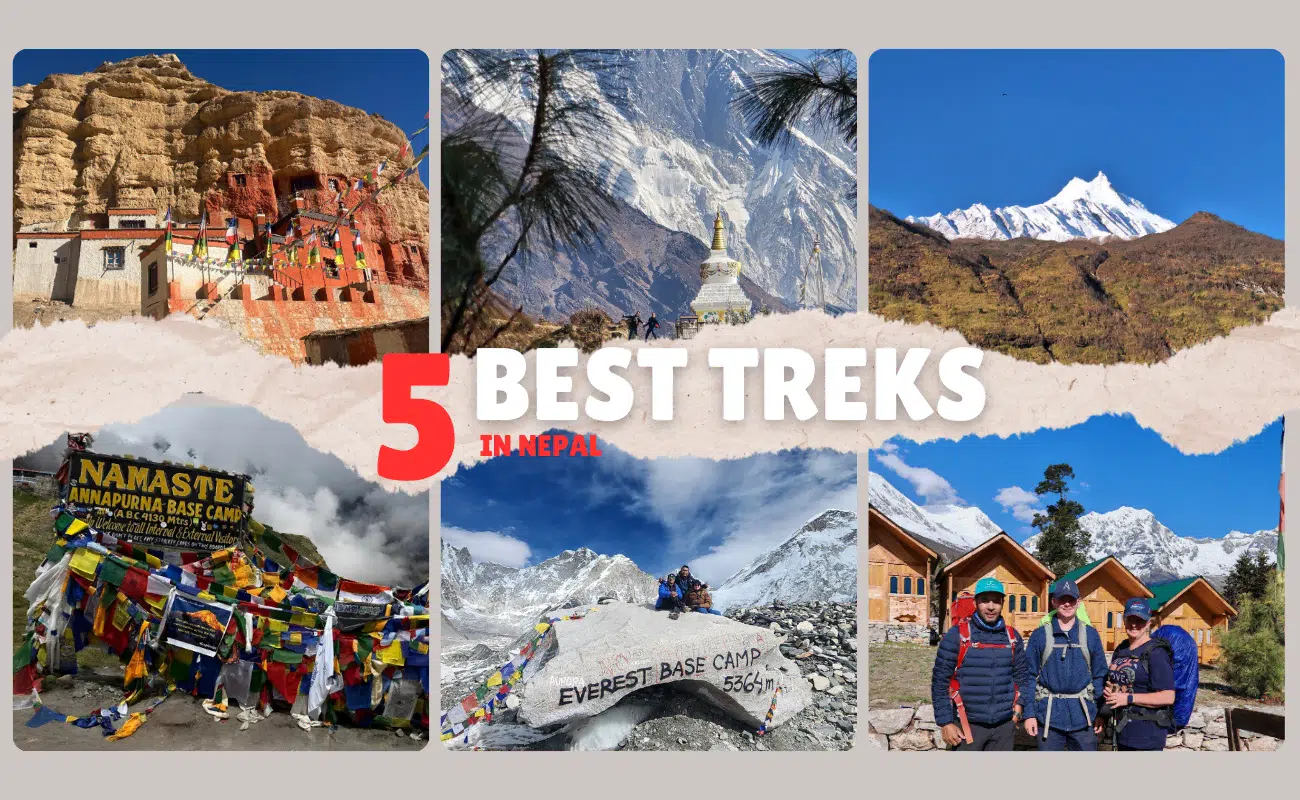
If you search for the “top treks in Nepal”, you will usually find the lists that are 80% Everest Base Camp Trek. Don’t get me wrong – Everest is legendary. But as someone who lives and breathes these trails every day at Pristine Nepal, I can tell you that the “best treks” isn’t always the one with the most famous name.
In 2026, the trekking scene is shifting. Travelers are moving away from the “traffic jams route” also known as classic routes and looking for authenticity. Whether you want the iconic views or a silent trail where you won’t see another soul for hours, here are the top 5 Best treks in Nepal for 2026:
1. The Manaslu Circuit Trek
For years, the Annapurna Circuit was the king of diversity. But with new roads reaching higer into the valley, the Manaslu Circuit has officially taken the crown for those seeking a “Pure” trekking experience.

Why it’s No 1 trekking trail in 2026?
The Manaslu Circuit offers the same dramatic “high pass” experience as Annapurna (crossing the 5,160m Larkya La) but without the jeeps. It’s a restricted area, meaning fewer crowds and a preserved Tibetan culture that feels like steeping back in time.
Also, if we talk about the vibe in Manaslu Circuit trek, this trail Is remote spiritual and physical demanding giving all the necessary adventure to trekkers.
2. Everest Base Camp via Gokyo lakes (The smart way)
If you have Everest Base Camp Trek on your Bucket List, don’t just walk up and down the main “highway”. The Gokyo lake Route is the superior way to see the Khumbu in 2026.

Why Gokyo Lake via Everest Base Camp is a smart way to do the trek?
When you look at a map of the Everest Region, the standard EBC trek is essentially a straight line, you walk up, and then you walk back down the exact same way.
By adding the Gokyo Lake and crossing the Cho La Pass, you turn that “line” into a majestic “loop”. For trekkers in 2026, this is widely considered the “ultimate” version of the Everest experience.
Similarly, in terms of cost efficiency, you pay the flight cost (around $400 – $500) and permits cost only once instead of paying EBC package in one year and EBC via Gokyo on next year.
Also, just by adding 3 to 4 extra days of food and lodging, you get to see 100% more of the region for only about 15-20% more total cost.
Another Reason to choose EBC Trek with Gokyo Lake is to escape the crowd and experience the real adventure. The Gokyo side is significantly quitter, you get better interaction with tea house owners’ and a more authentic Sherpa experience away from the massive group tours.
3. Upper Mustang: The Forbidden Kingdom
Mustang is categorized in two trails which is Lower Mustang and Upper Mustang. Also, Mustang is not just a different part of Nepal; it feels like a different planet. Imagine a high-altitude red-rock desert that looks like Mars, carved by wind into massive canyons and dotted with white-washed villages.
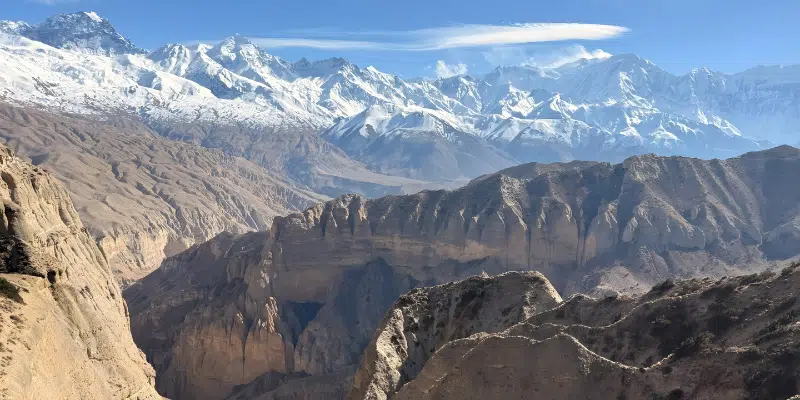
Until recently, Upper Mustang was famous for it’s strict $500 flat fee for a 10-Day permit. If you stayed 4 days, you still paid $500. However, the Nepal Government has moved to a $50 per day system which is the game changer for 2026.
Now, why these matters?
This makes shorter, high-impact trips much more affordable. You can now do a 5-day “Best of Mustang” jeep-and-hike combo for $250 in permit fees instead of $500. It’s the best time in history to visit.
Now, hold on, another thing about Mustang region being the top 5 best treks for 2026 is the tile that says “monsoon Escape”.
While the rest of Nepal deals with heavy rains, leeches, and clouds from June to August, Upper Mustang sits in the rain shadow.
It stays bone-dry with crisp air, clear “desert-blue” skies, and the iconic views of Dhaulagiri and Nilgiri during summer season/Monsson season.

During month of May, you can time your trip for the popular festival called Tiji Festival in lo Manthang which is a 3 day ritual of masked dances and ancient prayers to chase away demons. And witnessing this authentic Himalayan festival is one of the best experiences in Life.
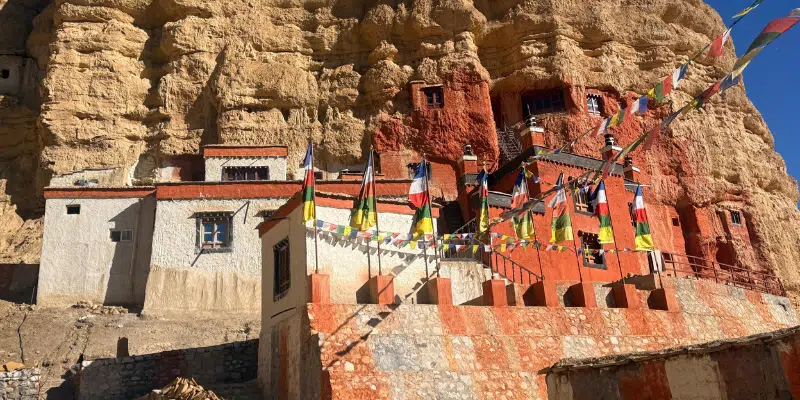
Another highlight of the Upper Mustang treks is:
Lo Manthang: A medieval walled city where the “king” of Mustang still resides. Walking through the narrow alleys feels like stepping into the 15th century.
The sky caves: Thousands of man-made caves are carved into vertical cliffs. Some were used as burial chambers, others as meditation retreats for monks over 2,000 years ago.
The terrain: No green forests here. You’ll walk past prayer walls (Mani Walls) that are hundreds of meters long, set against a backdrop of orange and yellow desert cliffs.
Accessible through Bike Tour: Another best thing about this region is that you can also do a bike tour which is can be best options for riders.
4. Annapurna Base Camp (Always the best)
If you have 10 to 12 days and want the highest “beauty-to-effort” ratio, ABC is unbeatable. You aren’t just looking at a mountain from a distance; you are walking straight into a 360 degree wall of rock and ice known as Annapurna Sanctuary.
Before 2026, the most common complaint about trekking in ABC used to be “shared bathrooms and cold rooms.” But the lodges in the Annapurna Region have undergone a major upgrade in 2026.
Private Comforts: In key stops like Ghandruk, Chhomrong, and even Sinuwa, more teahouses now offer private rooms with attached bathrooms and solar-heated showers. You don’t have to wait in line for a cold stall anymore.
Better Fuel for the Trail: Kitchen hygiene standards has been standardized across the region. While Dal Bhat is still king, you will find reliable vegan, gluten-free, and even “mountain-style” pizza and pasta that actually tastes good.
High-Speed Connectivity: Satellite-based Wi-Fi has replaced the old, patchy radio links. You can now video-call home from almost every village up to Machhapuchhre Base Camp (MBC).
Now, in 2026, the roads are improved and you can now reach Jhinu Danda and Kimche. This means you can bypass the lower, dusty sections and start your trek right in the heart of the green Gurung hills.
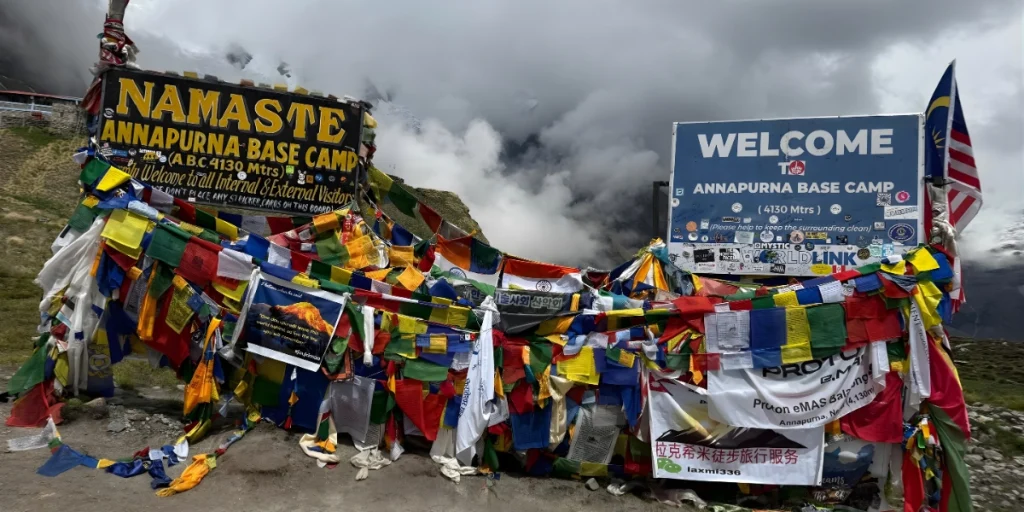
Similarly, since Annapurna Base Camp max altitude is only 5.364m, it’s best “test” for anyone wondering if they have what it takes for the Himalayas.
If you are going to trek Annapurna Base Camp on 2026, then the best time will be March to May where Rhododendron season is spectacular or October to November for its sharpest mountain view. Physically, if you can handle 5-7 hours of walking with some stairs, you can do this.
5. Langtang Valley Trek
If you are looking for a short day, easy to go and no hassle, Langtang Valley is the closest you can get to from Kathmandu city. No stress for Lukla flight delays, this is your trek for 2026.
Now, in 2026, the road from Kathmandu to Syabrubest has seen significant improvements.
While Everest trekkers often get stuck in Kathmandu or Manthali due to weather, you can reach the Langtang trailhead in a 6 to 7 hours scenic drive. Your vacation starts on day one, guaranteed.
Also, by skipping the $400 plus round-trip domestic flights that would have been gone to Lukla flight, you can put that budget into a private 4×4 Jeep or a high-end lodge upgrade. And in Pristine Nepal, we can manage everything for you. You will have a luxury experience for a budget price in Langtang Valley Trek.
Why Langtang is a Reborn community?
The Langtang Valley was the hardest hit during the 2015 earthquake, but its comeback is one of the most inspiring stories in the Himalayas.
Because the villages were rebuilt from the ground up, the teahouse here are some of the most consistent in Nepal. They are built with better insulation and more modern layouts than many of the older “classic” routes.
Similarly, a must do in 2026 is the Kyanjin Gompa Yak Cheese Factory visit. It’s fully operational and produces some of the best high-altitude cheese in the world. It’s the perfect snack for your final push to the viewpoints.
What about the Vibes in Langtang?
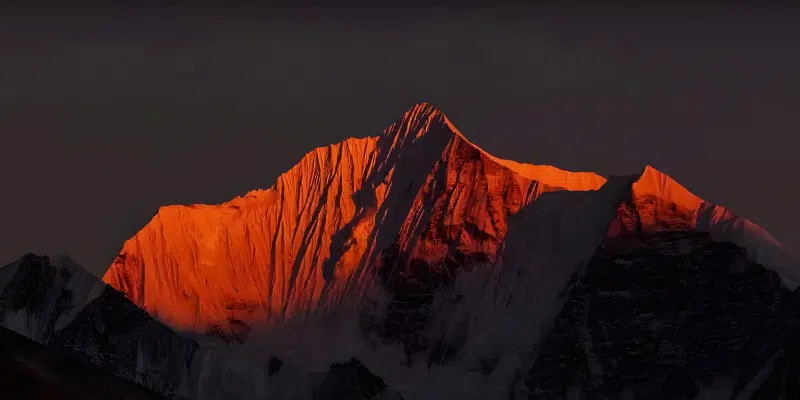
Now, don’t let the shorter duration fool you. The hike up to Kyanjin Ri (4,773m) or Tserko Ri (4,984m) offers a 360 – degree panorama of Langtang Lirung and the Tibetan peaks that rivals anything in the Everest Region.
In terms of wildlife, this is one of the best places in Nepal to spot elusive Red Panda. In 2026, local conservation efforts have made sightings in the bamboo forests near Lama Hotel more frequent for quiet trekkers.
Conclusion: Finding the Perfect Peak in 2026
These are the best top 5 treks in Nepal but not all. Nepal is much more than a collection of five famous trails. In 2026, the spirit of trekking is evolving. While the Everest Region remains the “crown jewel” and the Annapurna Sanctuary offers unparalleled comfort, the true magic of the Himalayas often lies where the cell service ends and the raw wilderness begin.
If you have already ticked the big names off your bucket list, or if you simply crave a deeper sense of solitude, the “Great Himalayan Trail” offers endless possibilities:
For the true Explorer: Consider the Kanchenjunga Base Camp in the far east. It is a long, raw, and physically demanding journey to the world’s third-highest peak, where you’ll see more blue sheep than fellow trekkers.
For the Spiritual Seeker: Upper Dolpo remains a living museum of pre-Buddhist Bon culture. It’s expensive, logistically complex trek that requires a full support team, but it is widely considered the last frontier of authentic Tibetan culture.
For the Peace Seeker: Rara Lake in the far west is Nepal’s largest freshwater lake. It’s a lower altitude “tranquility trek” through alpine meadows and pine forests that feels like a private paradise.
For the Adventure Purist: Makalu base Camp offers a challenging, teahouse-meets-camping experience in the shadow of the world’s fifth-highest mountain, surrounded by the incredible biodiversity if the Barun Valley.
Why choose Pristine Nepal for your Trek?
At the end of the day, the “best” trek is the one that aligns with your fitness, your timeline, and your dreams. Whether you want the upgraded comforts of Annapurna Base Camp, the Mars-like landscapes of Upper Mustan, or a custom-built expedition to the far west, we are here to make it seamless.
As a local team based in the heart of the Himalayas, we don’t just follow the maps – we know the people, the sherpas, the teahouse owners, and the secret viewpoints that don’t show up on google.
So, are you ready to start planning your 2026 adventure?