


Imagine standing at the very doorstep of the world’s highest peak, Mount Everest. For countless adventurers, this isn’t just a dream; it’s the ultimate goal of the iconic Everest Base Camp (EBC) trek. And right at the heart of this incredible journey lies Gorakshep, a pivotal and unforgettable stop.
Gorakshep is the highest camp on the Everest Base Camp trek, situated at an altitude of 5,164 meters (16,942 feet). It is the final teahouse settlement before reaching Everest Base Camp and serves as the starting point for the Kala Patthar hike, which offers the best views of Mount Everest.

This guide is crafted to be your comprehensive companion to Gorakshep and the magnificent Everest region. We’ll navigate the exhilarating challenges and unparalleled rewards of this high-altitude adventure, offering practical advice and fostering a deeper appreciation for the pristine environment and the vibrant local culture.
By understanding Gorakshep’s unique position and profound significance, you’ll be perfectly prepared for an unforgettable and responsible journey into the very soul of the Himalayas.
Gorakshep Geographical Significance & Elevation:
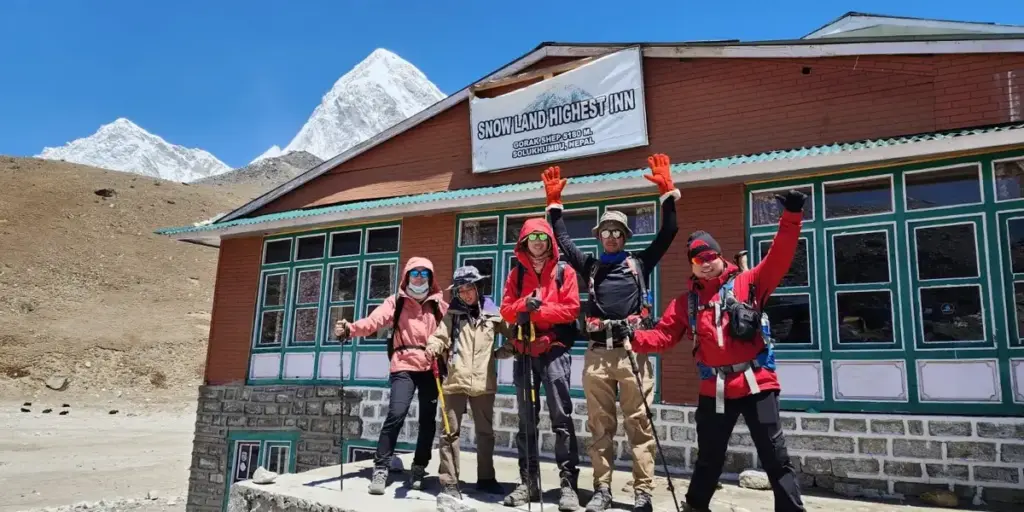
Standing at a breathtaking 5,164 meters (16,942 feet) above sea level, Gorakshep feels like a peace of heaven, nestled on the edge of a vast, frozen lakebed.
Its landscape is stunning, almost otherworldly – a barren, rocky expanse with virtually no vegetation. In fact, its name, “Gorak Shep,” literally translates to “dead ravens,” a nod to its extreme, uninhabited nature for most of the year, springing to life only during the Everest trekking season.
This incredible isolation and raw beauty stand in fascinating contrast to its role as the “heartbeat of high-altitude trekking” and the “last human settlement” before Everest Base Camp. This highlights Gorakshep’s critical function as a vital hub, despite its formidable environment.

Historical Echoes: The Original Everest Base Camp:
Imagine walking in the footsteps of giants! Gorakshep isn’t just a place; it’s a living testament to mountaineering history.
This very spot served as the original Everest Base Camp, famously used by Swiss climbers in their 1952 attempt to conquer Everest. Legends like Tenzing Norgay and Sir Edmund Hillary themselves traversed this rugged terrain during their historic 1953 ascent, forever solidifying Gorakshep’s status as a symbol of determination and high-altitude resilience.
The main camp was later moved closer to the mountain, just below the formidable Khumbu Icefall, but Gorakshep’s legacy lives on.
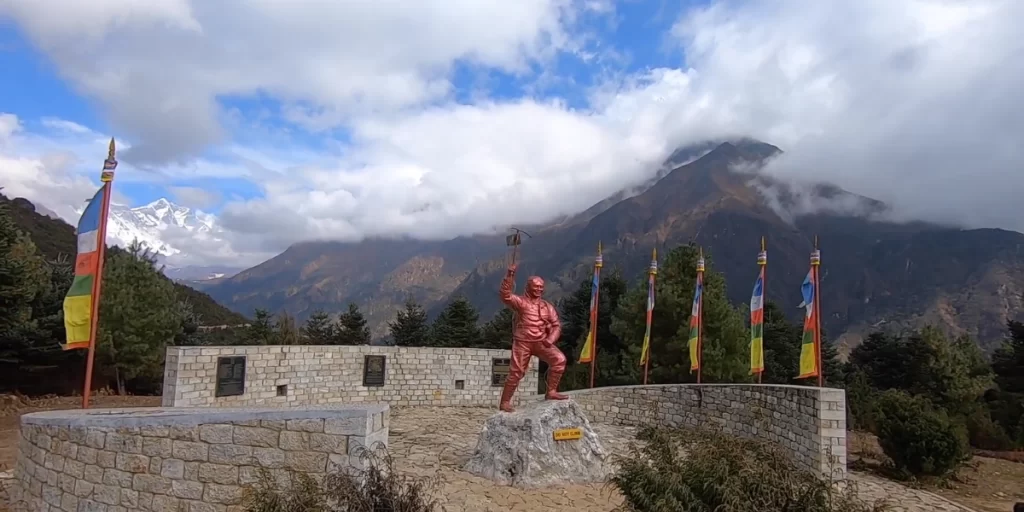
The fact that Gorakshep was the initial Everest Base Camp and a pathway for pioneers like Hillary and Norgay imbues the location with a deep sense of legacy. As you trek this path, you’re not just following a trail; you are, in essence, walking in the footsteps of legends.
This historical context adds a layer of spiritual and inspirational depth to your journey, connecting you to the pioneering spirit of mountaineering and making your experience far more meaningful than just a physical challenge.
Accommodation & Foods Facilities at Gorakshep:
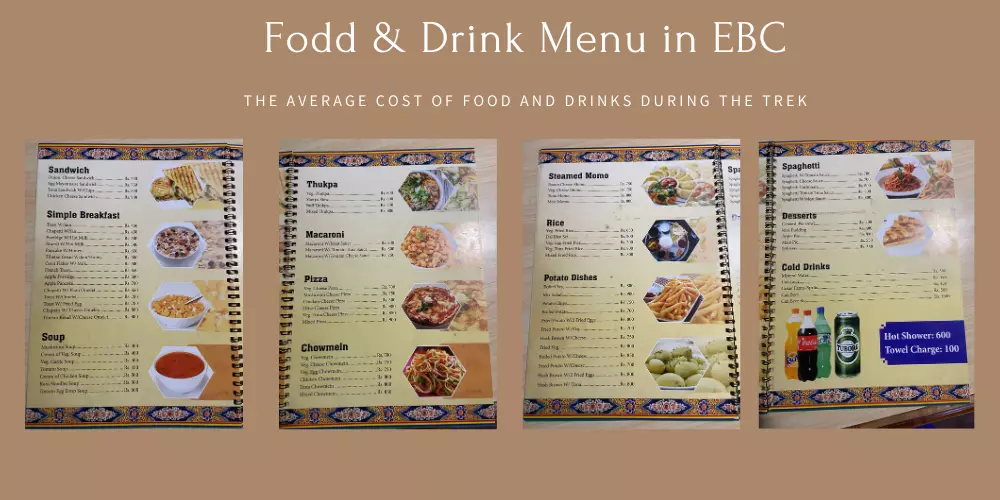
After a day of incredible trekking, Gorakshep welcomes you with its cozy, albeit basic, teahouses and lodges. However, Gorak Shep rooms are typically small, with twin beds and shared bathrooms. While a single room might occasionally be available, they’re significantly more expensive and often not an option due to limited space.
Given the drastic temperature drops at night, especially at this altitude, packing a warm sleeping bag is an absolute must.
Food Facilities at Gorakshep:
Food options are simple but satisfying, featuring classic Nepali meals like Dal Bhat (a staple of rice and lentils), noodles, pasta, potatoes, fried rice, and hearty soups. Hot drinks are always available to help you warm up.
Do keep in mind that food costs here are considerably higher than at lower altitudes. Think of it as a testament to the incredible effort it takes to sustain life at this altitude, with all supplies being carried by dedicated porters or yaks from lower regions.
As you ascend further, you’ll notice menu options tend to become more limited. The increasing cost of food and the basic nature of accommodation are direct consequences of the immense logistical challenges and the human and animal effort required to sustain life at such altitudes.
This understanding fosters appreciation for the local economy and the arduous work of the Sherpa community, subtly reinforcing the principles of responsible tourism. It also serves as a practical budgeting tip for trekkers, ensuring you carry enough cash for your daily needs.
The Stark Beauty of the Environment of Gorakshep

The environment of Gorak Shep is stark and barren, characterized by rocky terrain and sparse vegetation. The high altitude and freezing temperatures make it a harsh place to stay, yet its rugged beauty is captivating.
The surrounding peaks, including Nuptse, Pumori, and Lingtren, create a dramatic backdrop, while the Khumbu Glacier adds to its mystique. The thin air at this altitude can make even the simplest tasks feel challenging, underscoring the need for proper acclimatization.
Prepare to be mesmerized! The landscape around Gorakshep is unlike anything you’ve ever seen – a raw, untamed canvas of rocky terrain with sparse vegetation, yet it possesses a rugged, captivating beauty.
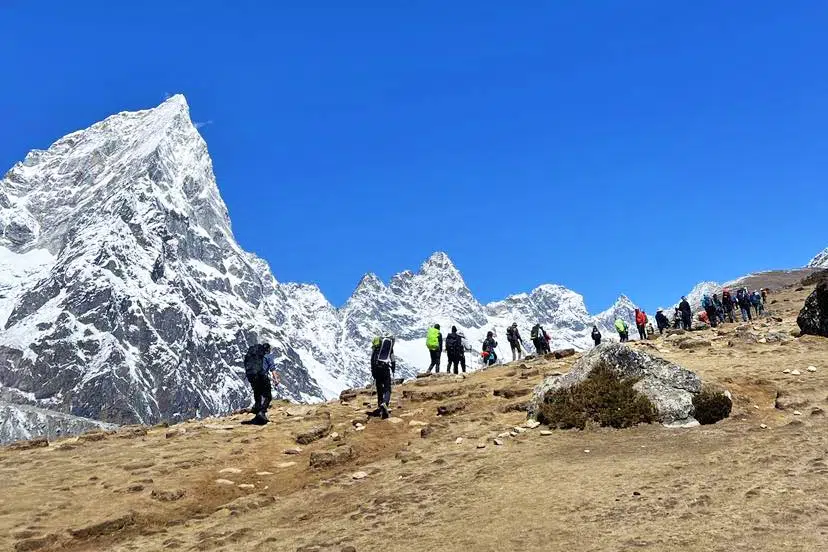
This dramatic scenery is perfectly framed by towering peaks like Nuptse, Pumori, and Lingtren, alongside the vast, imposing Khumbu Glacier. The air at this altitude is thin, a constant reminder of the need for careful acclimatization, which remains a primary consideration for all trekkers.
The description of Gorakshep as “stark and barren” yet possessing “rugged beauty” suggests that its aesthetic appeal is intrinsically linked to its extreme, high-altitude conditions. The absence of lush vegetation and the dominance of rock and ice create a unique, powerful landscape.
This perspective helps trekkers appreciate a different kind of visual experience, encouraging them to find beauty not only in verdant landscapes but also in the raw, untamed wilderness, aligning with an appreciative and respectful approach to the natural world.
Possible Risk Factors at Gorakshep:
Gorakhshep being at such a high altitude brings a lot of risk factors with it as well. Some of the major potential risk factors are:
- Altitude Sickness: As one of the highest points in the trek, Gorak Shep poses a significant risk of acute mountain sickness (AMS). Symptoms include headache, nausea, dizziness, and difficulty breathing. Adequate acclimatization and hydration are essential.
- Extreme Weather: Temperatures at Gorak Shep can plummet to below freezing, especially at night. Proper gear is crucial to stay warm.
- Limited Medical Facilities: The remote location means that medical assistance is scarce, making it critical to be cautious and prepared.
- Exhaustion: The trek to Gorak Shep and further to EBC or Kala Patthar is physically demanding, so maintaining a steady pace is important.
Distance to Everest Base Camp from Gorakshep:
Gorak Shep is located about 3 kilometers (1.8 miles) from Everest Base Camp, which takes around 2-3 hours to reach depending on your pace and acclimatization level. The trail from Gorak Shep to EBC is rugged and crosses glacial moraines, but the experience of standing at the foot of the world’s highest mountain makes it all worthwhile.
The path to the Everest Base Camp is quite rugged and narrow somewhere, we highly suggest trekkers to properly use trekking pole and walk carefully to prevent any kind of potential accidents.
Kala Patthar: The Best Viewpoint of Everest:

Kala Patthar, situated at an altitude of 5,545 meters (18,192 feet), is a short but challenging hike from Gorak Shep. It is renowned as the best viewpoint for Mount Everest, offering breathtaking 360-degree panoramic views of Everest (8848.86m), Nuptse (7,861m), Pumori (7,161m), and other Himalayan giants.
Trekkers have two options: sunset or sunrise in the early morning. Trekkers often start their ascent to Kala Patthar early in the morning to catch the sunrise, which paints Everest in hues of gold and pink. The climb is steep and requires determination, but the reward is unparalleled.
Similarly, sunset rewards trekkers with an unfazed view of Everest. The choice between sunset and sunrise depends on personal preference. Both offer marvelous views of the mountains.
Table 1: Gorakshep, EBC, and Kala Patthar at a Glance:
| Location/Point | Altitude | Primary Purpose | Key Views | Distance from Gorakshep |
| Gorakshep | 5,164m (16,942ft) | Last teahouse/camp | Surrounding peaks (Nuptse, Pumori, Lingtren), Khumbu Glacier | N/A |
| Everest Base Camp | 5,364m (17,598ft) | Climber’s staging point | Khumbu Icefall, surrounding glaciers, unique terrain, no direct Everest view | ~3 km (2-3 hrs hike) |
| Kala Patthar | 5,545m (18,192ft) | Best Everest viewpoint | Panoramic Everest, Lhotse, Nuptse, Pumori, Changste, breathtaking 360-degree views | Short, steep hike (2-3 hrs) |

