

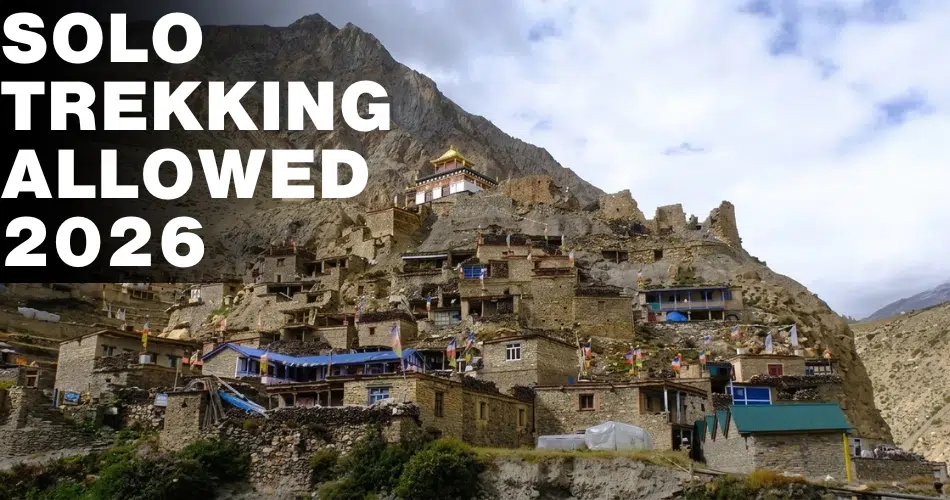
Yes – solo trekking in restricted areas is now allowed in Nepal, as of a rule change on 22 March 2026. A single foreign trekker can finally get a Restricted Area Permit in their own name, with no trekking partner required. But before you book a one-way ticket and plan to disappear into Upper Mustang alone, read the next line: “solo” here means you can apply alone, not that you can walk these trails without a guide. You still need a licensed guide and a registered agency. That’s the whole story in two sentences, and most headlines get it wrong.

Let me break down what actually changed, because the word “solo” is doing a lot of work it can’t back up.
What actually changed in March 2026:
Nepal’s Department of Immigration removed the old two-trekker minimum for the Restricted Area Permit (RAP). That’s the change. It sounds small. It isn’t.
For years, if you wanted to trek regions like Manaslu Circuit, Upper Mustang, Tsum Valley, Nar Phu, Upper Dolpo, Humla or Kanchenjunga, your permit needed at least one other paying trekker on it. Travelling alone? You either found a stranger to pair up with, joined a group departure you didn’t want, or gave up. It was a real wall, and a lot of experienced solo travellers hit it and just went to another country instead.
That wall is gone. Under the 2026 Nepal trekking permit rules, one person can hold a Restricted Area Permit alone.
What “solo” does NOT mean:
Here’s where the headlines get sloppy. Solo trekking in restricted areas does not mean trekking by yourself.
Two things are still mandatory, for solo trekkers and groups alike:
- A licensed guide. Every trekker walks with a licensed Nepali guide. One guide can handle up to seven trekkers, so a solo trekker simply gets a guide to themselves.
- A TAAN-registered agency. The RAP has to be processed through a trekking agency affiliated with TAAN. You can’t file the paperwork at the immigration office as a private individual.
So the honest phrasing is “solo permit application is now allowed.” You’re solo in the sense that you no longer need a partner. You’re not solo in the sense of roaming the Himalaya with no guide and no agency. Anyone selling you that second version is selling you a problem at the first checkpoint.
Where you can trek solo in restricted areas?
The new rule covers 13 districts and 15 restricted zones, most of them along the Nepal – China border. The ones people actually ask about:
- Upper Mustang
- Upper and Lower Dolpo
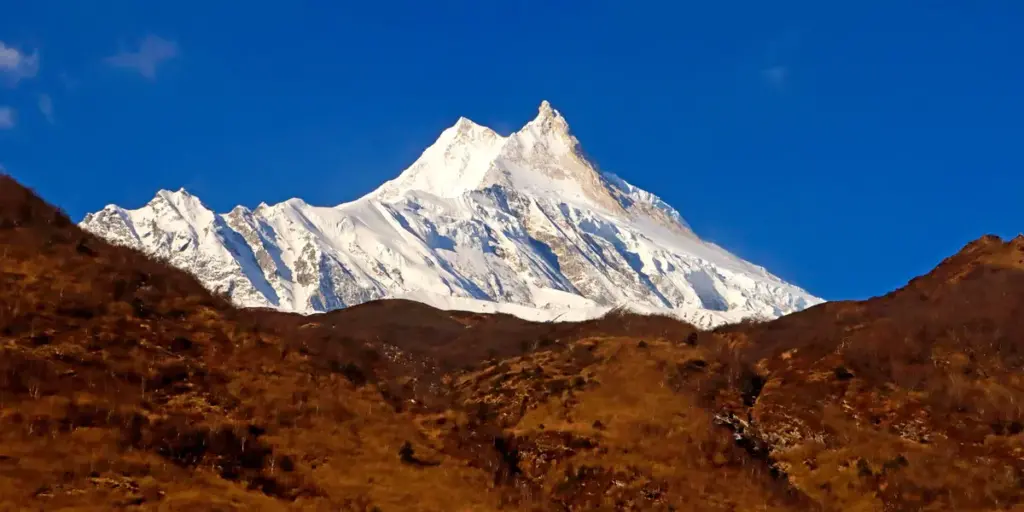
- Manaslu Circuit and Tsum Valley
- Nar and Phu Valleys
- Humla (Limi Valley)
- Border sections of Kanchenjunga and Makalu
These are the quiet corners – high altitude, deep Tibetan and Gurung culture, far fewer people on the trail than Everest or Annapurna. That’s exactly why they sat behind the group rule for so long, and exactly why they’re worth the effort now that solo trekking in restricted areas is on the table.
How the Restricted Area Permit works in 2026

The process moved online, which beats the old paper shuffle.
- If you’re already in Nepal, you apply using your visa number.
- If you’re planning from abroad, you use an Application Submission ID so your agency can start early.
- The final permit is still collected in person at the Department of Immigration office in Maitighar, Kathmandu. Your name, passport number and permitted zone are printed on it – it’s tied to you.
One practical warning: don’t book a flight that has you leaving Kathmandu for the mountains the same day you land. Give yourself at least one working day in the city. The agency needs your physical passport at the immigration office to finalise the permit, and that step can’t be rushed.
The honest bit before you plan
A quick word on trust, because you’ll read a dozen versions of this online. Nearly every write-up of this rule is published by a trekking agency – this one included – and everyone has a reason to repeat “book through an agency,” because it’s now written into the law. Fair enough. But treat specific figures, fees especially, as “confirm before you pay,” not gospel. Permit costs for places like Upper Mustang and Manaslu have always been seasonal and region-specific, and the official Department of Immigration numbers are what count, not a blog’s summary.
Short version: 2026 made these treks far easier to reach on your own. It did not turn them into a free-for-all. You still need a guide, you still need an agency, and in terrain like Dolpo or Limi Valley you’d want both anyway.
Planning solo trekking in restricted areas? Here’s the easy part
This is what we handle every week. As a TAAN-registered operator, we sort your Restricted Area Permit, match you with a licensed guide, and run the paperwork and logistics so you’re not chasing offices around Kathmandu. If one of these regions has been on your list and the old group rule was the only thing stopping you – that excuse is gone. Get in touch and we’ll build the trek around you.