


Tucked in the lap of the world’s tallest mountain lies a revolutionary initiative—Sagarmatha Next, a sustainability-focused center turning trash into treasure. Established under the Sagarmatha Pollution Control Community (SPCC), this project brings art, awareness, and action together in the pristine Khumbu region of Nepal.
Where is Sagarmatha Next?
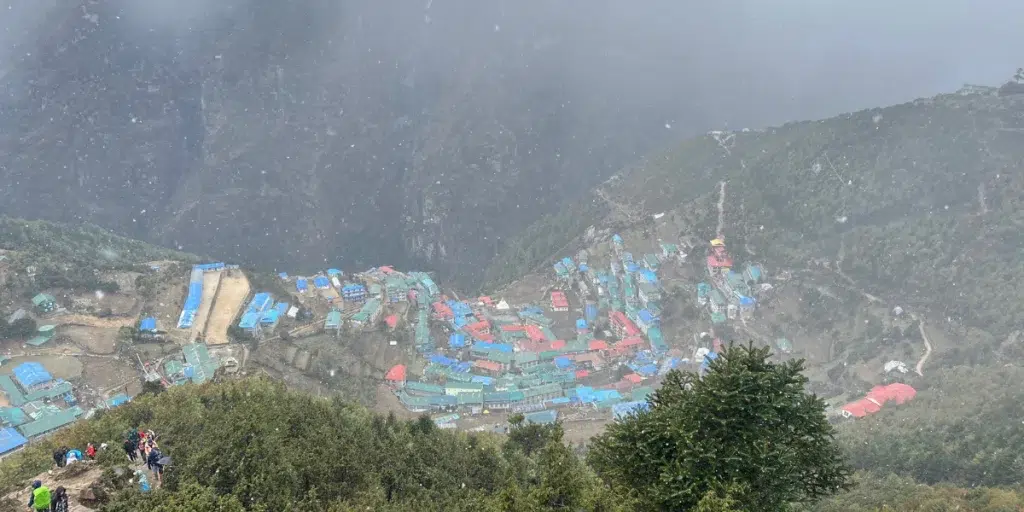
Sagarmatha Next is located in Syangboche, above Namche Bazaar, at an elevation of 3,780 meters.This location is along the Everest Base Camp trek route, making it easily accessible to trekkers heading to Everest Base Camp.
Because it’s on the way to Everest, many trekkers visit the place during their acclimatization day at Namche. It’s not just a stopover—it’s a center of innovation and sustainability in the Himalayas.
What Is the Motto of Sagarmatha Next?
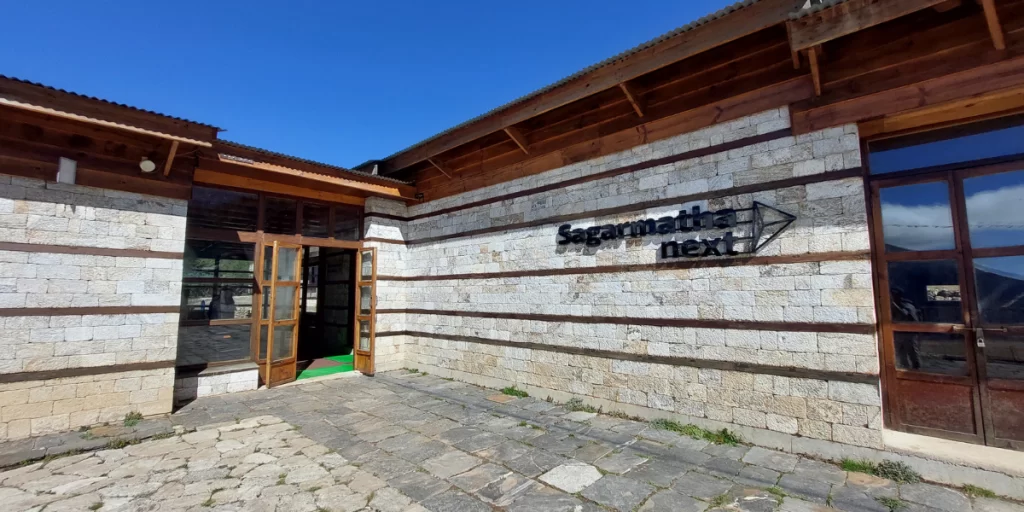
The motto of Sagarmatha Next is “Leave No Trace.” This powerful phrase captures the essence of the organization’s goal: to protect and preserve the Everest region from pollution and degradation caused by growing tourism.
The idea is not just about cleaning but about transforming the way people interact with nature, especially in fragile ecosystems like the Himalayas.
Sagarmatha Next promotes:
- Awareness among visitors about the environmental challenges
- Responsibility to reduce, reuse, and recycle
- Innovation through art and education
Introduction to SPCC – Sagarmatha Pollution Control Committee
The Sagarmatha Pollution Control Committee (SPCC) was established in 1991 as a non-profit and non-governmental organization. It plays a major role in waste management and conservation in the Everest region.
SPCC is responsible for:
- Installing and managing waste bins along trekking routes
- Collecting and sorting garbage brought down by porters
- Burning non-recyclable waste in eco-friendly incinerators
- Promoting sustainable tourism
Sagarmatha Next works under the guidance and support of SPCC, acting as the creative and educational wing of the mission.
Importance of SPCC for Everest Trekkers
SPCC directly impacts trekkers’ experiences by:
- Keeping trails clean and safe
- Reducing visual pollution
- Educating tourists about eco-friendly practices
- Ensuring healthier trekking environments
Without SPCC’s work, the Everest region could become overwhelmed with unmanaged waste due to high footfall, especially during peak trekking seasons.
How Can You Contribute to Keep Everest Region Clean?
Every trekker has a role to play in preserving the beauty of the Himalayas. Here’s how you can contribute:
- Carry your waste: Don’t leave wrappers or plastics behind.
- Buy local and eco-friendly: Support local products that are sustainably made
- Participate in “Carry Me Back”: Trekkers can carry 1kg of processed waste down to Namche Bazaar.
- Visit Sagarmatha Next: Learn, donate, and engage in awareness programs.
- Avoid single-use plastics: Use reusable bottles and bags.
- Share the message: Spread awareness on social media and to fellow travelers.
From Waste to Art: Turning Trash into Treasure
One of the most powerful ideas at Sagarmatha Next is converting waste into artwork. Instead of dumping trash, it is:
Collected, Cleaned, Reused in artistic ways
Artists create sculptures, installations, and unique pieces that highlight the issue of pollution while showing that waste can be a source of creativity.
Examples include:
Sculptures made from old trekking gear
Paintings using recycled canvas
Installation art from plastic bottles and wrappers
This approach doesn’t just recycle, it reimagines.
Arts in Sagarmatha Next: Creativity at High Altitude
Sagarmatha Next houses an art lab where both local and international artists come to create. These artworks are not only beautiful but also educational.
Visitors can:
See exhibitions
Join art workshops
Understand the stories behind each piece
It’s a chance for trekkers to connect emotionally with the environmental mission and maybe even get inspired to start their own project.
Virtual Reality (VR) in Sagarmatha Next
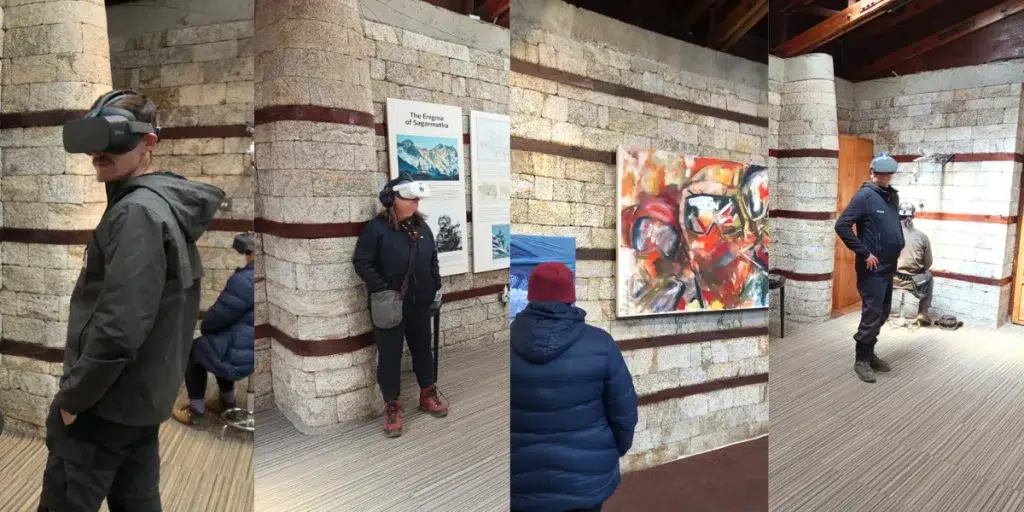
Technology meets conservation at Sagarmatha Next with its Virtual Reality (VR) experience. Visitors can wear a headset and:
Take a virtual trek through the Khumbu region
Understand how climate change is affecting the Himalayas
Learn about waste management challenges
Get an immersive experience of mountain life and culture
This digital journey helps people see the impact of their actions in a more personal and emotional way.
Souvenirs from Sagarmatha Next
Sagarmatha Next also offers souvenirs, but not the usual ones you find in tourist shops. These are:
- Handmade
- Eco-friendly
- Created from recycled materials
You can find:
- Keychains made from used trekking poles
- Jewelry from scrap metal and glass
- Notebooks with recycled paper covers
- Bags from leftover tent fabrics
Every item tells a story of transformation.
What Are These Souvenirs Made From?
Most of the souvenirs at Sagarmatha Next are made from waste materials such as:
Old oxygen cylinders
Discarded plastics
Broken electronics
Used cans and metal parts
Fabrics from damaged gear
These materials are cleaned, sanitized, and turned into beautiful, durable, and meaningful souvenirs. This not only reduces waste but also creates jobs and supports the local economy.
Carry Me Back: A Small Act with a Big Impact
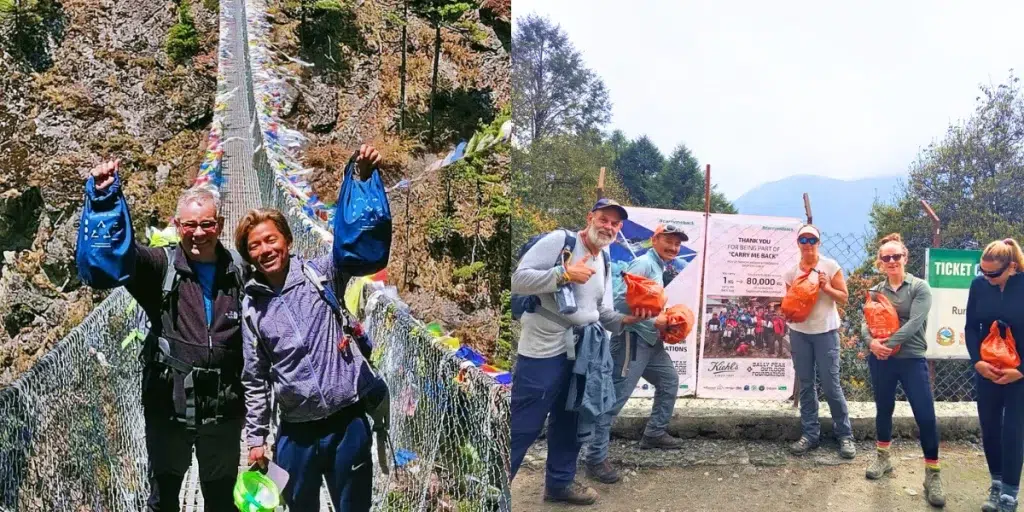
Carry Me Back is a creative and powerful initiative by Sagarmatha Next in partnership with SPCC, designed to involve trekkers in keeping the Everest region clean. The concept is simple but meaningful: every trekker is encouraged to carry 1 kg of processed waste back to Lukla, where the waste can be further managed or flown out of the region.
The waste is already cleaned, dried, and safely packed in sealed eco-friendly bags, so it’s safe and easy to carry. These bags weigh around 1 kilogram and don’t take up much space, making it manageable even for those carrying their own trekking gear.
You can collect these “Carry Me Back” bags at Sagarmatha Next center in Syangboche, just above Namche Bazaar. Many local lodges and trekking agencies in Namche also support the program and help distribute the bags to willing trekkers.
By taking part in this simple effort, you not only help remove waste from the mountains but also become part of a larger sustainable movement to protect the Himalayas for future generations.
FAQ
1. Is Sagarmatha Next open to all tourists?
Yes, Sagarmatha Next is open to all trekkers and visitors passing through Syangboche.
2. How can I volunteer at Sagarmatha Next?
You can apply through their official website or contact SPCC directly for volunteer opportunities.
3. Is there an entry fee for Sagarmatha Next?
There may be a nominal fee or donation request to support the center’s programs.
4. What’s the best time to visit Sagarmatha Next?
The best seasons are spring (March-May) and autumn (September-November), when trekking conditions are ideal.
5. Can I buy souvenirs online?
Currently, souvenirs are only available on-site, ensuring that purchases benefit the local community directly.
6. Is the VR experience suitable for children?
Yes, the VR experience is family-friendly and helps kids learn about sustainability in a fun way.
4. What is “Carry Me Back”?
A program where trekkers help carry processed waste back down the trail to reduce airlift waste costs.
Sagarmatha Next is more than a place—it’s a movement. A powerful initiative rising from the world’s highest region, inspiring trekkers and tourists to leave no trace, think creatively, and give back to the mountains that give so much.
