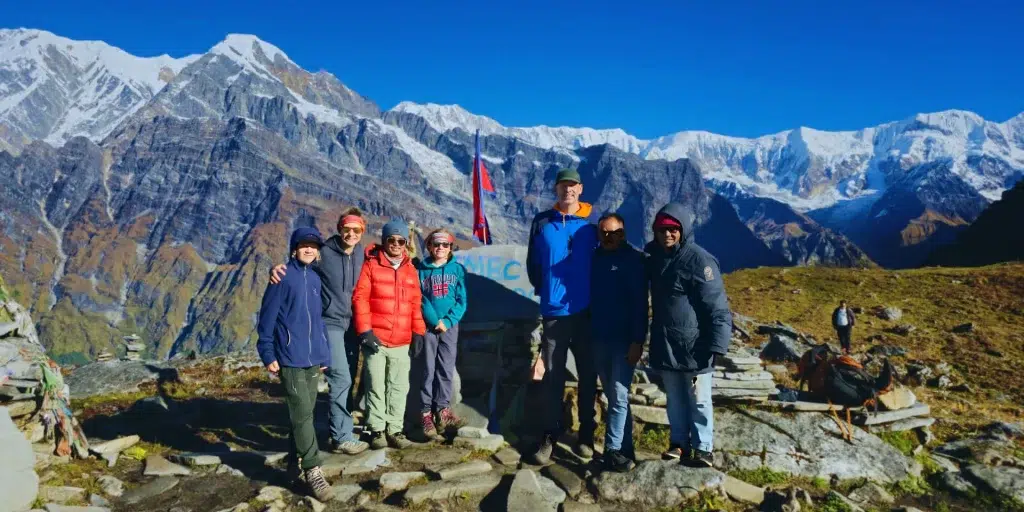
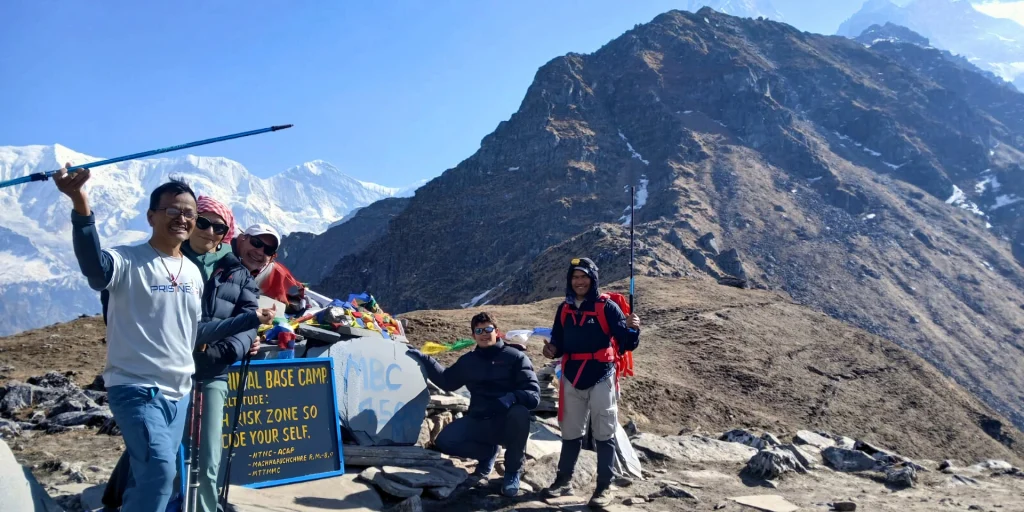
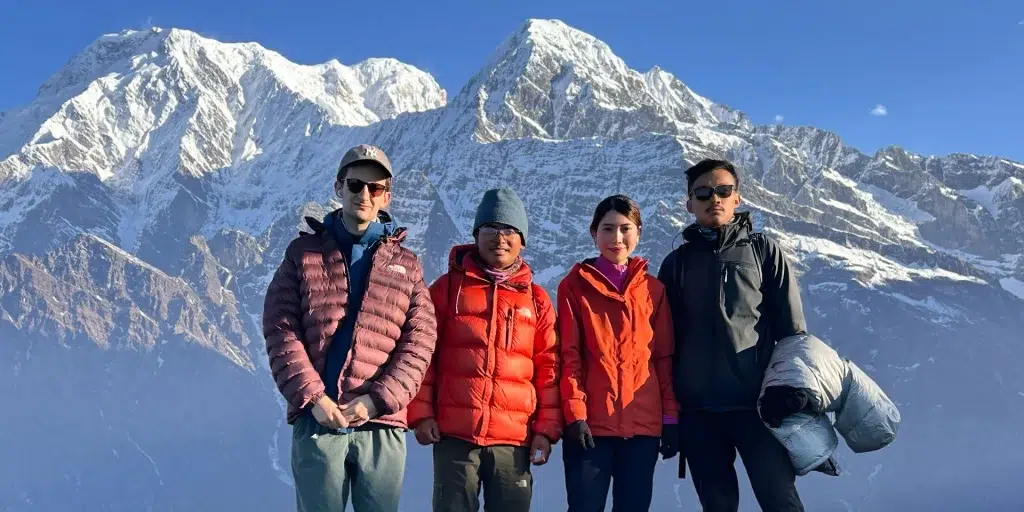
Look, let’s be totally honest for a second. The “hidden gems” of the Himalayas aren’t exactly secret anymore. If you search for an “off-the-beaten-path” trek in Nepal, the Mardi Himal Trek is usually the first thing that pops up. However, even though the word is out, this trail remains fundamentally better than the crowded classics like Poon Hill or Annapurna Base Camp. Why? Because while everyone else is walking in the valleys, looking up at the mountains, you faltitudeare walking on the ridge, looking the giants straight in the eye.
Welcome to the 9 Days Mardi Himal Trek. This guide isn’t just a collection of distances and altitudes; actually, it’s the definitive blueprint for anyone who wants to trade the tourist crowds for a genuine ridge-line revolution.
Introduction to Mardi Himal Trek:
So, what makes the Mardi Himal Trek Guide so different from everything else you’ve read? Basically, it comes down to perspective.
For decades, this trail was nothing more than a series of shepherd paths used by local Gurung villagers. It was only “discovered” by the trekking world around 2012. Consequently, the teahouses are still cozy, the forests are still pristine, and the sense of adventure is still very much alive. While the EBC trek offers prestige and ABC offers a “bowl” of mountains, Mardi Himal offers a spine-tingling ridge walk that feels like walking on a tightrope to the heavens.
The Vibe: Valleys vs. Ridges:
Most treks in Nepal follow river valleys. You spend days looking up at the peaks through the trees. Crucially, the Mardi Himal itinerary flips that script. By the time you reach Forest Camp, you have already started ascending the ridge. By the time you hit High Camp, the world drops away on both sides of you. To your left, you see the massive Annapurna South; to your right, the Mardi Khola valley. Directly ahead? The sacred, unclimbed pyramid of Machhapuchhre (Fishtail).
It’s a different vibe entirely. It’s silent. It’s wind-swept. It’s raw.
Our Promise to You:
If you’re ready to move from being a “hiker” to a “Himalayan trekker,” we’ve got you. This guide covers every single detail you’re worried about:
The Logistics: How to handle those tricky permits and the Kathmandu-to-Pokhara transition.
The Survival: What the “Dal Bhat” really tastes like at 4,000 meters and how to avoid the “Altitude Cough.”
The Strategy: Why we insist on the 9 Days Mardi Himal Trek duration for your safety and success.
Ultimately, this isn’t just about reaching a Base Camp. It’s about the journey along the ridge. Therefore, if you’re looking for the best views in the Annapurna without the headaches of the masses, you’ve found your trek. Let’s get into the details.
What Exactly is Mardi Himal?
Before we lace up the boots, let’s look at the numbers. Where exactly are we going?
Mardi Himal is a peak sitting at 5,587 meters, located just beneath the much more famous Machhapuchhre. Our goal isn’t to summit the peak itself (that would be a technical climb), but to reach the Mardi Himal Base Camp at 4,500 meters.
Geography at a Glance:
Situated in the Annapurna Conservation Area, this trek is the shortest high-altitude experience you can find near Pokhara. Furthermore, it is often called the “shortest altitude trek” because you gain elevation quickly. You start in the lush, subtropical forests of Kande and finish on a frozen alpine ridge in just a few days.
Moderate (Steep ridge sections, no technical gear)
Duration
9 Days Duration (Full Kathmandu to Kathmandu Circuit)
Daily Walking
5 to 7 Hours
Start/End Point of Walk
Kande (Start) / Sidding (End)
The “Mardi Magic”: What makes this trek “magical” isn’t just the height; it’s the proximity. Because you are on the ridge, you are physically closer to Machhapuchhre than almost any other trek allows. Basically, you aren’t just looking at the mountain – you are standing in its shadow.
Mardi Himal vs. Annapurna Base Camp (ABC): Which One Wins?
It’s the age-old question: “Should I go to ABC or Mardi?” Look, both are world-class, but they offer completely different psychological experiences.
Perspective: The Bowl vs. The Rim:
When you trek to Annapurna Base Camp (ABC), you are essentially walking into a “mountain sanctuary.” You are standing at the bottom of a giant bowl, surrounded by massive walls of rock and ice. It’s beautiful, but you’re always looking up.
On the other hand, the Mardi Himal Trek puts you on the rim. You aren’t at the bottom; you’re on the spine. Consequently, you get a 360-degree panoramic view. You can see the sunset hitting the face of Annapurna South to your left and the Machhapuchhre ridge to your right at the same time. For photographers, this is pure gold.
Crowd Control: The 2026 Reality:
Let’s be real – ABC is crowded. In peak season, you might find yourself in a queue on the trail. Furthermore, teahouses can get so packed that you’re lucky to get a bench in the dining hall. Conversely, Mardi Himal still feels like a trek.
While it is gaining popularity, the “Off-the-beaten-path” reality still holds true here. You’ll have more space to breathe, more quiet time with the mountains, and a much higher chance of snagging a private room.
Why Beginners and Photographers Choose Mardi
For Beginners: The total distance is shorter. You reach spectacular high-altitude terrain without having to commit 12+ days to the trail. Basically, it’s a high-reward, medium-effort investment.
For Photographers: Because the trail follows a ridge, you have clear sightlines for both sunrise and sunset. In the valleys, the sun disappears behind a mountain at 3:00 PM. On the ridge, you get every last drop of the “Golden Hour.”
The 9-Day Master Itinerary (Standard & Customizable)
You might see older blogs mentioning an 11-day itinerary. However, we’ve moved to a high-efficiency 9 Days Mardi Himal Trek model for 2026. Why the change? Because modern transport and better-positioned teahouses mean we can give you a better experience in less time without sacrificing safety.
Strategic Layout: The Logic of 9 Days
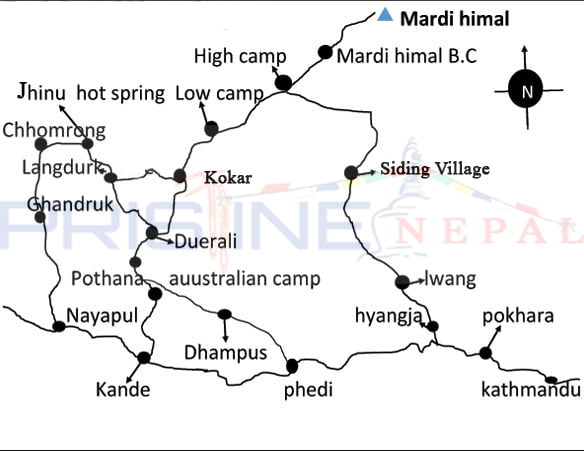
We start the trek from Kande and finish in Sidding. This creates a “loop” effect that keeps the scenery fresh every single day. We also prioritize a stop at Badal Danda, which most agencies skip. Therefore, you get to experience the sunset above the clouds – a view that many of our clients say is actually better than the Base Camp itself.
Mardi Himal Trek Map:
Best Timt to trek Mardi Himal from Kathmandu
So, when should you actually lace up your boots? Timing is everything in the Himalayas. Basically, while the 9 Days Mardi Himal Trek is technically doable year-round, your experience will change dramatically depending on the month you choose.
Spring (March to May): The Floral Explosion
If you like your mountains with a side of vibrant color, Spring is your window. Crucially, this is when the world’s largest rhododendron forests come alive. You’ll be walking through tunnels of red, pink, and white blossoms. The mornings are usually crystal clear, though clouds can roll in by mid-afternoon. Consequently, you need to be an early riser to catch those “money shots” of Machhapuchhre before the mist takes over.
Autumn (September to November): The Gold Standard
This is, hands down, the best time for the 9 Days Mardi Himal Trek. After the monsoon rain washes the dust from the air, the visibility is simply unbelievable. We call these “Diamond Peak” views because the mountains look so sharp you feel like you could reach out and touch them. Therefore, if photography and clear horizons are your priority, book for October. It’s busy, yes, but for a good reason.
Winter (December to February): For the Solitude Seekers
Look, it’s going to be cold. Honestly, it’s freezing at night once you pass Low Camp. However, if you have high-quality gear and you hate crowds, winter offers a surreal, quiet version of the ridge. You’ll likely be trekking through snow, which makes the landscape feel like a genuine alpine expedition. Just make sure your sleeping bag is rated for lower -15°C.
Monsoon (June to August): The Green Carpet (and the Leeches)
Let’s be real – we don’t usually recommend trekking in the monsoon unless you are a botanist or a fan of leeches. Basically, the trail gets slippery, and the clouds often hide the peaks. On the flip side, the forests are a deep, emerald green, and you’ll have the teahouses all to yourself. If you choose this time, bring high-quality rain gear and a lot of salt for the leeches!
Permits, Logistics, and “Boring Stuff”
We know you want to talk about the views, but we need to talk about the paperwork first. Actually, we make this part as painless as possible for our clients.
Permits: What You Need in 2026/2027:
To enter the Annapurna Conservation Area, you need two specific documents. First, the ACAP (Annapurna Conservation Area Permit). Second, the TIMS (Trekkers’ Information Management System) card.
The Cost: Expect to pay around $30 USD for the ACAP and $20 USD for the TIMS.
The Hassle-Free Way: When you book your 9 Days Mardi Himal Trek with Pristine Nepal, we handle all of this. You just provide us with your passport copy and a few photos, and we do the “boring stuff” while you enjoy your coffee in Thamel.
Logistics: Getting from Kathmandu to the Ridge
How do we get you to the start of the trail? Basically, you have two options:
The Scenic Drive: A 6-7 hour journey by tourist bus or private jeep. It’s a great way to see the “real” Nepal along the Trishuli River.
The 25-Minute Flight: If you want to skip the road, we can upgrade you to a flight from Kathmandu to Pokhara. It’s short, stunning, and gives you more time to explore Lakeside.
Crucially, your trek actually starts with a short drive from Pokhara to Kande. From there, the road ends and the adventure begins. Therefore, we ensure all your ground transportation is private and reliable, so you aren’t stuck waiting for a local bus when you should be on the trail.
Life on the Trail: Food & Accommodation
Look, let’s talk about the “teahouse reality.” At 3,500 meters, you aren’t staying in a luxury resort. Actually, these are cozy, local lodges where the heart of the home is the wood-burning stove in the dining hall. It’s simple, it’s communal, and honestly, it’s where the best stories are told.
What’s for Dinner?
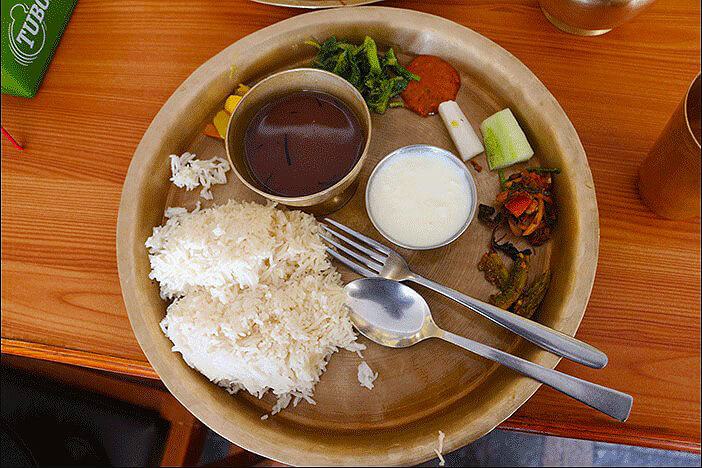
Dal Bhat Power: Basically, there is a saying in Nepal: “Dal Bhat Power, 24 Hour.” This platter of rice, lentil soup, and vegetable curry is the ultimate fuel. Crucially, it’s the only meal with free refills. Consequently, if you’re hungry after a long day on the ridge, this is your best friend.
The Magic of Garlic Soup: You might hate the smell, but you must eat it. Local guides swear by garlic soup for blood oxygenation. Furthermore, it’s a warm, comforting way to stay hydrated as you gain altitude. Also, it helps to tackle altitude sickness.
Snacks and Comfort Food: Most teahouses serve pasta, pancakes, and even pizza. However, we always recommend sticking to local, fresh ingredients the higher you go to avoid stomach issues.
Connectivity and Charging
Honestly, don’t expect 5G. Most teahouses offer Wi-Fi (via “Everest Link” style cards), but it’s hit or miss once the clouds roll in. Therefore, use this as a chance for a digital detox.
As for charging, most places charge a few dollars to juice up your phone or power bank. Consequently, we always suggest bringing a high-capacity portable charger to save money and avoid waiting in line for a socket.
The “Solo vs. Agency” Debate: The Honest Truth
I get asked this all the time: “Can I do the 9 Days Mardi Himal Trek alone?” Honestly, you could, but the real question is – should you?
The Risk Factor of the Ridge:
Unlike the broad valley floors of the EBC trek, the Mardi Himal trail is a narrow ridge. Crucially, when the afternoon fog rolls in (and it will), visibility can drop to five meters in seconds. If you lose the path here, you aren’t just in a different valley; you’re on the edge of a steep drop. Basically, having a professional guide isn’t just about carrying your bag – it’s about navigation and immediate safety decisions.
The Pristine Nepal Advantage
Why book with us? Because we’ve been doing this for decades.
Expertise: Our guides are NMA-certified and have walked this ridge hundreds of times. They know exactly where the path gets slippery and which teahouse has the warmest blankets.
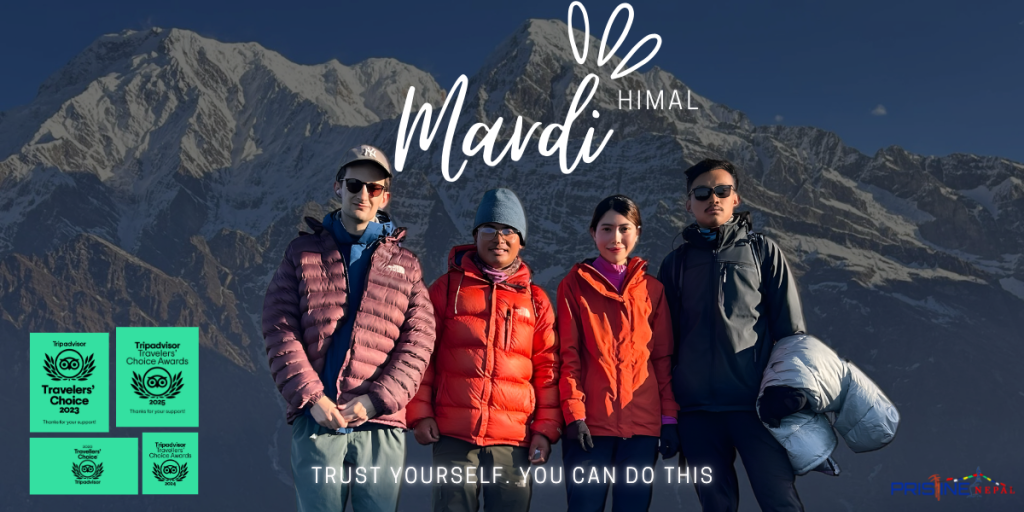
Award-Winning Service: We aren’t just another agency; we are the TripAdvisor Travelers’ Choice for 2020, 2023, 2024, and 2025. Therefore, you aren’t just a client; you’re part of a legacy of successful adventurers.
The “A-One” Standard: High prices don’t always mean good service, but we maintain a standard that no other local company can compete with. From private jeep transfers to pulse oximeter checks every evening, we handle the details so you can focus on the Fishtail view.
Ultimately, the choice is yours. But if you want a stress-free, safe, and genuinely successful summit, the only real choice is to go with the masters of the ridge. Let’s get you booked for 2026.
Preparation, Packing and Planning for Mardi Trek
Tools & Gears are fundamental needs when it comes to trekking. With proper packing, you will reduce the wastages & burden for your shoulder. Similarly, every trekker should have knowledge of what to pack for their trip. As a matter of fact, there are some gears which should be bought & which can be rented too that can help you reduce expenses.
Here are the packing list for Mardi Himal Base Camp trek which should be bought & can be rented:
One Down Jacket (can be rented)
Two Thermal Tops & Jumper
Two pairs of trekking pants & one trouser
One Woolen hat & Buff
One pair of woolen gloves
Two pairs of underwear & socks
One pair of waterproof trekking boots
One pair of sandal or Shoe
Sunscreen & sunglass
Water purification tablets or sterilizer
Sleeping Bags (can be rented)
Trekking Poles
Portable Charger
Basic first aid kit
Other personal essentials
Training: It’s Not About the Gym
Forget the heavy bench press. Instead, focus on endurance and “stair-master” cardio. Crucially, the most important training you can do is walking on uneven terrain with a weighted pack. Consequently, your ankles and knees will be ready for the rocky descent to Sidding.
The Goal: You should be able to comfortably walk 6 hours a day with a 5kg daypack. Therefore, start your training at least 3 months before your flight.
Where to buy the trekking gears?
Either you can buy the trekking gear in your country or you can buy in Nepal. However, if you don’t want to bring big loads of bags from your country & don’t know experience then you can buy in Nepal. Almost everything you need for trekking is available in Nepal. Similarly, you can go shopping with our professional members for shopping too.
Most Important FAQ questions about Mardi Himal Trek:
Q: Which is best? Annapurna Base Camp or Mardi Himal trek?
Both destination area is the best for trekking in Nepal. Either you do ABC trek or Mardi Himal trek, you will be in the Annapurna region. The only thing that matters is Annapurna Base Camp gets very crowded during peak season. Whereas, Mardi Himal trek is known as off the beaten track and gets less crowded during peak season. So, both are best but if you don’t want to face rush hour then go for Mardi Himal Base Camp.
Q: Drinking water in Mardi Himal:
Each & every hotel/lodges available in the Mardi Himal trail provides you clean water as well as hot water. However, you can take water steripen with you to make water germs free too. Moreover, don’t use plastic water bottles during your trek.
Q: Is it safe for Solo female trekkers in Mardi Himal Base Camp?
It is not recommended for solo female trekkers to trek in Mardi Himal Base Camp in-case you are in a group. Due to a less crowded area, it is little risk for solo females because you have to pass from the forest alone. Sometimes, due to unstable weather, finding routes can be even harder too.
Q: What happens if I get sick or injured during Mardi Himal Trek?
In every worst situation during your trek, your agencies come in handy. Your guide will provide you all the basic treatment but if it is a serious problem then you will be evacuated soon.
Q: Is Mardi Himal Base Camp a budget trek?
Yes, Mardi Himal Base Camp is the budget trek from Pristine
Nepal Treks & Expedition and it can be customized as per your needs too.